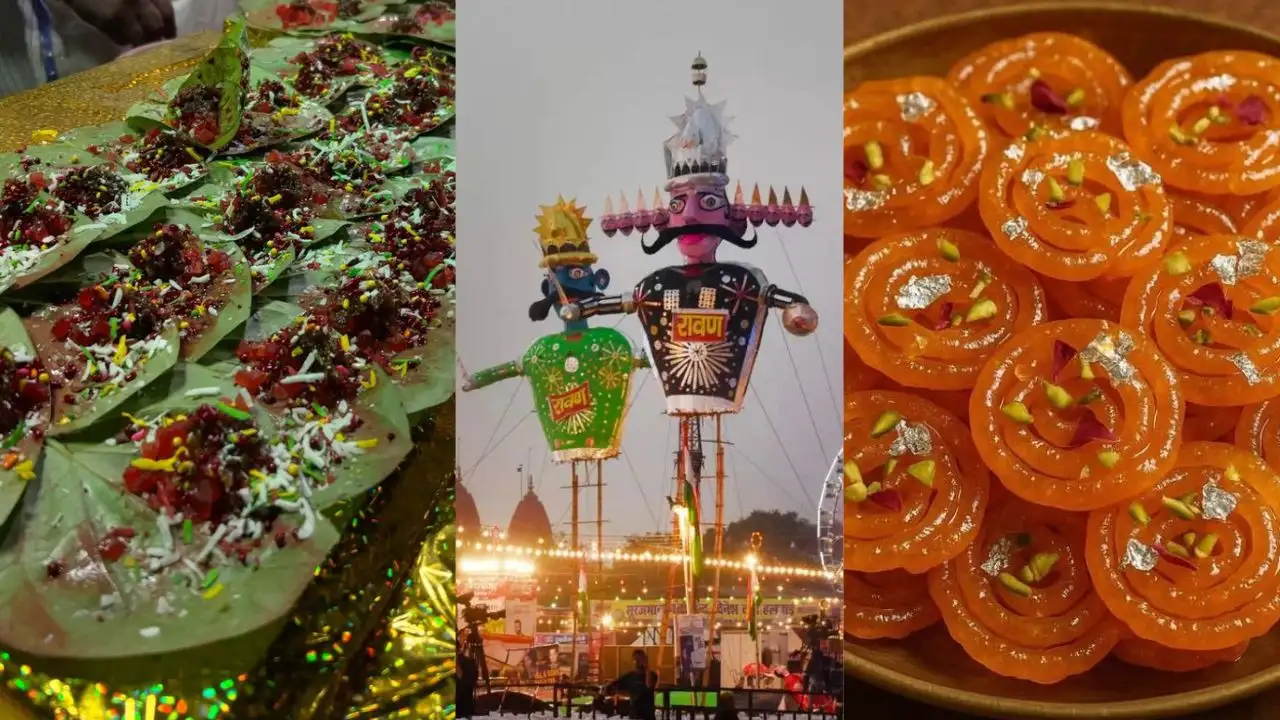
Dussehra: Festival of victory of good over evil
New Delhi: Dussehra, also known as Vijayadashami, is one of the major festivals of India. This festival symbolizes the victory of righteousness over unrighteousness and good over evil. According to Ramayana, on this day Lord Shri Ram killed Lankan king Ravana and freed Mother Sita. Dussehra is celebrated every year to commemorate this victory. On this day, there is a tradition of burning the effigies of Ravana, Kumbhakarna and Meghnad across the country, but along with this there are many unique traditions which are celebrated in different states.
Tradition of eating Jalebi after Ravana Dahan
In the Dussehra fair, it is seen that people enjoy Jalebi after Ravana Dahan. It is considered auspicious in North India. It is believed that Lord Shri Ram was very fond of a sweet called Shashkuli, which is similar to today's Jalebi. After the victory over Ravana, happiness was celebrated by distributing this sweet, and since then this tradition has been going on. Apart from this, the sweetness and round shape of Jalebi are considered a symbol of happiness, prosperity and victory in life.
tradition of feeding paan
At many places on Dussehra, people greet each other by feeding them betel leaves. In Hindu religion, betel leaf is considered sacred and auspicious. Betel leaf is used in every worship and religious function. Betel leaf is considered auspicious on the day of Vijayadashami. Feeding it is a symbol of love, respect and brotherhood, although the belief behind it varies slightly in every state.
Importance of Shami leaves
In many states including Maharashtra, there is a tradition of distributing Shami leaves on Dussehra. These leaves are given to each other as a symbol of gold. People wish happiness, good fortune and progress by giving Shami leaves to each other. This tradition conveys the message of praying for prosperity and success in the lives of loved ones.
Importance of Tika and Shastra Puja
Also important is the tradition of applying tilak on Dussehra, which is more prevalent in Nepal. The elders of the house apply tilak of curd, rice and vermilion on the forehead of small children and bless them for long life and success. Apart from this, Shastra Puja is performed on this day in South India. People honor their duty and knowledge by worshiping their tools, books, machines and weapons.