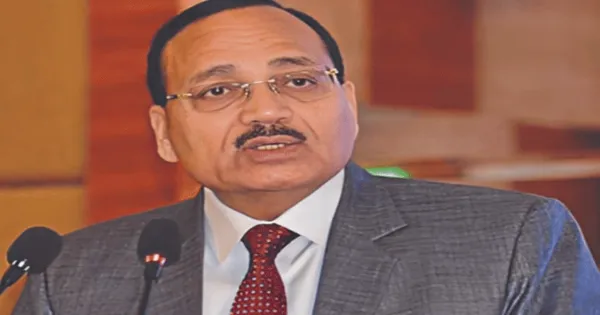
New Delhi. Environment protection, climate change and judicial role were widely discussed at a two-day international conference organized by the National Green Tribunal (NGT) in New Delhi. The inaugural session of the conference was attended by Chief Justice Surya Kant, Prime Minister Narendra Modi, Union Forest and Environment and Climate Change Minister Bhupendra Yadav, Attorney General R. Venkataramani and NGT Chairperson Justice Prakash Srivastava addressed. Judges, judicial officers, green tribunal officials, lawyers, environmentalists and experts from 17 countries participated in the conference on the theme 'Movement forward for environment and climate'.
CJI Surya Kant mentioned the fundamental right to environment
Chief Justice Justice Surya Kant said the Supreme Court of India has recognized the right to a pollution-free environment as a fundamental right over the past several decades. He said that the judiciary has developed important principles like principle of precaution regarding ecological health, liability of the polluter to pay, full liability and public trust.
He said India's judicial philosophy on climate has given greater clarity to people's climate-related rights from a constitutional perspective. It is recognized under law that the adverse effects of climate change may affect fundamental rights related to equality, livelihood and health. Justice Surya Kant noted the need to promote judicial collective wisdom, scientific knowledge and international cooperation to strengthen global environmental protection.
Prime Minister Modi launches NGT app
During the conference, Prime Minister Narendra Modi inaugurated the NGT app by pressing a button. Through this app, users will be able to get other information including the status of the cases going on in NGT and their progress on their mobile.
Bhupendra Yadav said – Development and environmental protection can go together
Union Minister for Environment, Forest and Climate Change Bhupendra Yadav highlighted India's climate-related commitments under the leadership of Prime Minister Narendra Modi. He reiterated his commitment to collective action for a sustainable, strong and just future. He said that in the last 12 years, the installed capacity of power generation from sources other than mineral fuels has reached 54.18 percent. This is more than the target of 50 percent set for 2030. Yadav said India ranks third in the world in terms of installed capacity of renewable energy and is the world's second largest growth market in solar energy. According to him, this indicates that economic development and climate action can go together.
From cheetah conservation to increasing forest area.
The Environment Minister also mentioned various initiatives of India to conserve wildlife and ecosystems. These include cheetah rehabilitation programmes, conservation-breeding programs to conserve the Great Indian Bustard and efforts to conserve and restore forests, grasslands and wetlands. He said that forest and tree cover in India has increased to 8.27 lakh square kilometers. Referring to the 'Global Forest Resources Assessment 2025' of the Food and Agriculture Organization of the United Nations, he said that India has retained its third position globally in terms of annual net forest area increase.
India will raise the issue of climate justice in COP31
Bhupendra Yadav said that in the next climate conference COP31 to be held in Antalya, Turkey, India will continue to advocate for issues focused on equity in climate action, implementation of decisions and the needs of countries facing the greatest impact of climate change. He said that at a time when environmental challenges transcend national boundaries, conferences that bring together judges, policy-makers, scientists and experts are extremely important. Yadav said the choice before the world is not between development and environment, but between sustainable development and development that cannot be sustained in the long run.
Attorney General said – mere announcements will not work
Attorney General R. Venkataramani said that no country can solve environmental challenges alone. There is a need to develop practical and enforceable mechanisms rather than limiting global action to mere declarations. Highlighting India's efforts to strike a balance between development and environmental protection, he said new global environmental regulatory frameworks and stronger international institutions are needed to ensure environmental justice. Venkataramani also stressed the need to include issues related to energy and food security, housing, health, water, ecosystems and economic opportunities in the environmental framework.
NGT Chairman said- Environmental protection is collective responsibility
NGT Chairperson Justice Prakash Srivastava said the Government of India's climate initiatives reflect national level action as well as the country's commitment to global environmental cooperation. He said that environmental protection is not the responsibility of any one institution or region, but it is a collective responsibility at the national and global level. Environmental degradation often impacts those who are least responsible for it.
Focus on climate justice and intergenerational equity
The two-day conference aims to strengthen environmental law and institutions, advance climate justice and inter-generational equity, promote sustainable and robust cities, and facilitate an equitable energy transition. Apart from this, there will also be discussion on encouraging collaborative action to deal with cross-border environmental challenges. The conference also focuses on sharing research, best practices and innovative solutions, developing partnerships and formulating practical recommendations and action plans for future collaboration.
Also read:-Good news for the youth! Campaign for 1 lakh government jobs started in UP, preparations for recruitment to thousands of posts including police-home guard