

0
Imran Masood’s criticism complicates alliance negotiations ahead of crucial Uttar Pradesh Assembly elections.
New Delhi
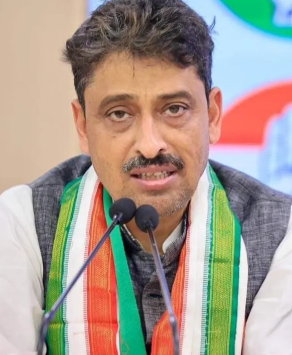
With the Uttar Pradesh Assembly elections scheduled for March or April next year, the Congress and the Samajwadi Party (SP) are facing early friction over alliance dynamics, with leaders from both sides trading barbs and senior Congress MP Imran Masood finding himself at the centre of the controversy after criticising the SP for remaining silent on issues concerning minorities.
Masood, the Lok Sabha MP from Saharanpur in western Uttar Pradesh, has come into the spotlight even before formal seat-sharing talks between the two parties have begun.
Following the Congress’ appointment of Rajendra Pal Gautam as the party’s Uttar Pradesh in-charge, replacing Avinash Pande, and with Ajay Rai continuing as the state Congress president, formal negotiations with the Samajwadi Party are yet to begin. Party leaders are awaiting directions from the central leadership before initiating discussions.
However, Congress sources said seat-sharing talks are expected to commence soon after instructions are issued by Congress president Mallikarjun Kharge and Leader of the Opposition in the Lok Sabha Rahul Gandhi.
A senior party insider said Masood’s recent statements targeting the Samajwadi Party and its chief Akhilesh Yadav were “not in good taste” and could adversely affect alliance prospects in Uttar Pradesh. The Congress and the Samajwadi Party are constituents of the INDIA bloc and have jointly opposed the Narendra Modi-led government at the Centre.
The leader said such remarks would have been understandable had the Congress decided to contest the elections independently.
“However, when the top leadership is inclined towards an alliance with the Samajwadi Party, such statements can hurt the alliance prospects ahead of the elections,” he said.
The Congress leader, who hails from Uttar Pradesh, claimed that during his visit to Delhi last week he had informed Kharge about the controversy surrounding Masood’s remarks.
According to the source, Kharge assured him that the matter would be discussed once Rahul Gandhi returned to India.
The leader further claimed that now that Rahul Gandhi has returned to Delhi after concluding the second edition of his Chhatron Ki Goonj outreach programme in Dehradun, such remarks are expected to stop.
Masood’s comments drew sharp criticism from the Samajwadi Party, whose leaders described the Saharanpur MP as “Team B” of the BJP.
The controversy began after Masood alleged that the Samajwadi Party does not speak on issues concerning Muslims and claimed that the party had won 37 Lok Sabha seats in Uttar Pradesh in 2024 largely because of the Congress.
Responding to the Samajwadi Party’s allegation that he was acting as the BJP’s “Team B”, Masood told Read: “If I show them the mirror, then they say I am speaking the BJP’s language.”
“Why don’t those leaders who call me Team B speak on behalf of the Samajwadi Party?” he asked.
Masood alleged that the Samajwadi Party remains silent when mosques and madrasas are demolished.
“When you became the largest party in Uttar Pradesh by taking our votes, then you must speak,” he asserted.
He maintained that if he did not speak on issues concerning minorities, then who else would.
“If I tell you the reality, then you feel bad. I won on a Congress ticket and I am with the Congress. I am not in the Samajwadi Party. Some of your leaders indulge in mudslinging against me and call me Team B of the BJP, while your own leaders receive greetings and wishes from Amit Shah,” he said.
Asked about the political marginalisation of several Muslim leaders in the Samajwadi Party, Masood said, “The representation of Muslims is being curtailed. Look at the political journey of a leader like Azam Khan.”
He also alleged that Muslim candidates were being denied tickets even in minority-dominated constituencies.
Masood further said the Samajwadi Party could at best make him lose an election or attempt to end his political career for speaking out.
“But at least I will not have to hide my face before God for remaining silent on the issues of minorities,” he said.
Responding to a question on whether his remarks could damage the Congress-SP alliance, Masood said: “I am not goon (dumb). I can speak. When the Samajwadi Party raises questions against me, I will respond.”
“If you call me Team B of the BJP and level allegations against me, then I will respond,” he added.
Asked about the Samajwadi Party’s claim of being the “big brother” in Uttar Pradesh politics, the Congress MP dismissed the description.
“There is nothing like a big brother or a small brother. If we are talking about leadership, look at Rahul Gandhi’s role and how he has been fighting almost alone. Even Mamata Banerjee, who used to speak a lot and claim she would lead the fight, should now look at her party’s condition,” he said.
However, Masood clarified that he would abide by whatever decision the Congress leadership ultimately takes regarding the alliance.
He also clarified that he had never said the Samajwadi Party hated Muslims, but only that it remained silent on issues affecting minorities.
The Congress is hoping to build on the performance of the 2024 Lok Sabha elections in Uttar Pradesh, where its alliance with the Samajwadi Party won 43 of the state’s 80 parliamentary seats.
The party remains optimistic about reaching a seat-sharing arrangement that would give it a respectable number of Assembly constituencies.
During the INDIA bloc meeting on June 8, Akhilesh Yadav had also indirectly criticised the Congress over delays in decision-making and what he described as its insistence on contesting more seats, suggesting that this had contributed to losses in constituencies that could otherwise have been won.
Sources in the Samajwadi Party also said that if the Congress wanted a successful alliance and was serious about winning the Assembly elections, it would need to rein in its leaders and focus on fielding candidates with genuine electoral winnability in the seats it seeks to contest.

Comments are closed.