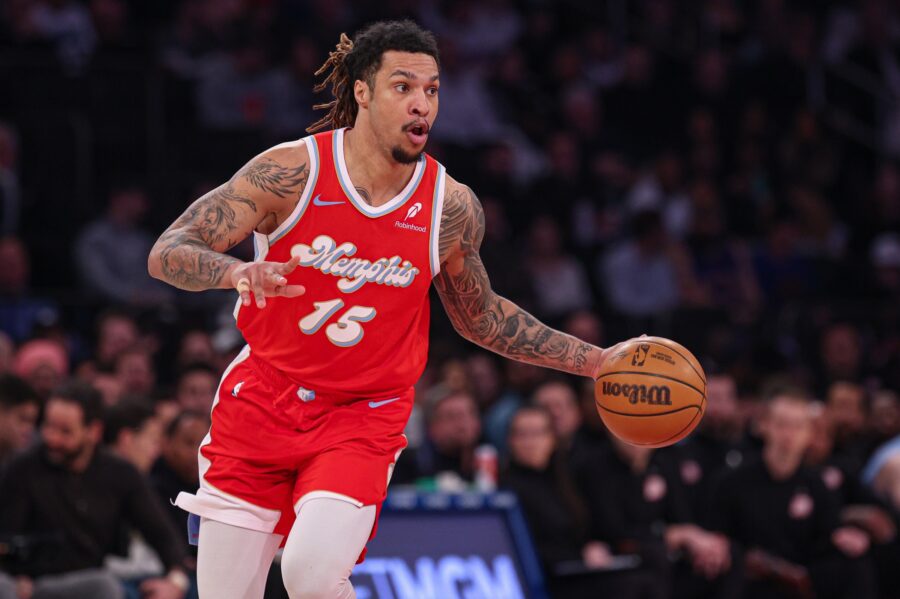
The Los Angeles County medical examiner’s office announced Friday that Grizzlies forward Brandon Clarke died due to an accidental overdose of heroin and cocaine, writes Melody Gutierrez of The Athletic.
The brief report also cited the “combined effects of multiple prescription medications” as a significant factor in Clarke’s death, Gutierrez adds. Those medications weren’t listed Friday, but will be once the full autopsy report is released in the future, according to the medical examiner.
Clarke spent his entire NBA career in Memphis after being selected with the 21st pick in the 2019 draft. He was 29 years old at the time of his passing on May 11.
Clarke was found unresponsive in his bedroom following a 911 call and was pronounced dead by paramedics at 5:15 pm local time, per the examiner’s report. Drug paraphernalia was found at the home and the incident was treated as a possible overdose, which has now been confirmed.
A native of Vancouver, British Columbia, who grew up in Phoenix, Clarke was regarded as a beloved teammate and was active in the Memphis community. The former San Jose State and Gonzaga standout averaged 10.2 points and 5.5 rebounds while shooting 60.5% from the field in 309 career regular season appearances with the Grizzlies, including 55 starts (20.8 minutes per game).
The Canadian-born Clarke was one of the top reserves in the league when healthy but battled significant injury absences in recent seasons. A 6’8″ power forward, he missed a little over one calendar year due to a torn Achilles tendon he sustained in March 2023 and was limited to just two games played in 2025/26 due to knee and calf injuries.
Clarke was arrested in Cross County, Arkansas, in April on charges of trafficking a controlled substance, possession of a controlled substance, fleeing in a vehicle exceeding the speed limit, and improper passing. He was released on bond the following day.
Subsequent reporting indicated that over 230 grams of kratom were allegedly found in his possession after he led local deputies on a “miles-long chase” while driving over 100 miles per hour. Kratom, described by the Mayo Clinic as a herbal extract that can act as a stimulant at lower doses and a sedative for pain relief at higher doses, is legal in Tennessee but is considered a Schedule 1 controlled substance in Arkansas.
According to Gutierrez, the coroner’s report didn’t mention whether kratom was present in Clarke’s body at the time of his death.