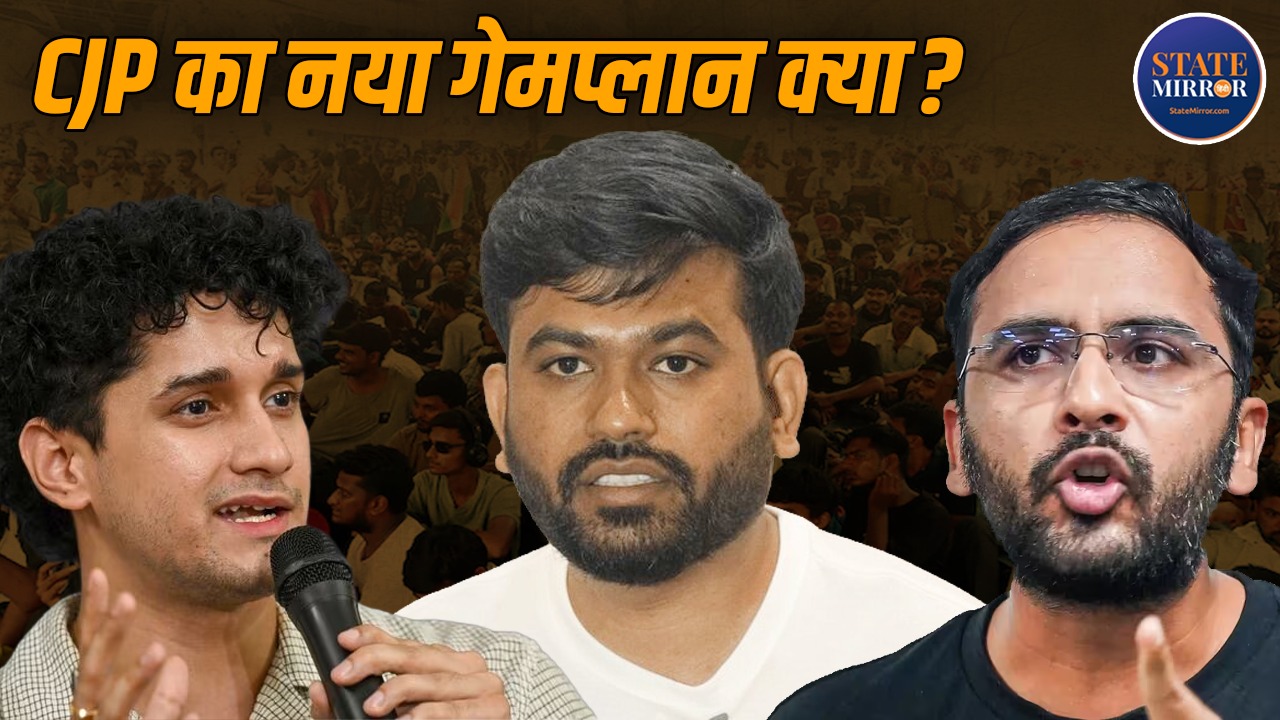
After the conditional release of CJP leaders Abhijit Deepke, Ashutosh Ranka and Saurav Das in Delhi, eyes are on the next strategy of the movement. The three leaders were detained on 10 October. The next day, the court of the Special Executive Magistrate, Delhi Cantt, released him on the condition of maintaining peace and good behavior for one year. For this a surety bond of Rs 50 thousand was filled. Now the question is whether the court's instructions will provide relief to the protesters i.e. Gen Z?
What was the basis for detaining the leaders?
Delhi Police had taken preventive action against the three leaders under sections 126 and 170 of the Indian Civil Security Code (BNSS). Section 126 deals with the process of filing bonds to maintain the peace, while Section 170 gives the power of arrest to prevent serious crime. The police side was that there was a possibility of law and order being disturbed during the proposed demonstration.
CJP leaders were to protest demanding the resignation of Chief Election Commissioner Gyanesh Kumar. The party is raising questions over alleged irregularities in the Special Intensive Revision (SIR) of the voter list. There are differences between the demands of CJP and the Election Commission's stand in this matter. In such a situation, the main question regarding detention is whether the action of detaining those who violated Section 163 before the demonstration was necessary and was the legal process completely followed for this?
What instructions did the court give?
The court gave instructions on issues related to free movement of people, public transport and legal process. The question that was also important before the court was that while dealing with the protests, the movement of common citizens and their rights should not be affected. Steps like barricading and restrictions on movement should be implemented as per need only and not in an arbitrary manner.
However, the court's directions should not be seen as vindication of all CJP's allegations or as permission for unconditional demonstrations everywhere. The actual scope of the order will be determined by its wording and the relevant circumstances. Now it will be the responsibility of the administration to follow the instructions of the court and maintain a balance between maintaining law and order and the rights of the citizens.
Will conditional release increase problems?
The release of the three leaders does not mean that they have been completely barred from political activities or peaceful demonstrations. However, after filing the bond on the condition of maintaining peace and good behavior for one year, it will be important to see how the administration interprets this condition and what action is taken in case of any dispute in future.
The challenge for CJP will be to carry forward its demands and continue the movement within the ambit of law. At the same time, the administration will also have to ensure that preventive action is not used arbitrarily. If any action is challenged, its validity will be decided on the basis of relevant facts, orders and legal provisions.
Will CJP change its strategy?
After the release of the leaders, the next step of CJP will now be under watch. The organization has options like talking to the administration, asking for permission and clarity regarding the arrangements for the demonstration, and carrying forward its legal challenge. It can also take its campaign forward by presenting documents related to alleged irregularities in the voter list and cases of affected voters.
But it is too early to believe that after the release the movement will intensify or CJP will change its strategy. For this, we will have to wait for the official announcement of the organization and further programs. It will be clear in the coming days whether CJP continues to protest on the streets, adopts the legal route or takes both options together.
Will the voter list become the issue of the movement?
CJP's protest is against the resignation of the Chief Election Commissioner and alleged irregularities in the special intensive revision of the voter list. Supporters of the organization allege that the process of removing names may affect the rights of voters. On the other hand, it is important to keep in mind the official side regarding the process of the Election Commission and its justification.
Now the credibility of the movement will depend on how many concrete documents, figures and examples the CJP presents before the Supreme Court in support of its allegations. Evidence related to the cases of affected voters, the process of removal of names and resolution of complaints will make the debate more factual.
Who will be kept the most eye on now?
- First, the announcement of the next program of the movement by CJP.
- Second, the actual situation of barricading and movement of people in Delhi after the instructions of the Supreme Court.
- Third, the reaction of the Election Commission and the government regarding the change in the voter list.
For now, the immediate controversy over detention has subsided with the release of the leaders, but CJP's core demands have not gone away. Now it has to be seen what strategy the organization moves forward with, how the administration implements the court's instructions and whether this entire dispute can be resolved through negotiations and legal process.