

0
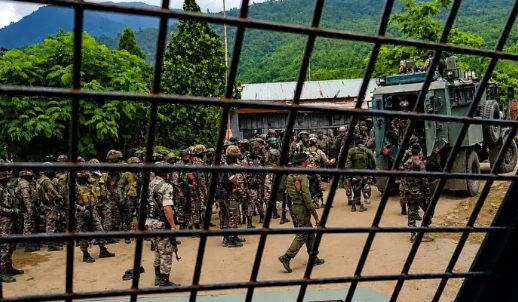
The Central Reserve Police Force (CRPF) has introduced revised Standard Operating Procedures (SOPs) across its units in Manipur following two deadly attacks on Assam Rifles personnel in Manipur and Nagaland.
Under the revised SOPs, personnel must travel only in bulletproof vehicles during operational movements. The use of soft-skinned vehicles is banned unless approved by senior officers. The guidelines also restrict unscheduled movement outside camps and call for closer operational coordination.
Other measures include stronger convoy protection, better route sanitisation, and increased surveillance to detect improvised explosive devices (IEDs) and prevent coordinated ambushes. Security agencies are also reviewing operational protocols across the region to address security gaps.
The revised procedures follow two major attacks on Assam Rifles personnel. On July 6, suspected militants ambushed a convoy of the 40th Battalion Assam Rifles near Nungshang Khong (also spelt Noungshong Kong) on NH-202 in Manipur’s Ukhrul district. The attackers opened fire and reportedly used IEDs near a bridge. Warrant Officer Balwant Singh and Havildar/Rifleman Chandra Mohan Singh were killed on the spot, while several others were injured. Security forces immediately launched search and area domination operations and later recovered unexploded devices.
A week later, on July 13, a suspected IED, believed to have been remotely controlled and concealed inside a parked autorickshaw, struck an Assam Rifles vehicle near Sukhovi (also spelt Shokhuvi) in Nagaland’s Chümoukedima district. Havildar Mohd Iqbal was killed and four to five others, including security personnel and at least one civilian, were injured. The blast also damaged nearby buildings and vehicles. Assam Rifles, local police and the district administration launched joint operations after the incident.
No group has claimed responsibility for either attack. However, the NSCN-IM denied involvement in the Manipur ambush. Security officials said the incidents reflect a broader pattern of militant activity that exploits ethnic divisions, porous international borders and weapons left over from earlier violence.
Manipur has remained affected by ethnic violence since May 2023, when clashes first broke out between the Meitei and Kuki-Zo communities. The violence has resulted in more than 260 deaths, thousands of injuries and the displacement of around 60,000 people. The conflict has since expanded, with fresh tensions between Naga and Kuki groups reported in areas such as Ukhrul and Kangpokpi.
The underlying issues include disputes over land, political representation, reservations, and control of drug trafficking, timber and other illegal trade routes linked to Myanmar. The insurgency situation in the region remains complex. Groups such as the NSCN-IM continue to maintain influence despite ceasefire agreements, using cross-border sanctuaries in Myanmar and networks for arms and funding. Other outfits, including remnants of ULFA (I) and valley-based insurgent groups, have added to the security challenge. The porous India-Myanmar border continues to facilitate movement, although border fencing work is underway.
The CRPF has also expanded its deployment in the state. Elite CoBRA (Commando Battalion for Resolute Action) units, known for anti-Naxal operations, are now playing a key role in jungle warfare, bunker destruction, arms recovery and area domination. Two additional CoBRA battalions have been deployed along with more than 200 CRPF companies to secure buffer zones between the hills and valleys.
CRPF Director General G.P. Singh has visited Manipur several times, stressing the need to neutralise armed miscreants and implement a long-term strategy to reduce insurgency.
Manipur Home Minister Konthoujam Govindas Singh and other senior officials have also reviewed the security situation with CRPF leadership, highlighting the importance of coordination with the Assam Rifles and the state police. Ongoing operations include destroying fortified bunkers, setting up mobile checkposts and providing convoy escorts.
The Centre has also pushed for the surrender of looted weapons, with more than 6,000 arms reportedly still missing, and stricter enforcement of Suspension of Operations (SoO) agreements.
The latest security measures are part of a wider strategic shift by the Ministry of Home Affairs. With Left-Wing Extremism (Naxalism) largely brought under control, the Centre is redirecting resources to the Northeast with the goal of largely ending active insurgency by 2029.

Comments are closed.