
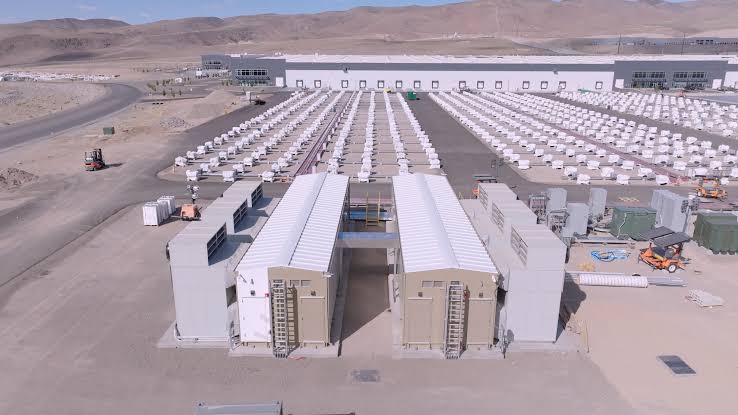

Data centres are emerging as the “new oil fields” in the sense that they now hold the key to economic power, energy consumption and national policy in ways very similar to oil fields in the last century. These centers convert electrical power and data into artificial intelligence, cloud computing services and digital products.
For most of the twentieth century, oil fields served as the source of power for factories, transport and military strength. Control over oil reserves translated into power over international business, industries and politics.
The parallel with data centres today is emerging in the following manner:
Oil served as the main fuel for the industrial era while data serves as the main fuel for the digital era.
Oil fields served as the beginning of the energy chain while data centers are at the center of the compute chain, which powers AI, cloud computing and internet-based applications.
In the phrase “Data centres are the new oil fields”, we see an analogy drawn between these two eras of economic development.
Data is the new raw material
Oil in the ground had little use until it passed through wells, pipelines and refineries. In the same way, raw data is not useful on its own.
Data centres play the role that refineries played for oil: They store data from apps, websites, sensors, banks, governments and companies.
They process it using servers, GPUs and specialised chips to train models, run search, handle payments and deliver content.
This is where the “data is the new oil” line comes from, and data centres are the places where that “oil” gets refined. The result is AI systems, cloud platforms and digital tools that now underpin almost every sector.
Energy hunger on the scale of heavy industry
Oil fields changed physical landscapes. They needed large power lines, pipelines and export terminals. Data centres are doing something similar, but for electricity and networks.
How much power data centres use
Data centres and data networks already consume around 1–2% of global electricity, and that share is set to rise as AI workloads grow.
AI‑focused sites can draw hundreds of megawatts, which is comparable to a small city or a large industrial plant.
In 2025, global spending on new data centre capacity is expected to reach about 580 billion dollars, exceeding global investment in finding new oil supplies by roughly 40 billion dollars. That number tells its own story: the world is investing more in compute infrastructure than in new oil exploration.
Grids reshaped by AI demand
Utilities and grid operators now plan around data centres in the way they once planned around steel mills or refineries:
Connection queues for large new sites in regions like Northern Virginia, Dublin and parts of Europe can stretch from several years up to nearly a decade because the grid must be upgraded first.
US utilities are preparing over a trillion dollars in grid investment over the next decade to cope with rising AI and data centre demand.
Data centres no longer look like neutral “IT buildings”. They are now one of the main drivers of how and where future power infrastructure is built.
Strategic infrastructure and “sovereign compute”
Oil did not matter only for money. It was a strategic resource. Governments built strategic oil reserves, protected shipping routes and formed alliances around energy.
Data centres are starting to occupy a similar space.
National strategies around compute
Governments treat large cloud and AI facilities as critical national infrastructure because they host defence systems, payment rails, health records and core public services.
Countries talk about “sovereign compute”: making sure that sensitive workloads run on domestic data centres, under local law, with secure access to power and chips.
Nations that host major data centre clusters gain leverage. They are better placed to develop and deploy advanced AI, analyse economic data, and support modern military and cyber capabilities.
New centres of gravity
The pattern is clear:
Roughly four‑fifths of global data centre capacity is concentrated in the US, China and Europe.
Oil and gas regions in the US are becoming hotspots for new data centre projects because they already have strong grids and energy infrastructure.
Like oil hubs in the past, these data centre regions become new centres of gravity for investment, jobs and political attention.
Economic power: AI factories instead of oil wells
Oil fields once defined which nations could industrialise quickly. Today, AI data centres help define which nations and firms can scale digital services and automation.
Engines of the AI economy
Modern hyperscale sites act as “AI factories”:
They host large language models and other AI systems that support search, translation, recommendation, fraud detection and code generation.
They run cloud platforms that small firms use for storage, analytics and software delivery, cutting the need for their own hardware.
Analysts expect AI to add trillions of dollars to global GDP over the next decade, with much of that value depending on the availability of compute and storage. Data centres are the hardware backbone that makes this growth possible.
Investment and financing
It took deep pockets to drill oil fields and build refineries. The same is now true for large data centres:
Hyperscale and AI sites cost from hundreds of millions to several billions of dollars once land, buildings, power links, chips and cooling are included.
Investors such as sovereign wealth funds, infrastructure funds and utilities are backing data centre projects in the same way they once backed pipelines and power plants.
For many large projects, the web of finance, construction, energy and regulation now looks closer to classic energy infrastructure than to a simple “IT spend”.
Environmental costs and local concerns
The phrase “new oil fields” also hints at risk. Oil fields brought pollution, carbon emissions and community impact. Data centres bring their own set of issues.
Electricity, water and emissions
High power demand raises questions over emissions if the grid still relies on fossil fuels. AI data centres in particular can drive sharp local increases in electricity use.
Many sites need large volumes of water for cooling in certain climates, which can create tension in regions facing drought or tight water supplies.
Critics worry that a rapid build‑out could lock in high energy use before grids fully decarbonise.
Efforts to cut the footprint
Operators are under pressure, and many respond in three main ways:
Improving energy efficiency using better designs, modern cooling and tight control of “power usage effectiveness” (PUE).
Signing long‑term contracts for wind, solar and other renewables to match consumption with clean supply.
Exploring reuse of waste heat for nearby housing or industry, turning a by‑product into a resource.
These moves do not remove all impact, but they help distinguish data centres from classic oil fields, which had fewer ways to connect with a net‑zero pathway.
Data centres as new energy hubs
In the past, heavy industry was seen mainly as a problem for the grid. Data centres start in that position, but they can also help.
Flexible loads
Most data centre tasks do not need to run at one fixed time:
Some workloads can be shifted to match periods of high renewable output, such as windy nights or sunny midday hours.
Operators can use on‑site batteries and backup systems to support the grid during brief peaks or outages.
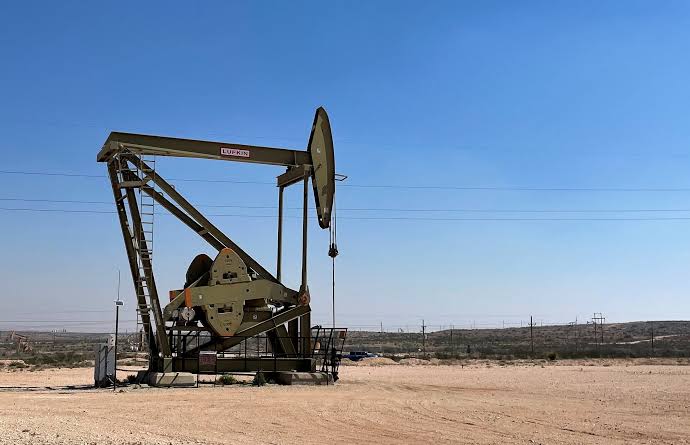
In effect, data centres can act as flexible consumers rather than rigid drains, which makes them useful partners for grids with large shares of wind and solar.
Integrated energy systems
Research points to the potential for “integrated energy systems”, where data centres connect more closely with local grids and heat networks:
They help absorb surplus renewable power that might otherwise be curtailed.
They feed district heating systems with waste heat.
Compared with oil, which mostly flowed in one direction from wells to refineries to customers, data centres offer more options to sit inside a broader energy transition.
Risks and vulnerabilities in the new system
Oil markets feared sudden shocks: wars, embargoes, pipeline damage. A world that relies on compute faces its own set of risks.
New kinds of disruption
Chip shortages or export controls can delay new AI data centres or limit upgrades, just as supply shocks once hit the oil sector.
Grid constraints, transformer shortages and long permitting times can slow projects and strand demand in queues.
Cyberattacks, cooling failures or extreme weather can knock out cloud regions, causing widespread service outages.
These issues make resilience planning for data centres as important as it has long been for energy infrastructure.
Concentration risk
As with oil, capacity is not spread evenly:
Large data centre clusters sit in a handful of regions with strong grids, good fibre links and friendly regulation.
Heavy reliance on foreign data centres can leave countries exposed, much like heavy reliance on imported oil did in the 1970s.
This adds another layer to debates about digital sovereignty, national security and global competition.
Why this analogy matters now
Describing data centres as the new oil fields is not just a catchy line. It signals a real shift in how economies work.
The analogy highlights three important points:
- Power: Where data centres are built, and who owns them, shapes who can deploy advanced AI and digital services at scale.
- Pressure on energy systems: Their growth pushes grids, regulators and planners to adapt, much as oil once did.
- Responsibility: Their impact on climate, water and communities demands careful management, just as oil projects did in earlier decades.
Oil remains vital. Planes, ships and heavy industry still depend on it. But alongside those wells and pipelines, quiet buildings full of servers are becoming just as important to global power and prosperity.
For governments, regulators and companies, the key question is no longer only “Where is the oil?” It is also “Where is the compute, who controls it, and how is it powered?”

Comments are closed.