
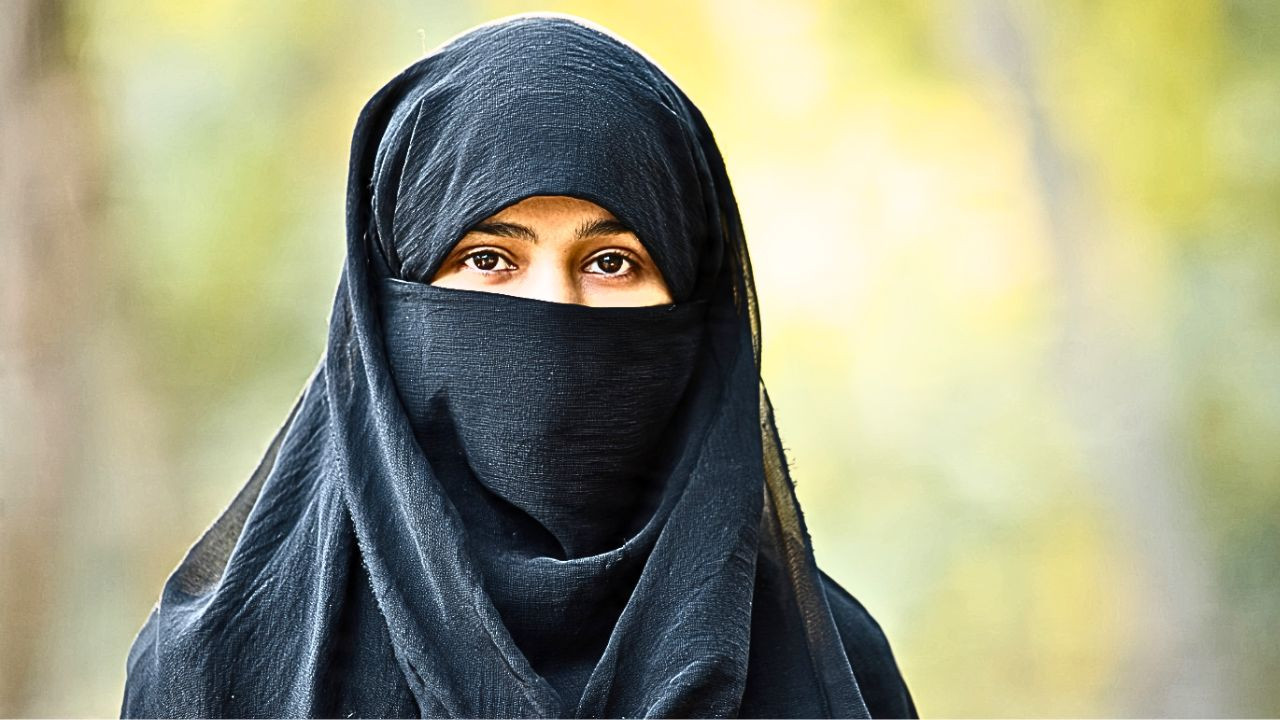
Emergence of Indian Muslim women due to efforts of Central Government: Changing picture through tradition, education and leadership

New Delhi: The role of Muslim women in India has long been viewed from a limited and one-sided perspective, with them often portrayed as silent and victims. However, in the changing social scenario this perception is fast breaking down. Today, Indian Muslim women are emerging as strong carriers of positive change in the society by striking a balance between faith, tradition and modernity.
There has been a strong contribution in history also
History is witness to the fact that Muslim women have made significant contributions to leadership and social reform in every era. Personalities like Shahjahan Begum set an example of administrative efficiency and social development even at a time when women’s public participation was limited. By prioritizing education and infrastructure development, he proved that Islamic identity and progressive leadership can go hand in hand.
Getting new encouragement from government schemes
Let us tell you that at present the schemes being run by the Central and State Governments are giving new impetus to this empowerment. Initiatives like the new Roshni scheme focus on developing leadership capabilities among Muslim women, where they are given training on digital literacy, legal rights and healthcare. At the same time, through Begum Hazrat Mahal National Scholarship, economically weaker girl students are being helped to continue their education, due to which the dropout rate is reducing.
Along with this, schemes like Sikho aur Kamao Yojana are making women financially self-reliant by providing them vocational training. Reserved seats for women in these schemes ensure that they not only acquire skills but also contribute to the economic development of their families and society.
Breaking walls in education and leadership
Muslim women are also setting new examples in the fields of education and leadership. Dr. Naima Khatoon becoming the first woman Vice Chancellor of Aligarh Muslim University is a historic achievement, breaking long standing barriers. Similarly, personalities like Dr. Saeeda Hameed and Bilquis Latif have made significant contributions towards the rights and empowerment of Muslim women through policy-making and social work.
religion is becoming a strength
In fact, an important change is also being seen in this era that Muslim women are now giving new interpretations of religious teachings. They are becoming aware of their rights on issues like marriage, education and inheritance, considering Islam not as a hindrance but as a means of equality and justice. From this perspective, religion is not becoming a hindrance for them but is becoming a basis of empowerment.
Growing presence in every field including media, sports and art
It is noteworthy that with increasing participation in media, arts, sports and social fields, Muslim women are challenging traditional notions. Their presence is not only increasing their acceptance in the society but is also becoming a source of inspiration for the coming generations.
Taken as a whole, the rise of Indian Muslim women is not just a story of individual success, but is part of a broader process of social change. With education, government support and confidence, they are moving towards a future where equal opportunity, dignity and participation will be their right and will be the true identity of India’s inclusive development.

Comments are closed.