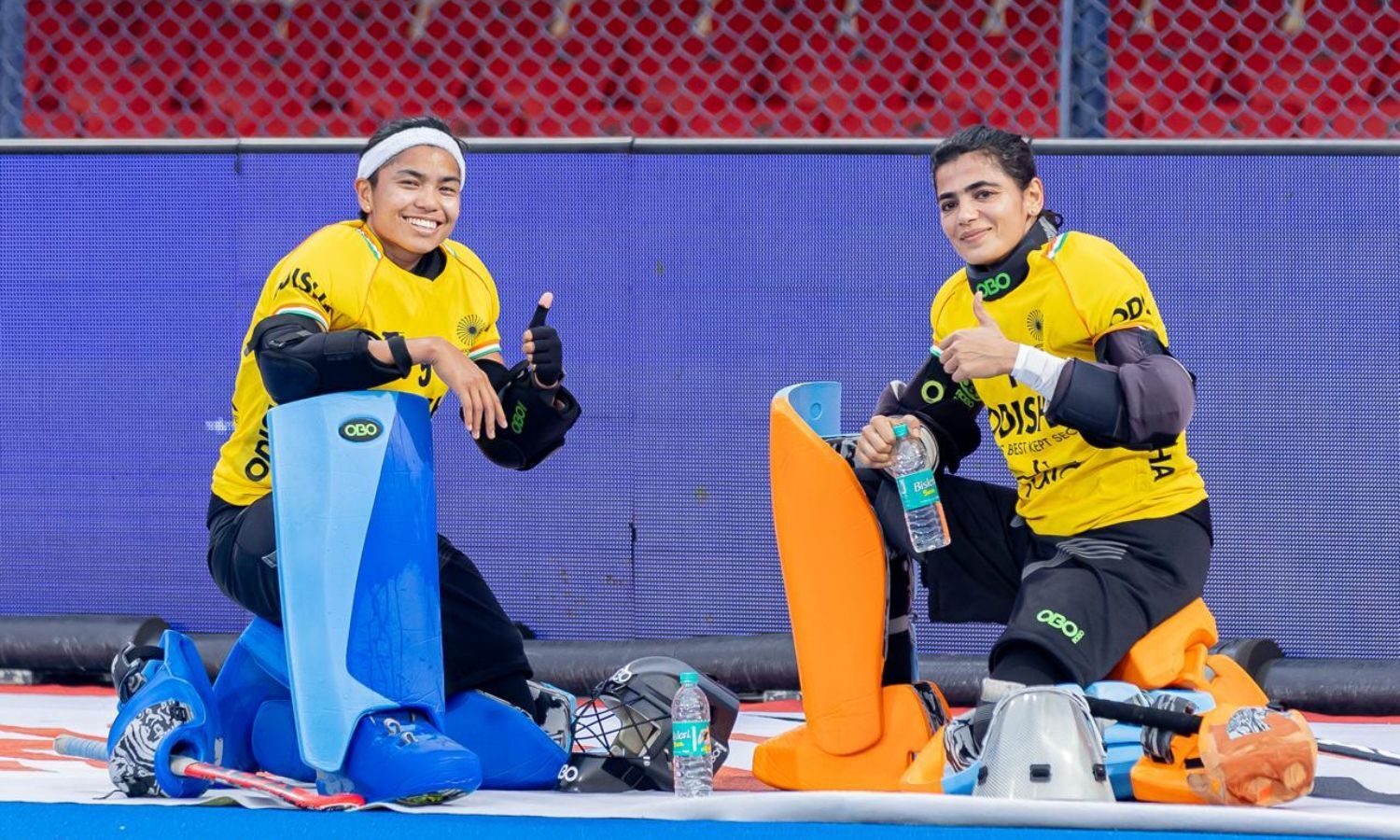
Legendary Dutch goalkeeper Pirmin Blaak is impressed by the camaraderie between veteran Savita Punia and Bichu Devi, saying their willingness to help each other instead of rivalry could ensure a smooth transition in Indian women’s goalkeeping, in contrast to the “huge gap” he sees in the men’s team following the retirement of PR Sreejesh.
Blaak, 38, who was a part of the Netherlands’ Paris Olympic gold-medal winning team, feels India’s young men’s goalkeepers have so far lacked the quality and presence needed to take the team to the next level.
“I watched the men’s team also and there is a huge gap after the legendary PR Sreejesh retired. The big-status goalkeeper. Young goalkeepers have come but they lacked the quality to push India to the next level,” Blaak said.
Blaak said replacing Sreejesh was not simply about finding a goalkeeper with the required technical skills.
“Sreejesh has a big legacy. I feel some similarity with him. We had something with our body language like we are there. He was really outspoken. A goalkeeper should make a difference and it seems to be missing,” he added.
Blaak had a short stint with the Indian women’s team to help Savita and Bichoo prepare for the World Cup and was struck by the relationship between the two goalkeepers.
“I love the way they help each other. It was not there during my career and I can also learn as a trainer with them. They are really nice, friendly people and that’s what I like the most,” Blaak said.
“It is very rare that two players are not competing but rather they are helping each other. I asked them, ‘Are you serious, you are not competing with each other?’,” he said.
Both the goalkeepers were instrumental in India’s reasonably good World Cup show where they finished fifth, their best performance in 52 years.
Blaak feels Savita, who has been India’s first-choice goalkeeper for more than a decade, is herself playing an important role in preparing her successor.
“What Savita was setting up for the last decade is incredible. It is nice that she herself is preparing Bichu to come through.
“It will be really nice if they can play together for some time, where Savita opens up and says that I am going to retire soon and I am giving that last push to Bichu to help her. It is nice to have an experienced goalkeeper besides a younger one,” said the former keeper who has played over 150 matches for Netherlands.
Blaak said his own role was not to make drastic technical changes to the two goalkeepers, given the limited time available before the World Cup.
“I haven’t changed anything tactically. I just discussed where we want to grow and what my vision is. I keep them the way they are. They are brilliant and unique in their style of play,” he said.
Instead, he focused on the mental side of goalkeeping and the pressure that comes with representing India at a major tournament.
“Savita and I also talk about the pressure to perform on Team India. I understand that. I have been in those moments and Savita has also experienced that.
“In two weeks’ time we cannot change anything, but I talked to them about these aspects. I think mental side is one of the most important things in goalkeeping,” he said.
Blaak said his stint with the Indian team was based on a two-way understanding of what the goalkeepers needed rather than imposing his own methods.
“When Sjoerd asked me about the stint, I also spoke to Taekama and Savita. They asked me what I can give and I asked them what do you want, and it’s the combination where you push to the best, high performance area.”
The Dutch goalkeeper also pointed out that even the Netherlands, despite being one of the dominant forces in world hockey, have their own challenges.
“The Netherlands also could not win a World Cup for 24 years now. We have won a Pro League but we see the Pro League leg as an internal stage. You need to play the semifinals and finals of the World Cup and Olympics. That’s where we have to be always and our coaches think about every aspect – technical, mental and behavioural part.”
Blaak believes major tournaments require a different level of preparation, with mental strength and smart decision-making often proving decisive.
“For a World Cup, smartness and mental preparation are very important,” he said when asked about why Indian men’s team could not emulate Olympic success in WC.
His advice to India’s young goalkeepers, Mohith HS and Suraj Karkera is, to make use of the experience available around them and develop a clear plan.
“You have great coaching staff, legends like Sreejesh, so just come together and plan what you really need. You need to chart out a strategy and follow that,” he said.
(Except for the headline, this story has not been edited by Read Desk. It is published from a syndicated feed.)