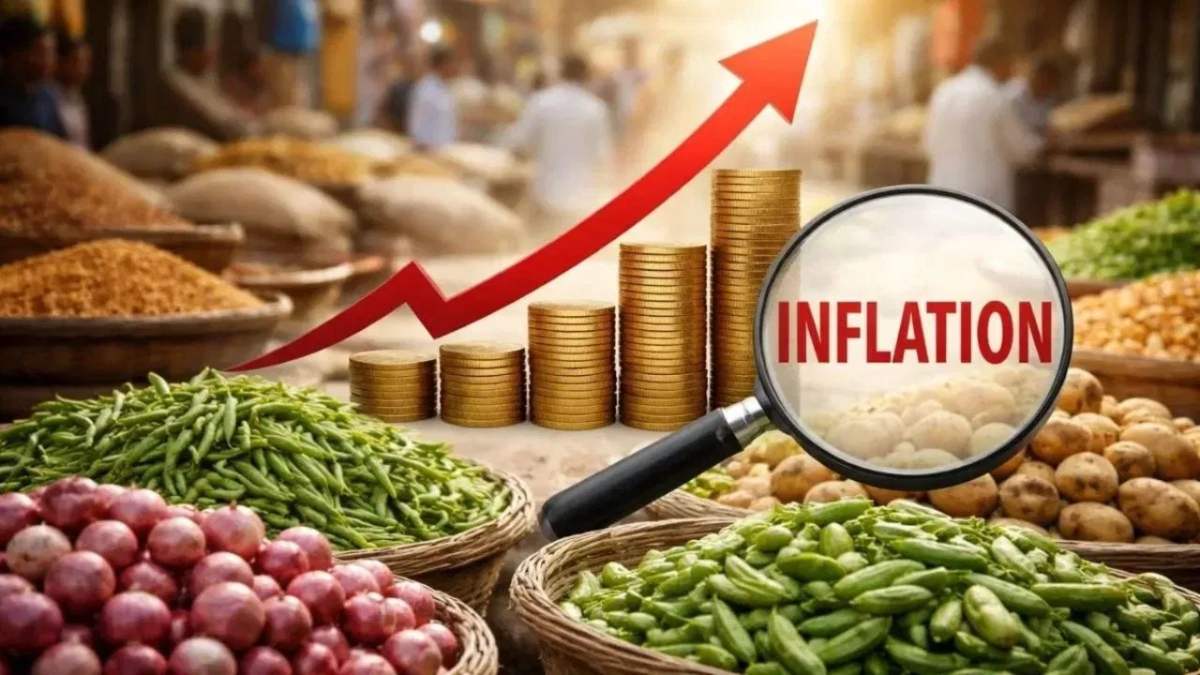
Business Desk – Food Inflation 2027: In the year 2027, prices of food items may increase across the world including India. Multinational financial services firm JP Morgan has estimated that global food prices may increase by about 5% in the first half of 2027, compared to 2.8% in the first half of 2026.
According to the report, weak monsoon, increase in oil prices due to tension between Iran and America and expensive fertilizers can increase the cost of farming. This may affect crop production and food prices. This concern is a bigger concern for India, because agriculture is an important part of the economy. According to the report, increasing fertilizer subsidy may cost the government more than Rs 3 lakh crore.
Iran crisis threatens supply of fertilizer and gas
According to the report of JP Morgan, increasing tension in the Middle East may affect the supply of fertilizers worldwide. About 42% of the world's urea and 27% of ammonia comes from the Middle East i.e. Arab countries. Ammonia is the main chemical used in making fertilizer.
If supplies from the region are disrupted due to war or tension, there could be a worldwide shortage of fertilizer. In case of less supply, there will be pressure to increase the prices of fertilizers.
Expensive gas will increase the cost of fertilizer
Natural gas is used extensively in making fertilizers like urea. In such a situation, if gas prices increase, the production of fertilizer will also become expensive.
Expensive fertilizer will have a direct impact on the costs of farmers. If farmers reduce the use of expensive fertilizers, it may affect crop production. In case of less production, prices of food items may increase further.
It may take a long time for fertilizer factories to restart
The report also states that if fertilizer factories or gas plants are closed or their supply is affected due to the crisis, it may take 1 to 5 years for them to restart at full capacity.
Due to this, there may be pressure on the supply of fertilizers for a long time and this may have an impact on the cost of farming and food prices.
45 kg bag of urea in India costs Rs 266.50
India is among the major countries purchasing urea in the world. The price of 45 kg urea bag in the country is Rs 266.50. The government compensates the difference between its actual cost and selling price through subsidy to provide urea to the farmers at a lower price.
The report says that the government bears the cost of this huge difference, which is called fertilizer subsidy. According to officials, the government's fertilizer subsidy expenditure this year may exceed Rs 3 lakh crore.
If the Middle East crisis continues, government spending will increase.
If the Middle East crisis continues for a long time, there could be further pressure on fertilizer prices and government subsidies. In such a situation, the government may face challenges like giving more subsidy to keep fertilizers cheap or asking farmers to reduce the use of fertilizers. If the use of fertilizer is reduced, there will be a risk of crop yield being affected.
81% chance of Super El Nino by end of 2026
Along with the supply of fertilizers, weather can also become a big challenge for farming in 2027. JPMorgan has estimated that there is an 81% chance of a Super El Niño occurring by the end of 2026. Its effect may continue till 2027.
In case of El Nino, hot and adverse weather can affect farming. There is a danger of crop yield being affected due to this.
Crop yield estimated to decrease by 3.5%
According to the report, crop yields may decrease by an average of 3.5% due to bad weather during El Nino. If production decreases and prices of fertilizers, gas and oil increase, there could be double pressure on farming costs and food prices. Its impact can be seen more in agriculture based markets like India.
Food inflation may increase further by 1.5%
According to JP Morgan's estimates, due to bad weather and El Nino, food inflation may increase by about 1.5% worldwide. This increase, coupled with already expensive fertilizer, energy and transportation costs, can have a direct impact on the household budget of common people.
The report broadly estimates that amid all these risks, global food prices could rise by 5% in the first half of 2027, which would be much higher than the level of 2.8% in the first half of 2026.