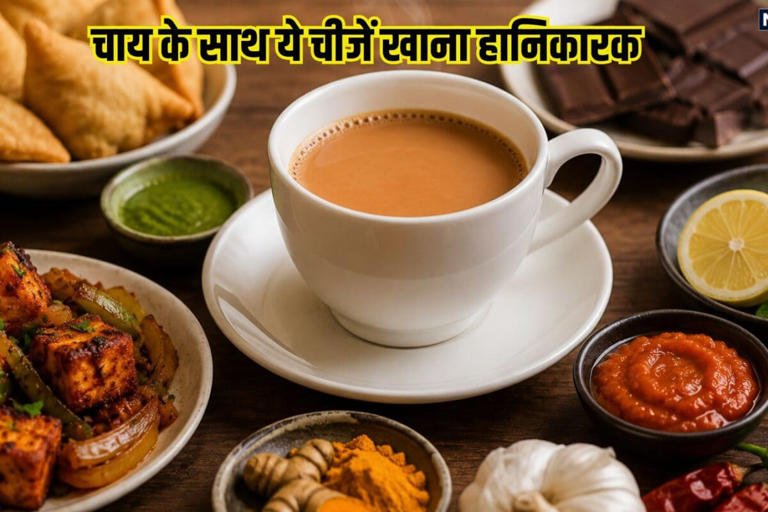
In India, tea is not just a beverage but an integral part of the daily routine and culture of millions of people. Be it Lucknow, Delhi, Kanpur, Patna, Jaipur or Kolkata, a cup of hot tea is synonymous with freshness and energy from the beginning of the morning till the end of the evening. But most of the people while sipping tea do not pay any attention to what they are eating with it.
Often, salty, fried pakodas, boiled eggs or sour things are served with tea in homes, offices and street corners. Both Ayurveda and modern medical science clearly believe that the nature and chemical properties of some food items do not exactly match with the elements present in tea (such as tannins and caffeine). Due to wrong food combination, instead of being digested, the food starts rotting in the stomach, which gradually causes serious damage to the digestive system by producing toxins in the intestines.
The combination of hot pakodas made with tea and gram flour is the first choice of almost every Indian household, especially during the rainy or cold season. But according to health experts, this is one of the most unhealthy combinations.
Gram flour is heavy by nature and the intestines require additional digestive juices to digest it. On the other hand, caffeine and tannins present in tea slow down the activity of digestive enzymes. When gram flour pakodas or namkeens deep fried in oil are eaten with hot tea, excessive hydrochloric acid is secreted in the stomach. As a result, problems like severe heartburn, sour belching, severe acid reflux and bloating begin immediately. Maintaining this habit for a long time increases the risk of gastritis and peptic ulcer manifold.
If you are having spinach cheela, salad, sprouts or any iron-rich food for breakfast, do not drink tea with it or immediately after.
A large amount of 'Tannins' and 'Oxalates' are found in tea leaves. Both of these compounds combine with the iron present in food (especially non-heme iron) to form an insoluble chemical bond (chelation). Its direct disadvantage is that your small intestine is unable to absorb the necessary iron from food and it passes out of the body without being digested. In people who regularly eat nutritious food with tea, hemoglobin level gradually starts falling, due to which they become victims of chronic anemia (blood deficiency), constant fatigue and weakness.
Turmeric used in kitchen is a mine of medicinal properties, but its contact with tea has completely opposite effect. Turmeric contains an active element called 'Curcumin', which is alkaline and hot in nature, whereas tea is acidic in nature.
When you eat too many turmeric snacks, salty or spicy mathri along with tea, it creates an imbalance of acid and alkali within the stomach. This chemical collision directly disrupts the digestive process, causing heaviness in the stomach, gas, constipation and imbalance of Pitta dosha. For people who often suffer from intestinal bloating or stomach cramps, this combination makes the condition worse.
Eating or drinking ice cream, cold water or anything from the fridge with tea or immediately after drinking tea is considered 'counter food' in Ayurveda. The nature of tea is hot, which stimulates the digestive fire (Jatharagni) of the body. As soon as any cold object enters the stomach, the digestive fire suddenly calms down. This sudden change in temperature causes the intestinal muscles to contract, which can cause stomach pain, cramps and nausea.
Similarly, citrus fruits like lemon or orange should never be consumed with milk tea. As soon as citric acid is added to milk tea, the milk bursts in the stomach, causing intense acidity and heavy gas in the stomach. If you are drinking lemon tea, do not add even a drop of milk to it.
The trend of drinking strong tea with milk along with boiled eggs or omelette for breakfast is widely seen among youth and fitness enthusiasts. But according to medical science, eggs contain high quality protein which takes a long time to digest. The tannins present in tea harden the egg protein molecules. Due to this, the intestines have to work hard to break down this protein, due to which the digestive system becomes very sluggish. Due to this, complaints like heavy gas in the stomach, constipation and hardening of the stomach become common.
If you are fond of tea and want to protect your health, follow these basic rules:
-
Do not drink tea on an empty stomach: Drink lukewarm water first thing in the morning. Drinking tea on an empty stomach increases bile.
-
Difference between food and tea: Consume tea at least 45 minutes to 1 hour after the main meal (lunch or dinner), so that the body can completely absorb the nutrients of the food.
-
Selection of light snacks: Instead of fried pakodas with tea, take roasted makhana, plain roasted gram or light fiber biscuits in limited quantity.
-
Only 2 cups a day: Avoid drinking more than 2 to 3 cups of tea in a day, so that the amount of caffeine in the body is controlled and there is no problem of insomnia or dehydration.