
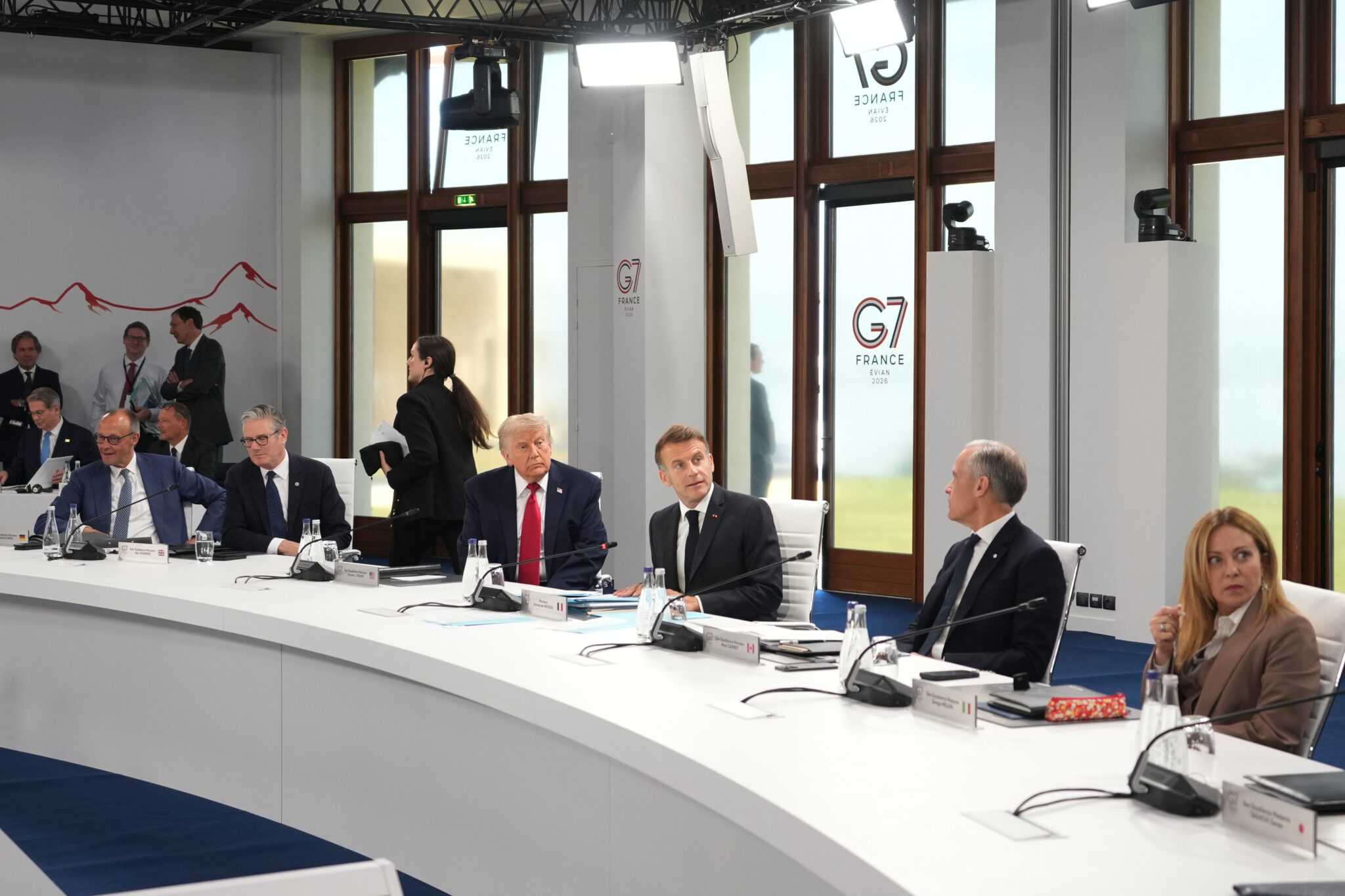

G7 Leaders Back Trump’s Iran Deal Amid Questions at Home/ TezzBuzz/ WASHINGTON/ J. Mansour/ Morning Edition/ G7 leaders endorsed President Trump’s proposed agreement with Iran aimed at ending the conflict and reopening the Strait of Hormuz. The deal faces skepticism in Washington due to limited public details and unresolved nuclear questions. Global leaders pledged support for Ukraine, sanctions on Russia, and efforts against trafficking and smuggling.

- G7 leaders called the agreement a “historic opportunity.”
- The deal aims to reopen the Strait of Hormuz.
- Iran would be allowed to resume oil exports.
- A formal signing ceremony is scheduled in Switzerland.
- Nuclear negotiations are expected to continue for 60 days.
- Sanctions relief remains tied to future agreements.
- Lebanon remains a key sticking point.
- France and the U.K. may lead maritime security operations.
- G7 nations pledged additional support for Ukraine.
- Congress and some Republicans remain skeptical.

G7 Leaders Rally Behind Trump’s Iran Initiative
Leaders of the Group of Seven industrial democracies threw their support behind President Donald Trump’s tentative agreement with Iran on Wednesday, framing it as a major opportunity to reduce tensions in the Middle East and prevent Tehran from acquiring nuclear weapons.
The endorsement came during the G7 summit in Évian-les-Bains, France, where leaders issued a declaration praising the agreement as a “historic opportunity” despite the fact that the full text has not yet been officially released by either Washington or Tehran.
The emerging accord seeks to end months of conflict, reopen the strategically vital Strait of Hormuz, and establish a framework for future negotiations over Iran’s nuclear program.
Yet while international leaders welcomed the initiative, the agreement continues to face growing scrutiny in the United States, where lawmakers from both parties have demanded greater transparency.
A Deal Still Shrouded in Mystery
One of the biggest challenges confronting the administration is that few outside negotiators have seen the final text.
President Trump himself acknowledged as much during meetings at the summit.
“Nobody knows what it is but it’s very strong,” Trump told reporters while meeting with Egyptian President Abdel-Fattah el-Sissi.
He emphasized that the agreement remains a memorandum of understanding rather than a final treaty and suggested that military action could resume if negotiations ultimately fail.
The administration has indicated that a formal signing ceremony is expected in Switzerland on Friday, after which additional details may become public.
Leaked versions of the document suggest that Iran would reopen maritime traffic through the Strait of Hormuz while receiving relief from sanctions and expanded economic opportunities if future negotiations succeed.
Why the Strait of Hormuz Matters
At the center of the agreement is the Strait of Hormuz, one of the world’s most important energy chokepoints.
Before the conflict erupted in February, roughly one-fifth of globally traded oil and natural gas passed through the narrow waterway connecting the Persian Gulf to international markets.
Disruptions in the strait have contributed to sharp increases in global energy prices and inflation pressures worldwide.
Under the proposed arrangement, Iran would begin reopening the passage and allow maritime traffic to return toward pre-war levels.
The G7 leaders also endorsed an international maritime mission led by France and the United Kingdom to protect merchant vessels and ensure safe passage.
Such efforts could play a crucial role in stabilizing global energy markets and restoring confidence among shipping companies.
Nuclear Questions Remain Unresolved
Despite broad support for the agreement’s goals, many of its most sensitive issues remain unresolved.
Leaked drafts indicate that Iran reiterates it will not produce nuclear weapons, but specific mechanisms for verification and enforcement have not been publicly disclosed.
Future negotiations are expected to address:
- The status of Iran’s enriched uranium stockpiles
- Inspection and verification procedures
- Long-term sanctions relief
- The scope of Iran’s civilian nuclear program
The agreement reportedly establishes a 60-day negotiation window for these discussions.
Many lawmakers in Washington argue that any lasting arrangement must include robust oversight to prevent Iran from advancing toward nuclear capability.
Lebanon Emerges as a Delicate Issue
Another challenging element involves Lebanon and the conflict between Israel and Hezbollah.
The proposed framework calls for an immediate end to fighting in Lebanonwhere months of conflict have caused widespread destruction and displacement.
Iran has argued that Israeli withdrawal from Lebanese territory should be part of any settlement. However, leaked versions of the agreement reportedly do not explicitly require such a withdrawal.
President Trump expressed frustration over the prolonged fighting.
“Israel’s fighting Hezbollah too long, and too many people are being killed,” he said during summit discussions.
G7 leaders reaffirmed support for Lebanese sovereignty while encouraging efforts to disarm Hezbollah through diplomatic means.
Ukraine and Global Security Also Dominate Summit
The Iran agreement was only one component of the broader G7 agenda.
Leaders also pledged continued support for Ukraine in its defense against Russia’s invasionpromising additional air-defense systems and stronger sanctions targeting Russian energy exports.
The summit additionally addressed concerns over international drug trafficking and migrant smuggling.
In joint declarations, G7 nations committed to increasing cooperation against transnational criminal networks while reaffirming the rights of sovereign nations to secure their borders.
Discussions also focused on artificial intelligence, global trade and concerns that state subsidies in some countries are distorting international markets.
Political Challenges Await at Home
Even with strong backing from U.S. allies, Trump’s Iran initiative faces an uncertain path domestically.
Some Republicans have questioned whether the agreement goes far enough to permanently restrict Iran’s nuclear ambitions, while Democrats have demanded congressional review and transparency.
The administration must now balance international enthusiasm with domestic skepticism as negotiators work toward a final agreement.
If successful, the accord could reshape Middle East diplomacy and global energy markets.
If negotiations falter, however, the region could quickly return to instability.
For now, world leaders appear willing to give diplomacy a chance.
More on US News
Comments are closed.