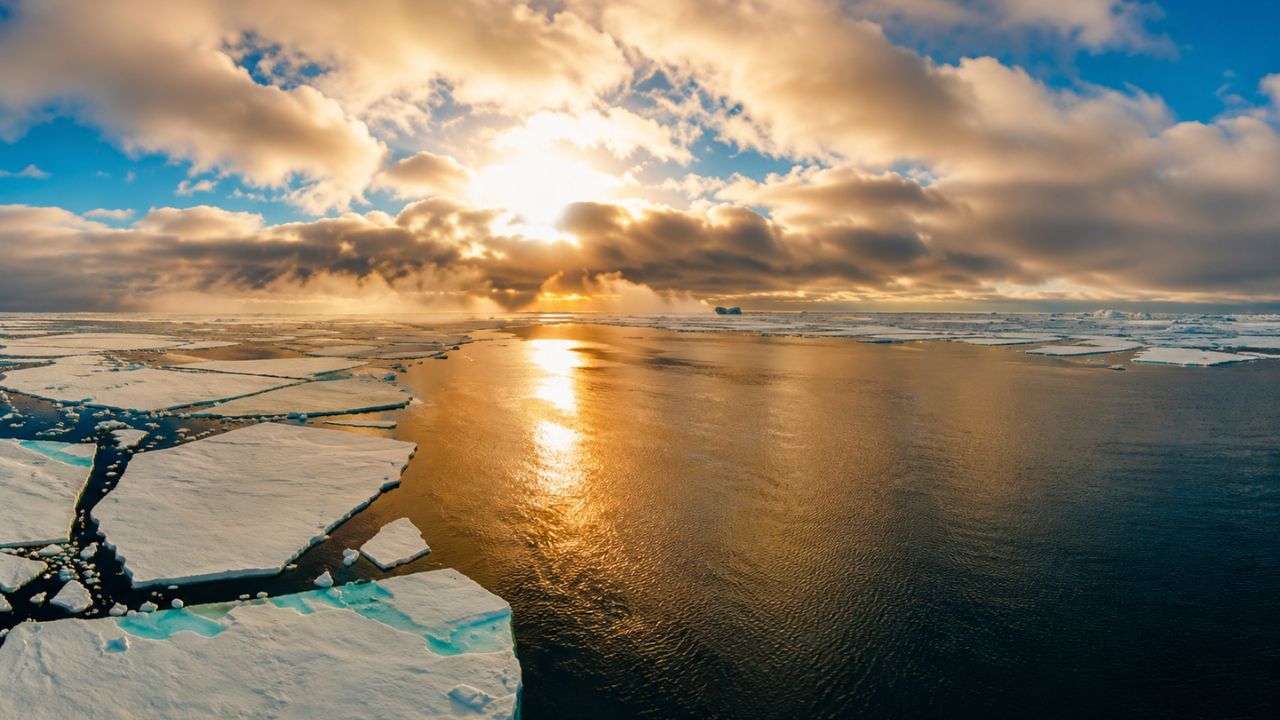
- The number of cloud-forming particles at the boundary between sea ice and the open ocean increased 50-fold in one day.
- These fine particles were found to be formed by a combination of sunlight, seaweed and natural chemical compounds.
- As the sea ice in the Arctic melts rapidly, this process could affect the climate if the 'marginal ice zone' expands.
Scientists have discovered an unknown natural process that suddenly greatly increases the number of atmospheric particles that form clouds in the Arctic region. This process occurs at the boundary between sea ice and open ocean water. This opens up new possibilities for Arctic cloud cover, solar reflectance, and the region's impact on climate change. The findings of this research were published in 'Nature Geoscience' on August 5.
OpenAI's special surprise for teenagers! ChatGPT for Teens Launched for Kids Under 18, Know Features
The study was conducted by researchers in China and Spain, led by the University of Birmingham. Measurements were made from the research vessel 'RRS Discovery' in the spring and summer of 2022 in the Greenland and Davis Strait area. New particles were found to form on more than 80 percent of sunny days. So it is clear that this process is taking place on a large scale in this part of the Arctic.
Findings from the research!
Iodine compounds released into the atmosphere from the ocean, sea ice and coastal areas, dimethyl sulfide from marine plants and algae, and organic compounds naturally released from the sea and land play an important role in this process.
Exposure to sunlight causes chemical changes in these compounds and creates new particles in the atmosphere. Scientists have also discovered previously unknown compounds called 'iodinated oxygenated organic molecules'. These molecules help the newly formed microparticles to grow. Hence, these particles become capable of forming cloud droplets.
The government's eye on social media! Order to block as many as 1.95 lakh posts in five months, read in detail
A combination of marine life and sunlight
The boundary between sea ice and open ocean water is called the 'marginal ice zone'. Sea algae and other microorganisms are widely active in this area. The chemicals released from it form microscopic particles that become cloud seeds in the atmosphere after exposure to sunlight. Researchers reported a 50-fold increase in the number of cloud-forming particles in the region in just one day. In one event, the particle count increased from about 50 to as many as 1,500 per cubic centimeter. As the Arctic sea ice melts rapidly, this 'marginal ice zone' is likely to widen further in the future.