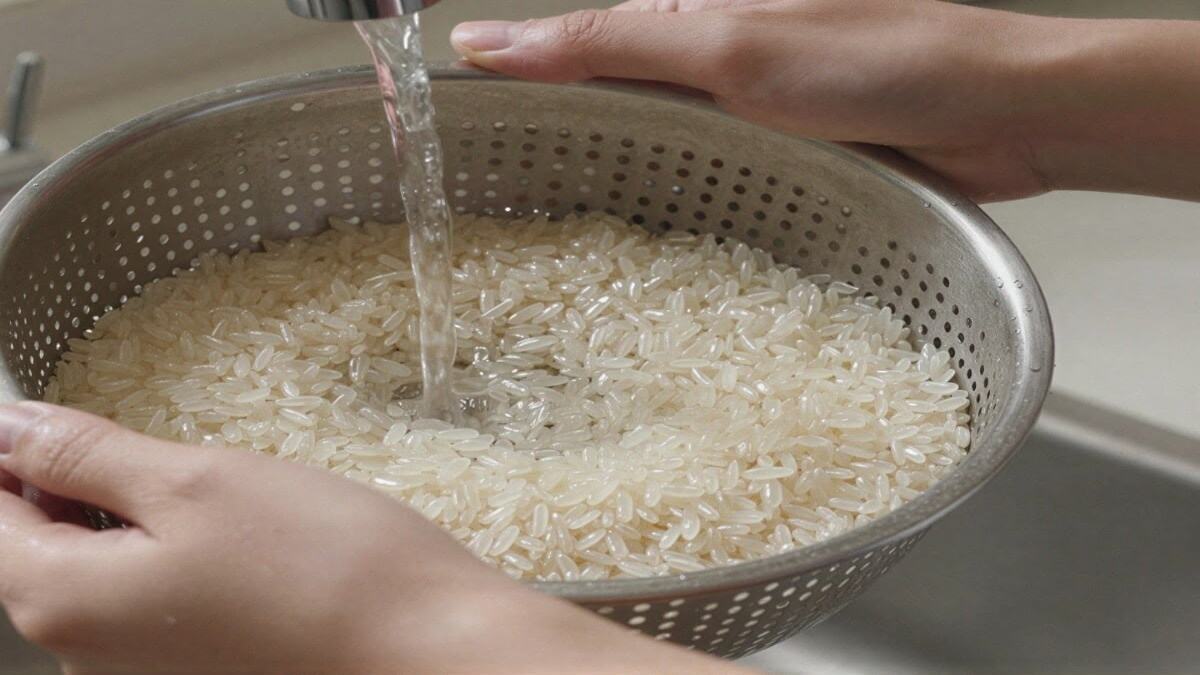
Lifestyle Desk – Rice is such a part of Indian kitchen, which is hardly made daily in any house. A plate of rice with dal, vegetable, curry or a special dish is often an essential part of the meal. But the method of washing rice before cooking it may be different in every household. Some people cook the rice immediately by washing it with water just once, while others change the water several times and rub it vigorously with hands. In such a situation, the question is, how should rice be washed properly?
Rice travels from the farm to the processing unit, packaging and then to our kitchen. During this entire process, dust or very small particles may come on its surface. Due to rubbing of rice grains kept in packets together, fine starch powder can also get deposited on their outer surface. This is the reason why washing rice before cooking is a common kitchen procedure of many people. Let us know how to do it.

What happens when you wash rice?
When rice is washed with water, the loose particles and some extra fine starch present on its surface are removed with water. If rice is cooked without washing, the grains may feel relatively sticky or heavy after cooking in some varieties. However, the final texture of rice also depends greatly on its variety, water content and cooking method.
How often is it okay to wash?
No single number for washing rice applies to every type of rice. Generally, take rice in a vessel, add water to it and stir it gently with your hands. Drain the water and add clean water again. This can be done until the water appears much clearer than before. It is not necessary that the water becomes completely transparent like glass. Washing rice for too long or rubbing it vigorously can unnecessarily wear out the surface of the grains. Therefore washing with gentle hands is considered a better method.
It is not right to rub too much
A common mistake when washing rice is to rub the grains vigorously between the palms. Doing so may break the rice grains and affect their texture. Especially for rice that needs to remain separate and fluffy after cooking, the washing process should not be too aggressive.
The method may change depending on the variety of rice
Basmati, regular white rice, brown rice or rice used for a specific dish may have different requirements. Some recipes require the rice to be washed and then soaked, while others require it to be cooked directly. Therefore, it is useful to keep in mind the instructions given on the packet.
Overall, the purpose of washing rice is not to over-rub the grains, but to remove loose surface particles and excess fine starch. Washing gently with changes of water and then cooking with the right amount of water can be an easy start to achieving a better rice texture.