As the global men’s grooming market grows, many leading barbershop brands are competing on more than haircut quality. Standardized training, digital technology, and customer-focused service models have enabled them to scale across multiple markets.
The following brands illustrate different approaches to building large grooming businesses, ranging from express haircut concepts to premium salon brands.
Scaling through franchising and technology
Among the largest players is Great Clips, founded in the United States in 1982. The company operates more than 4,400 salons across the U.S. and Canada and performs around 90 million haircuts annually. Its standardized operating model and early adoption of an online check-in system have helped improve efficiency while maintaining consistent service standards.
|
Great Clips’s facade in the U.S. Photo courtesy of the barbershop |
Another major North American brand, Supercuts, has expanded to more than 1,800 locations in the U.S., Canada, and the United Kingdom. Operated by Regis Corporation, the chain emphasizes convenience through affordable pricing, accessible locations, and digital appointment booking.
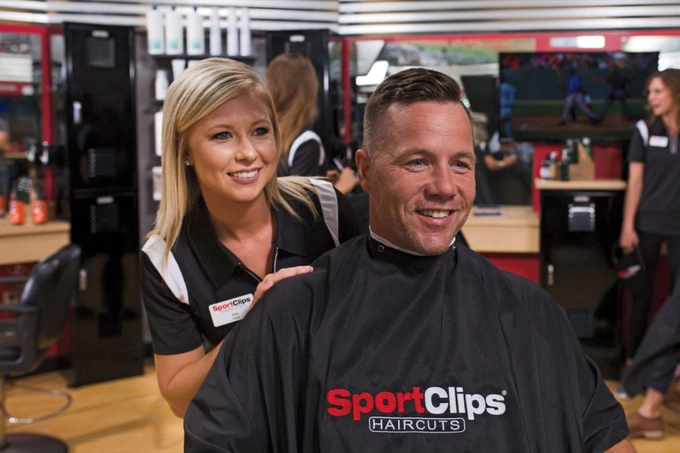
Sport Clips Haircuts, also based in North America, has built a network of nearly 1,800 stores serving men and boys. The company differentiates itself through sports-themed interiors, its signature MVP grooming service, and standardized barber training.
 |
|
Sport Clips offers an online check-in system, enabling customers to reserve appointments and monitor wait times directly from their smartphones. Photo courtesy of the barbershop |
Building a brand beyond haircuts
Some companies have expanded by developing distinctive brand identities alongside their grooming services. Floyd’s 99 Barbershop, with more than 140 locations across the United States, combines the atmosphere of a traditional barbershop with modern salon services in a rock-and-roll-inspired setting.
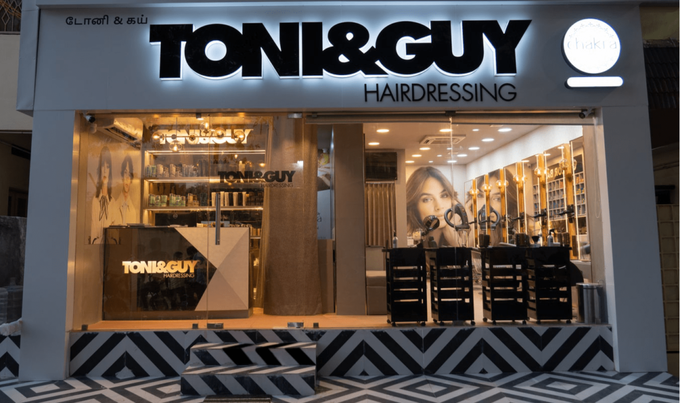
Toni&Guy, founded in London in 1963, has grown into one of the world’s best-known premium salon brands, operating more than 600 salons in around 45 countries. In addition to its salon network, the company has developed professional academies, haircare products, and education programs.
 |
|
A defining strength of Toni&Guy is its ability to integrate fashion, education and international franchising into a unified business model. Photo courtesy of the barbershop |
Asian brands develop localized growth models
Several Asian brands have also built large-scale grooming businesses by adapting their services to local consumer preferences.
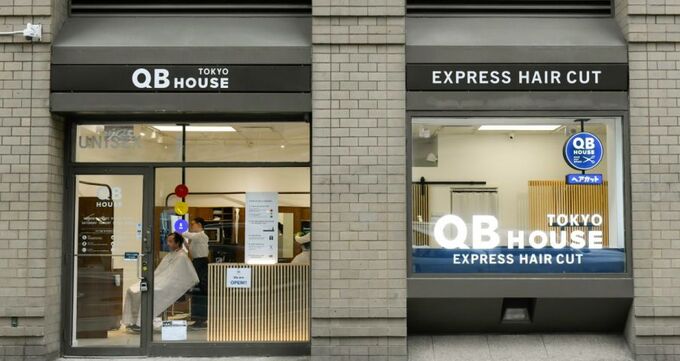
Japan’s QB House pioneered the 10-minute haircut concept, streamlining operations to provide fast, affordable services. The chain now operates more than 700 locations, primarily in railway stations, shopping centers, and office districts.
Another Japanese brand, 3QCut, has expanded to more than 280 locations across Japan, Singapore, and Hong Kong with its “10 Minutes – Haircuts Only” concept, targeting customers seeking quick and convenient services.
In China, Yongqi Beauty & Hair has developed a network of more than 1,000 salons through a combination of company-owned stores and franchising. The business integrates salon services with digital customer management, online booking, and membership programs.
 |
|
QB House is a leading brand in Japan’s haircare industry. Photo courtesy of the barbershop |
India’s Jawed Habib Hair & Beauty has grown to more than 900 locations, making it one of the country’s largest salon chains. The company combines salon operations with professional education while leveraging the reputation of founder Jawed Habib, a well-known hairstylist in India.
Vietnamese brand expands internationally
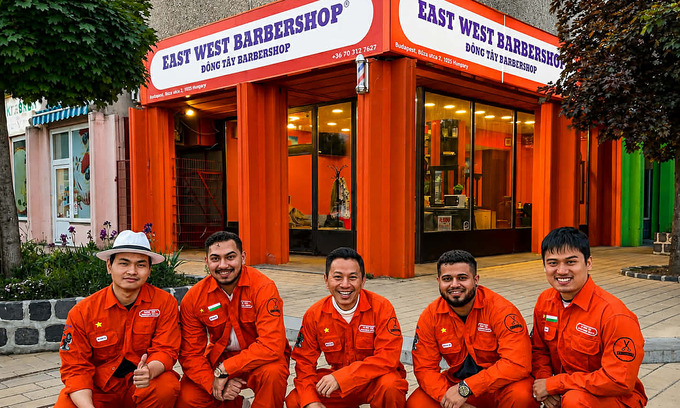
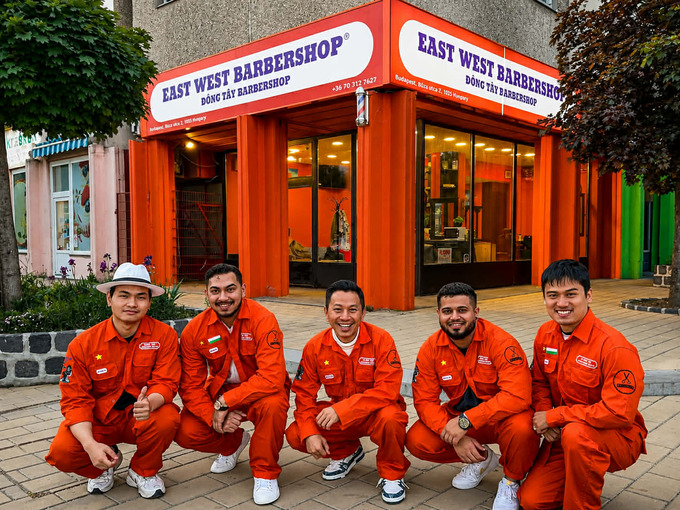
Among newer entrants, East West Barbershop (Dong Tay Barbershop) has rapidly emerged as one of Asia’s fastest-growing grooming brands.
Founded in 2018, the company has expanded to more than 130 locations in Vietnam and several overseas markets, including Thailand, China, Europe, and the United States.
The company has introduced what it describes as an “Experiential Barbershop” model, incorporating children’s play areas, billiard tables, pianos, reading corners, and other amenities alongside traditional grooming services.
According to the company, its growth strategy focuses on standardized franchise operations, barber training, and community initiatives, including vocational education and charitable activities.
 |
|
Founded by Vietnamese entrepreneur Nguyen Hoai Thanh (C), the company has rapidly grown into one of Vietnam’s largest barbershop networks. Photo courtesy of Dong Tay Barbershop |
More than a haircut
Although these brands operate in different markets and serve different customer segments, they share several common approaches.
Most rely on standardized training systems to maintain consistent service quality, while technology—including online booking, customer management platforms, and digital operating systems—has become an important tool for improving efficiency as their networks expand.
Customer experience has also become a key differentiator. Whether through express haircut concepts, premium salon environments, or lifestyle-oriented barbershops, many chains are seeking to offer services that extend beyond a traditional haircut.
Their growth reflects how scalable operating systems, recognizable brands, and consistent customer experiences have become important factors in the development of modern grooming businesses.