The first-half total was also 26.9% higher than in the corresponding period of 2019, before the Covid-19 pandemic hit, Korea Times reported.
Mainland China remained South Korea’s largest inbound tourism market, accounting for 3.21 million arrivals.
Japan ranked second with 1.95 million visitors, followed by Taiwan with 1.15 million, the U.S. with 810,000 and the Philippines with 360,000.
|
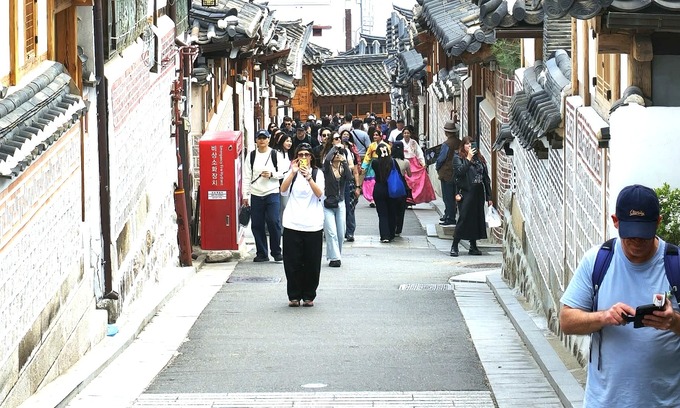
Tourists walk at Hanok Bukchon Village in Seoul, South Korea, April 2026. Photo by Read/Hoang Phong |
South Korea exceeded 10 million inbound visitors in late June, around one month earlier than it did in 2025, reinforcing expectations that the country can meet its target of attracting between 22 million and 23 million overseas visitors in 2026, The Korea Herald reported.
Tourism authorities expect momentum to continue through the second half of the year, supported by an extension of the temporary visa-free policy for Chinese tour groups, the peak summer holiday season and the expansion of international flight services to regional airports.
To sustain the recovery in inbound tourism and improve the travel experience, South Korea’s Cabinet recently approved amendments to the enforcement decree of the Tourism Promotion Act aimed at tackling unfair pricing practices at tourist destinations.
The revised regulations, which would take effect on Aug. 4, introduce stricter penalties for accommodation operators serving foreign visitors who fail to display room rates or charge prices higher than those advertised.
Under the new rules, operators of urban homestays and traditional accommodations will face a five-day business suspension for a first offense. Previously, traditional guesthouse operators received only a corrective order for an initial violation, while urban homestays were not required to display room rates.
Sanctions will become progressively tougher for repeat offenses, with businesses facing permanent closure after a fourth violation.