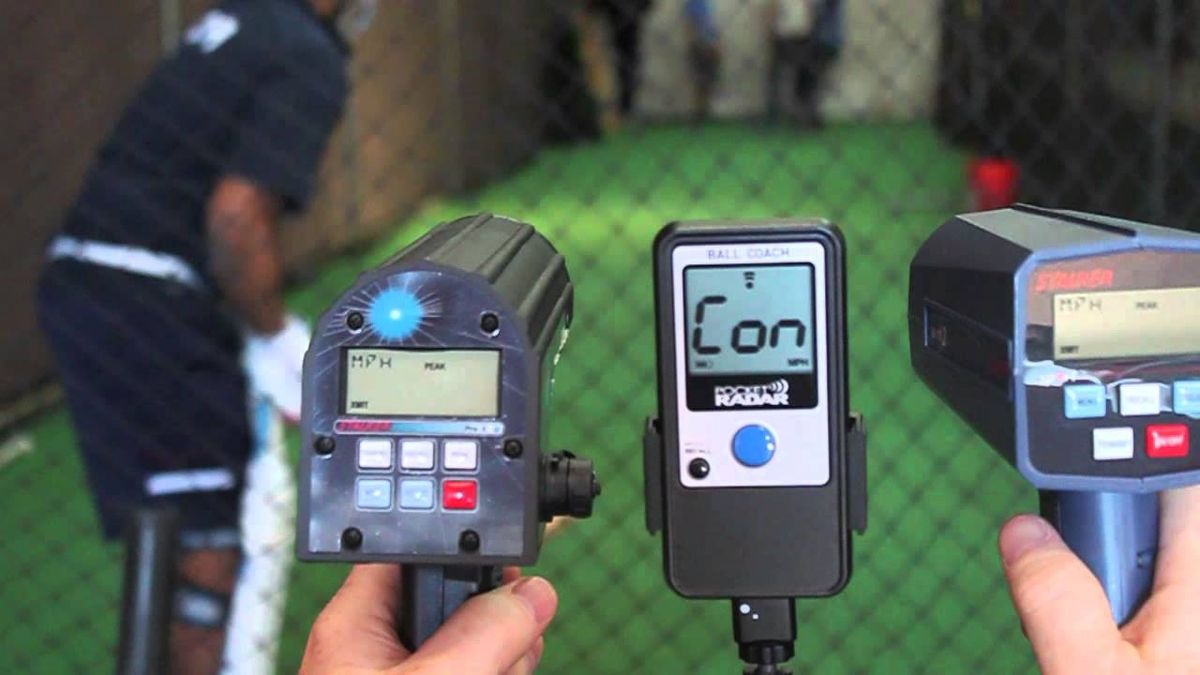
Delhi: When a fast bowler bowls a ball at 145, 150, or 155 kilometers per hour in a cricket match, and the speed is instantly displayed on the TV screen, the question arises: how is this speed determined? Is a camera on the field measuring the ball’s speed, or is it calculated by Hawk-Eye? In fact, what is commonly called a speedometer or speed gun in cricket is primarily a radar-based speed-measuring system. Its operation is based on the principle of the Doppler effect. Simply put, the radar sends radio waves toward the ball. After striking the ball, these waves return to the radar. The system calculates the ball’s speed by measuring the change in frequency between the transmitted and returned waves. This is why the ball’s speed becomes visible on the screen just moments after it leaves the bowler’s hand.
The use of radar technology to measure bowling speed in cricket is quite old, and its significant use in broadcasting began around 1999. Initially, its purpose was not only to inform viewers of a bowler’s speed, but also to help bowlers and teams understand their own speed. Over time, this technology has evolved significantly, and today radar systems measure ball speed extremely quickly and transmit it to broadcast systems. Stalker is a leading name in this field. Stalker’s parent company, Applied Concepts, was founded in 1975, and the company’s sports radar series is used to measure bowling speed, ball exit speed after being hit, and throw speed. However, the actual equipment and technical infrastructure used in different tournaments and broadcast systems may vary, and not all information is publicly available.
What’s most interesting is that the ball speed displayed on the TV screen isn’t just a simple number; it involves a whole series of radars, radio waves, the Doppler effect, signal processing, and transmission technology. The radar is positioned to accurately send signals in the direction of the ball and capture the ball’s return signal. The system then processes this information to calculate the ball’s speed, which is then transmitted to the broadcast graphics within seconds. However, sometimes the displayed speed may differ slightly from the actual speed, as equipment position, ball angle, radar alignment, and signal technical limitations can all affect the outcome. So, the next time you see a bowler clocking 150 kilometers per hour on the screen, remember that behind that single figure lies a whole story of modern radar technology and years of technological development.