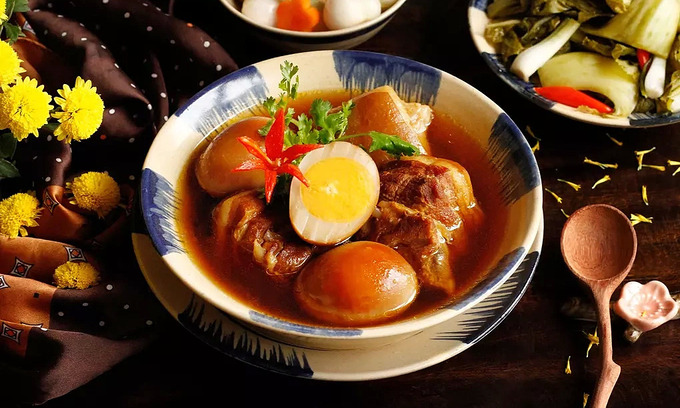
Adding eggs to a braise too early or frying them first can leave them tough and bland.
The proteins in egg whites are tightly coiled, chef Vu Nhat Thong of the Eric Vu Cooking Class Center explains. When eggs go into a braise too soon, the boiling liquid’s heat stretches the protein strands. Meanwhile, the concentrated salt and fish sauce bind them together. The resulting firm network makes the whites tough and keeps seasoning from reaching the yolks.
Seasoning moves from the concentrated braising liquid into the eggs most easily before the whites become too firm, Thong said.
|
Southern Vietnamese pork and eggs braised in coconut water. Photo by Bui Thuy |
Add the eggs once the pork begins to soften and the liquid has reduced by about a third and turned deep amber. By then, the heat is usually lower, so the egg proteins set more gently and the whites stay soft and porous. The pork has also absorbed some seasoning, lowering the liquid’s salt concentration. The gentler heat and less concentrated salt help keep the eggs tender while allowing them to absorb flavor.
Some cooks briefly fry eggs before braising them for a chewier texture and appealing color, but Thong warned frying creates a firm outer layer that makes it harder for seasoning to penetrate, leaving the eggs bland.
Instead, he recommended soaking the eggs in some of the braising liquid before adding them to the pot. Boil and peel the eggs, then wait until the pork’s braising liquid has shrunk. Spoon some liquid into a bowl and let it cool to about 40-50 degrees Celsius. Soak the eggs for 15-20 minutes, then return the eggs and liquid to the pot. This gradually exposes the eggs to the seasoning and heat, helping the whites stay tender and the yolks rich while they take on more flavor.