


The video of the ABP journalist, Megha Prasad, talking about the issue of VVIPs and politicians not paying toll taxes has been shared on X by Nehra ji on their page. It starts off with Prasad asking Gadkari about the issue of VVIP culture at toll plazas. She asks him, why don’t you end the VVIP culture at toll plazas where VVIPs, MPs, and MLAs don’t have to pay any tolls, and common citizens have to pay them?
She adds that the VVIPs, MPs, and MLAs have the privilege to pass toll plazas without paying tolls, but the common man cannot. Prasad sarcastically also states that do these VVIPs have any special wings for which they don’t have to pay and common people have to pay? Following which, the Minister of Road Transport and Highways answers her question, but not directly.
He firstly says that the toll policy which has been made is not just for MPs and MLAs. Gadkari adds that it also exempts ambulances and other emergency service vehicles as well. However, immediately cutting off Gadkari, Prasad highlights that ambulances have a genuine cause and their exemption is not the problem. She then asks him to directly answer about the situation of MPs and MLAs.
Gadkari then continues and states that the problem is that MPs and MLAs, for a long time, have not been paying tolls because they have been given this service from the beginning. And when the reporter asks Gadkari why he does not change this particular service, as he has changed a lot of things, to which Gadkari directly answers why he should change it.
He adds that he is the birth giver of BOT (Build Operate Transfer), and he will not make any suggestions which could become dangerous for his chair (his position in the political arena). At last, he states that MPs and MLAs have their own place in the democracy and these perks have been given to them from the beginning.
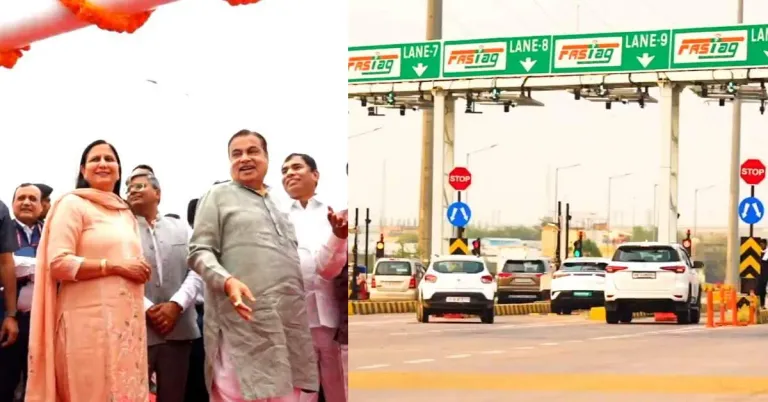
Over the last few years, India’s highway toll system has changed a lot. Earlier, many people believed that toll collection would stop once the cost of constructing a highway was recovered. However, under the amended National Highways Fee Rules, 2008, that is no longer the case.
As per the rules, toll plazas can continue operating even after the complete project cost has been recovered. Although toll charges may be reduced after recovery, they do not end completely. Additionally, if a highway is upgraded in the future, such as being expanded from four lanes to six lanes, the toll recovery process starts again.
This means that motorists end up paying higher toll charges once more. According to the government, highway tolls are now treated as a user fee rather than a temporary charge to recover construction costs. And as we all know, toll revenue has increased a lot over the years due to the rapid expansion of the national highway network and the mandatory adoption of FASTag.
Union Minister Nitin Gadkari has also confirmed that toll collection is perpetual, with toll rates being revised every year under the provisions of the National Highways Fee Rules, 2008.
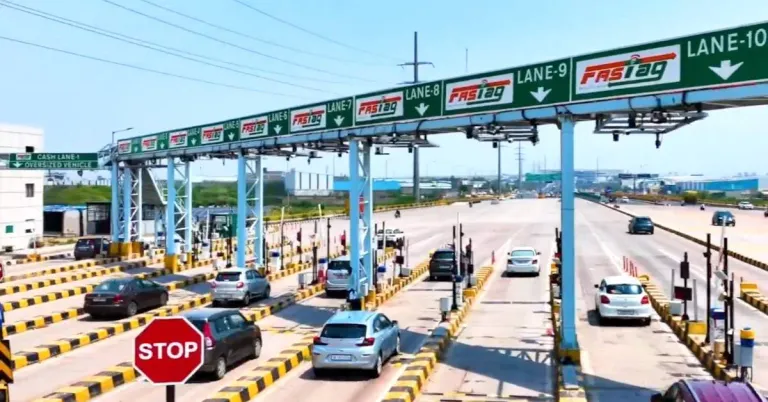
At the same time, the government is now preparing to introduce a barrier-free toll collection system using cameras, sensors, and RFID technology to make toll payments completely seamless. For vehicle owners, this means that the overall cost of owning and using a car continues to increase.
Apart from paying GST at the time of purchase, road tax during registration, and taxes on fuel, motorists also have to continue paying highway tolls throughout the life of a road. Now, while the government has stated that each of these taxes and charges serves a different purpose, most of the public believes that the overall financial burden is only increasing.
Comments are closed.