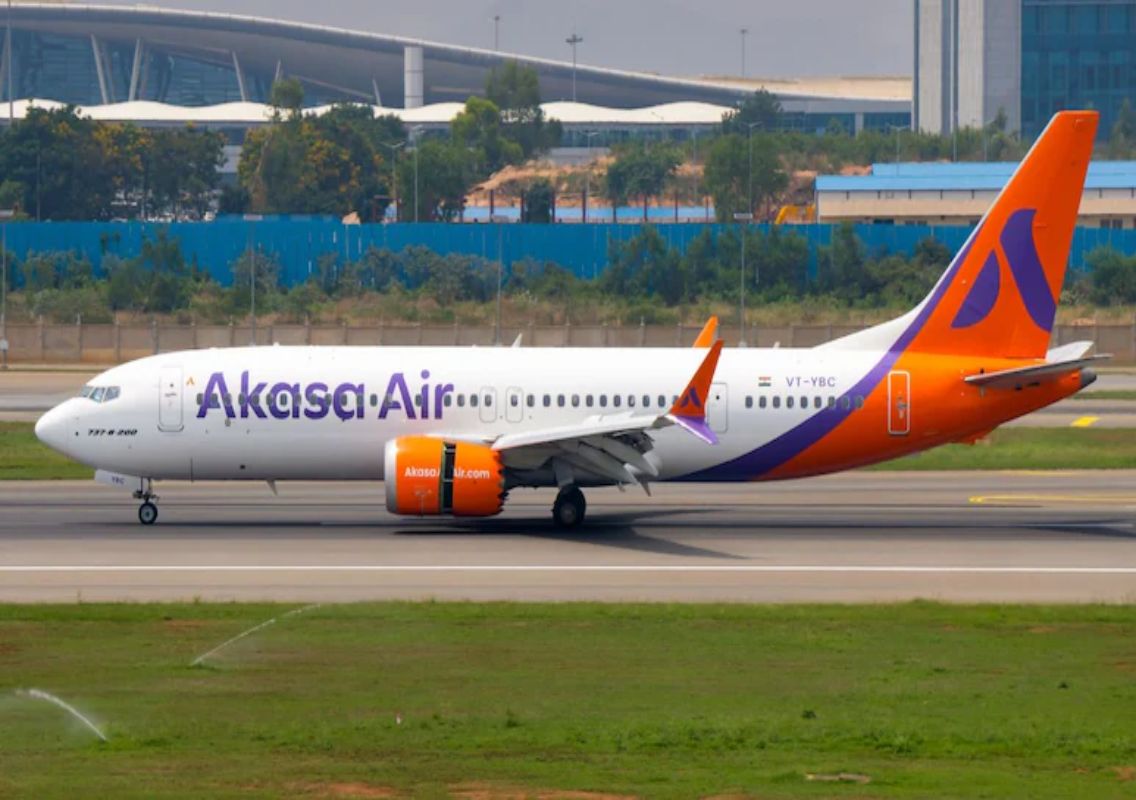
New Delhi: Indian carriers Akasa Air and Air India Express have clarified that their Boeing 737 fleets are not impacted by a recent directive issued by the Federal Aviation Administration (FAA), which calls for inspections of certain aircraft over concerns related to fuselage cracks.
Both airlines, among the largest operators of Boeing 737 MAX aircraft in India, reassured passengers and stakeholders that the directive does not affect the safety or ongoing operations of their fleets.
Airlines emphasise minimal operational impact
Akasa Air stated that it operates one of the youngest fleets globally, consisting entirely of newly delivered Boeing 737 MAX aircraft. According to the airline, the FAA directive pertains to aircraft that are nearing 30,000 flight cycles—a metric that includes both take-offs and landings.
With its current utilisation levels, Akasa Air indicated that this threshold would only be reached more than 13 years after an aircraft enters service. Given that the airline’s longest lease period is approximately 12 years, the directive is unlikely to have any practical impact on its operations.
Similarly, Air India Express confirmed that its fleet of around 80 Boeing 737 aircraft remains unaffected by the directive. The airline reiterated that all its aircraft comply with existing safety standards and maintenance protocols.
Together with SpiceJet, which also operates Boeing 737 aircraft but has not commented publicly, these carriers account for over 140 such aircraft in India.
Understanding the FAA directive
The FAA issued the Airworthiness Directive on August 7 after identifying potential issues involving cracks in a structural component known as a bearing strap. This component is located at the forward upper corner of the forward galley door cutout in certain Boeing 737 variants, including the 737-8, 737-9 and 737-8200.
The directive mandates that airlines conduct inspections of the fuselage skin to check for existing repairs and undertake corrective measures if necessary. These inspections are part of routine safety checks designed to identify structural fatigue over time.
Boeing’s response and prior measures
Boeing has stated that it first identified and reported the issue and has been working with airlines on inspection protocols for several years. The company had already notified operators of Boeing 737 Next Generation aircraft about similar concerns in 2019 and provided detailed inspection procedures.
In 2021, the FAA made such inspections mandatory for certain aircraft models. Although the issue has not been observed in the Boeing 737 MAX fleet so far, the inspections have been extended to these aircraft due to similarities in design and manufacturing processes.
Boeing reiterated its support for the FAA directives and assured continued assistance to airline operators in implementing safety checks and maintenance requirements.
Safety assurances for passengers
The clarification from Indian airlines comes at a time when aviation safety remains under close public scrutiny. By confirming that the FAA directive does not immediately impact their fleets, Akasa Air and Air India Express aim to reassure passengers about the continued safety and reliability of their services.
Experts note that such directives are precautionary in nature and form a standard part of global aviation safety practices. The requirement for inspections at a high flight cycle threshold indicates that the concern is linked to long-term wear and tear rather than any immediate operational risk.
Conclusion
While the FAA’s directive highlights the importance of continuous monitoring and maintenance in aviation, Indian carriers operating Boeing 737 MAX aircraft remain unaffected in the near term. With relatively young fleets and adherence to stringent safety standards, airlines like Akasa Air and Air India Express are well-positioned to comply with regulatory requirements without disruption to their operations.