
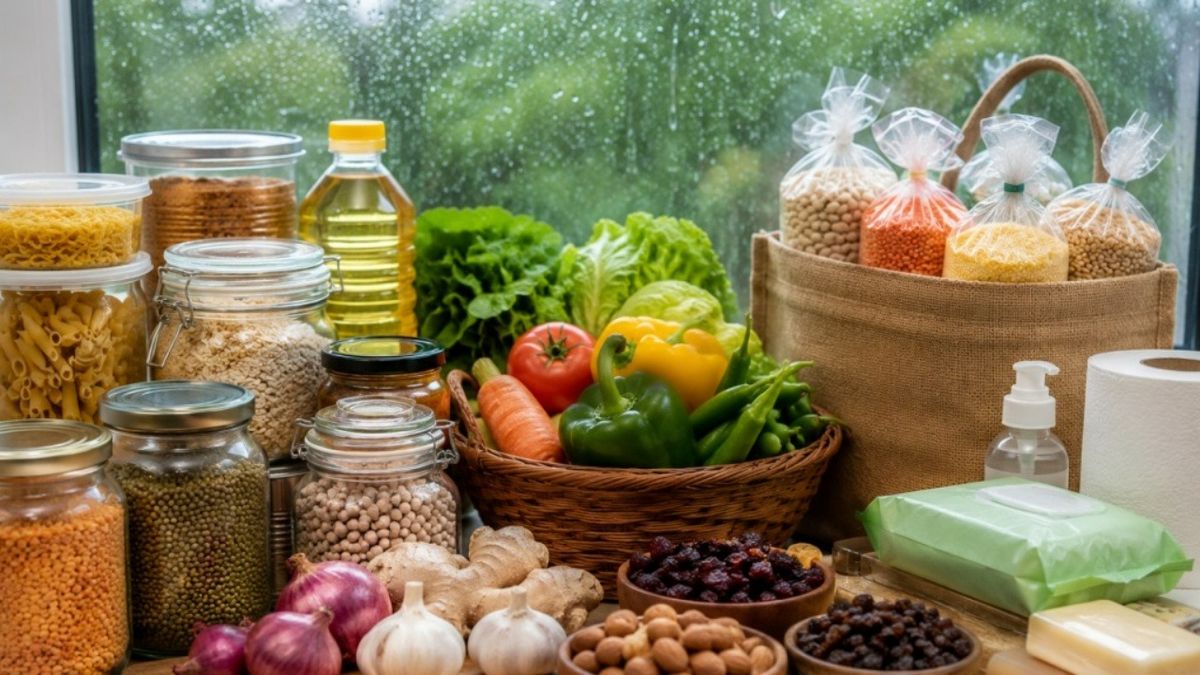

He is tired of going to the market again and again on rainy days, so he brings bags to the market. Be careful! In this climate, your kitchen can become an entire germ factory. Know without buying all the food together, which 5 ingredients you can safely store at home, and which 5 you should not forget to touch, know now. According to nutritionists, shopping smartly on monsoon days can be the only solution to avoid stomach problems and waste!
1. Fresh Flour – Flour provides essential fiber and energy. It can be stored for a long time if kept in an airtight container in a cool place to avoid moisture.
Read more: Frequent acidity-indigestion in monsoon? If you drink this water on an empty stomach, you will get comfort like magic!
2. Pulses – Mung beans, lentils, chickpeas are easily digestible, these pulses are also great sources of protein. You can keep it for a long time if you keep it in an airtight glass and steel container. Bay leaves or dried to ward off insects and spiders
You can keep it with neem leaves.
Also read: Cool and casual even in the rain! Learn 5 smart techniques to wear baggy jeans in monsoons to save water and mud now
3. Whole spices – Turmeric, jojoba, pepper and ginger improve digestion and help prevent diseases. Keep dry airtight container without heat or steam.
4. Nuts and seeds – Almonds, walnuts, pumpkin, flaxseeds contain many nutrients required by the body. Can be spoiled by moisture so keep it in an airtight container or in the fridge, it will last longer.
Also read: Why 9 am to 11 am is perfect for eating papaya? Doctors surprising information!
5. Fermented food – Many buy dairy products from the market, which can spoil if left in open air during monsoons. Don’t buy a small amount or else get it from the market and put it in the fridge immediately.
So some things will be wasted if you buy too much in the rainy season?
Vegetables – Rot quickly due to excess moisture. It becomes a breeding ground for bacteria. So buy as much as you need from the market. Don’t buy more than that. Get it from the market and wash it repeatedly in clean water and then cook it. Buy small packets. Be sure to refrigerate.
Read more: Heating food in microwave? You are not taking the risk of cancer unknowingly!
Bread and Bakery Foods – Due to the high humidity of the air, mold grows very quickly in bread, cakes and bakery products. So buy a small packet, if necessary keep it in the fridge for 1 day.
Fish or Seafood – During the rainy season fish are breeding, so fresh fish is easy to find. Buy it from the market and cook it and eat it during the day, it is better to eat it fresh. It is not advisable to store fish or seafood during monsoon.
Milk- Milk curdles very quickly in heat and humidity. So buy small quantities rather than huge packets. Keep it in the fridge after buying it.
Cut fruits and ready-to-eat salads – Pre-cut fruits or packaged salads are more prone to contamination. Buy whole fruits and cut them at home and eat them fresh.
Comments are closed.