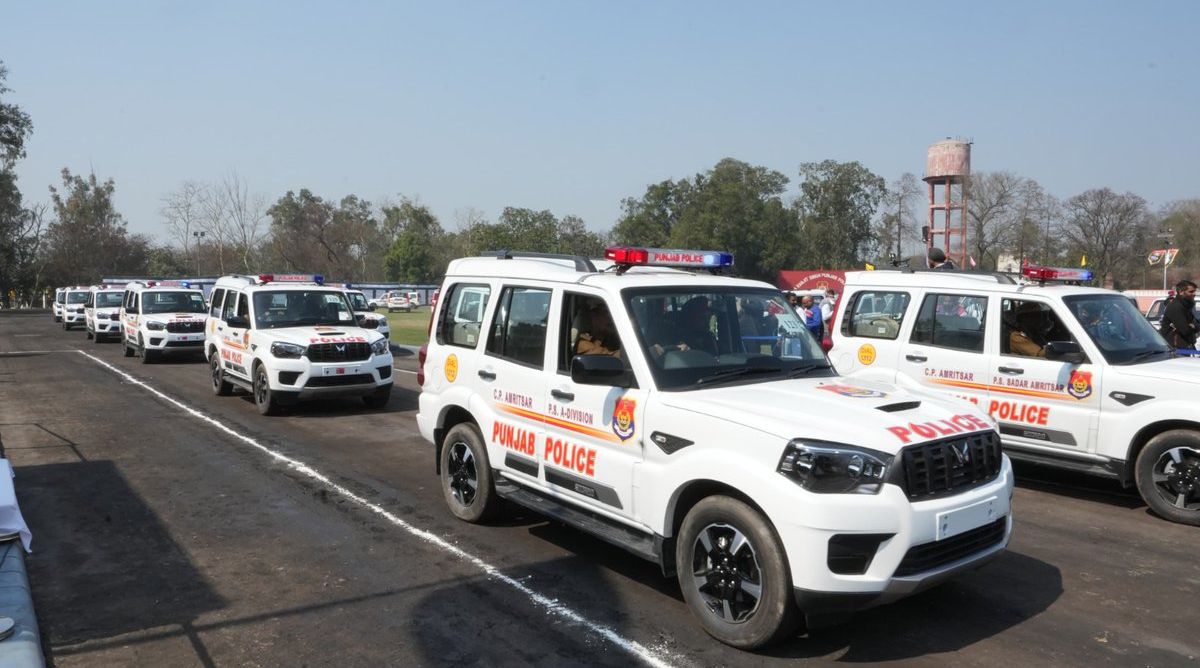
Punjab Police: From busting various crimes involving international gangsters to weakening the network of drug smugglers, Jalandhar Commissionerate Police has ensured minimal scope for organised crime.
This positive outcome is the result of modern policing strategy and better coordination, under which the district police targeted the illegal financial sources, weapons, transportation, anonymity and recruitment networks of various criminal gangs.
Major police action in seven months
Effectively implementing each drive launched by the Punjab Police, Jalandhar Commissionerate Police registered 1,201 cases under the NDPS (Narcotic Drugs and Psychotropic Substances) Act during the last seven months.
Drug money and narcotics recovered
As part of the Punjab Police’s “War Against Drugs” campaign, the Commissionerate Police arrested 1,440 drug traffickers. Police recovered 16.810 kg of heroin, 119 grams of methamphetamine (ICE), 9.274 kg of opium, 24.624 kg of ganja, 33.750 kg of poppy husk, 20 grams of cocaine, 15.200 kg of hashish, and 3,130 narcotic capsules/tablets. Additionally, drug money worth ₹1,117,900 and vehicles used in drug trafficking were seized. These seizures not only removed drugs from the streets but also weakened the networks that financed organized crime.
Preventing criminals from accessing weapons
The action wasn’t limited to this. It also expanded to the crackdown on illegal weapons, which are used to create an atmosphere of fear and promote violent crimes. Under the “Gangsters to War” campaign, parallel action was taken against illegal arms suppliers, gangsters’ associates, and their aides. During this period, the Commissionerate Police recovered 51 illegal pistols and 133 live cartridges. Additionally, individuals supporting organized criminal gangs were identified and continuously monitored. The objective is to prevent criminals from accessing weapons and to weaken criminal networks by dismantling their support structures before violence occurs.
14 motorcycle patrol units deployed
Preventive policing has further tightened the noose on criminals. The Commissionerate Police has deployed 45 Emergency Response Vehicles (ERVs) and 14 motorcycle patrol units, with 209 police personnel on duty. In addition, permanent night checkpoints established at major entry and exit points of the city have further strengthened surveillance. Real-time verification through a vehicle database has significantly reduced the possibility of stolen or suspicious vehicles being transported undetected.
More difficult to conceal identity or destroy evidence
Technology has also made it more difficult for criminals to operate. The Punjab Artificial Intelligence System (PAIS), the Integrated Command and Control Center (ICCC), the ever-expanding CCTV surveillance network, and the Digital Forensic Laboratory have significantly strengthened scientific policing. Every investigation now makes extensive use of CCTV footage, vehicle records, and digital evidence from mobile phones and other electronic devices, making it far more difficult for criminals to conceal their identities or destroy evidence of crime.
Intelligence-based operations
In this regard, Director General of Police (DGP) Gaurav Yadav stated that the Punjab Police has fundamentally changed its approach, focusing on dismantling the entire criminal network that supports organized crime rather than reacting to individual crimes. He said, “Modern policing is no longer limited to isolated arrests or seizures. Its objective is to maintain sustained pressure on organized criminal networks by simultaneously targeting their financial sources, weapons, logistics, technical resources, and support mechanisms. Intelligence-based operations, scientific investigations, and public cooperation are helping us steadily narrow the scope available to criminals across Punjab.”
Relocation arrangements to reduce demand
This strategy is not limited to law enforcement but is equally focused on crime prevention. Given that drug addiction often fuels organized crime, the Jalandhar Commissionerate Police has also strengthened rehabilitation measures to reduce the demand that fuels the illegal drug trade. Since January, 1,300 individuals have been admitted to de-addiction centers, 1,509 individuals have been referred to Outpatient Opioid Assisted Treatment (OOAT) centers, and 504 eligible beneficiaries have been provided relief under Section 64-A of the NDPS Act.
Every step is aimed at organized crime
Police Commissioner Satinder Singh said the aim is to ensure that each action weakens multiple links in the criminal chain, rather than being limited to individual crimes. He said, “Whether it’s disrupting drug supply chains, recovering illegal weapons, identifying gang members, using technology, or strengthening preventative policing—every step is aimed at making it harder for organized crime to operate and sustain. Our goal is not just to uncover crimes, but to eliminate the space, resources, and incentives needed for criminal networks to operate.”
Allegations of sharing sensitive information
This strategy has also led to significant success in key investigations. This year, the Commissionerate Police successfully solved the BSF Chowk blast case, arresting the key accused and exposing their links to Pakistan-based handlers. Furthermore, the police busted an anti-national module accused of sharing sensitive information with Pakistan-based handlers. This demonstrates the growing role of intelligence-based policing and scientific investigation in tackling complex criminal conspiracies.
not limited to disclosing crimes
Beyond the statistics, a major shift in policing is evident. The Jalandhar Commissionerate Police is no longer limited to solving crimes, but is also systematically eliminating the space, resources, and networks available to organized crime.