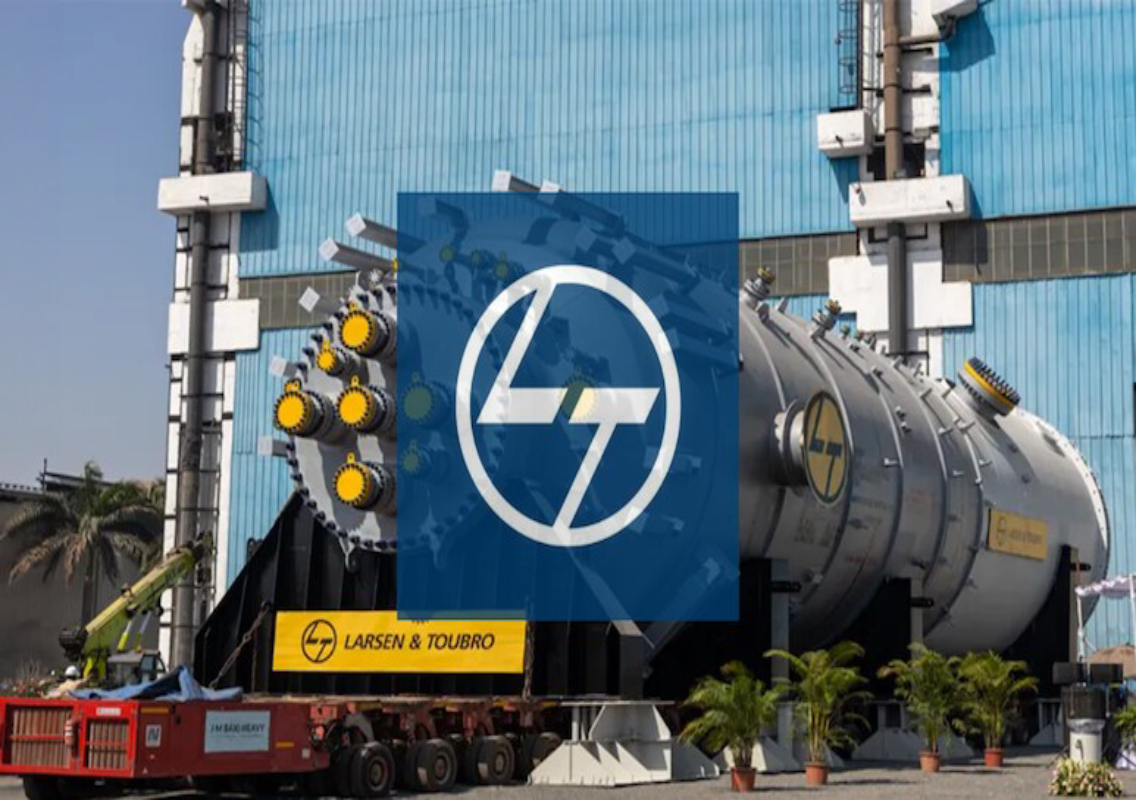
Mumbai: Larsen & Toubro (L&T) has become the first private-sector company in India to raise funds through tokenised bonds, marking a significant step in the country’s move towards blockchain-based corporate debt markets.
The engineering and infrastructure major has raised ₹500 crore through tokenised bonds with a three-year tenure under the Securities and Exchange Board of India’s (SEBI) new framework for tokenising corporate bonds. The transaction uses distributed ledger technology (DLT) and a Central Bank Digital Currency (CBDC)-based settlement mechanism.
The move comes as Indian regulators test whether blockchain technology and the digital rupee can make the corporate bond market faster, more transparent and more efficient.
L&T raises ₹500 crore through tokenised bonds
L&T’s three-year tokenised bond carries a 7.4% coupon, according to market reports. The company became the first private-sector corporate to enter the emerging segment after state-owned REC completed India’s first tokenised corporate bond issuance.
Under the new structure, the bond is represented digitally using distributed ledger technology rather than relying entirely on conventional record-keeping systems.
L&T said the transaction represents an important milestone in its technology-led approach to capital raising and treasury operations. The company expects DLT-based infrastructure to support a more streamlined and transparent system for recording and managing bond transactions.
The ₹500-crore issue is part of a broader experiment to determine how tokenisation can work within India’s regulated financial markets.
What are tokenised bonds?
Tokenisation involves creating a digital representation of a financial asset on a blockchain or distributed ledger.
In the case of corporate bonds, the underlying economic features of the security remain broadly similar to conventional bonds. Investors still receive interest according to the agreed terms and the bond continues to have a defined maturity.
What changes is the way ownership and transactions are digitally recorded.
The technology can potentially reduce the need to reconcile separate records maintained by different intermediaries. It can also support automated processes through smart contracts and make settlement more efficient.
The latest Indian pilot combines tokenised securities with payment through the wholesale digital rupee, creating a system in which the transfer of the security and the corresponding payment can take place together.
SEBI-RBI pilot opens new phase for debt markets
The L&T transaction comes as SEBI and the Reserve Bank of India (RBI) have begun testing the tokenisation of corporate bonds through a pilot initiative sometimes referred to as “Demat 2.0”.
The initiative uses blockchain-based infrastructure for securities while the RBI’s wholesale CBDC is used for settlement. Major market infrastructure institutions, including stock exchanges, depositories and banks, are participating in the pilot.
The objective is not simply to replace existing digital records. Regulators are examining whether distributed ledger technology can improve settlement speed, asset servicing and transparency.
The concept also enables what is known as atomic delivery-versus-payment, where the transfer of the bond and payment occur together. This can reduce settlement risk because one side of the transaction is not completed without the other.
L&T follows REC and IIFL Finance
L&T is not the only company participating in India’s early tokenised bond market.
REC was the first issuer in the pilot, while L&T subsequently raised ₹500 crore. IIFL Finance also entered the market with a ₹25-crore tokenised bond issue, making it the first non-PSU non-banking financial company to raise funds through this mechanism, according to Business Standard.
Together, these transactions provide regulators and market participants with early experience of using tokenised securities for corporate fundraising.
The initial issues are relatively small compared with India’s overall corporate bond market, but their significance lies in testing the infrastructure and regulatory framework.
Potential benefits for India’s bond market
Tokenisation could eventually improve several aspects of India’s debt markets.
One potential advantage is faster settlement. Conventional securities transactions involve multiple systems and intermediaries, whereas distributed ledger technology can allow participants to work from a shared digital record.
Tokenisation could also improve record-keeping and transparency. Smart contracts may eventually automate certain corporate actions and other processes associated with securities.
Another potential development is greater accessibility. If regulatory and technological hurdles are addressed, tokenised assets could eventually support fractional ownership and wider participation in financial markets. However, retail access is not yet the main focus of the current pilot.
For India’s corporate bond market, which has historically faced issues around liquidity and accessibility, the technology could eventually become an additional tool for improving market infrastructure.
Challenges remain before wider adoption
Despite the potential benefits, tokenised bonds remain at an early stage in India.
The current pilot is primarily testing primary issuance and settlement. Secondary-market trading remains largely untested, meaning it is too early to determine whether tokenisation will significantly improve liquidity.
There are also questions around custody, taxation, accounting, legal treatment and interoperability between different platforms.
The success of the technology will ultimately depend not only on blockchain infrastructure but also on whether issuers, investors, banks, exchanges and other market participants adopt common standards.
Regulators will therefore need to balance innovation with cybersecurity, investor protection and financial stability.
A milestone for India’s digital financial infrastructure
L&T’s ₹500-crore issuance is nevertheless an important milestone for India’s private sector.
The transaction demonstrates that tokenised corporate debt can move beyond regulatory experimentation and be used by a major private-sector borrower within a regulated framework.
With REC, L&T and IIFL Finance participating in the early phase, India is building practical experience in combining blockchain-based securities with the RBI’s digital currency infrastructure.
For now, tokenised bonds remain a pilot-stage technology rather than a replacement for India’s conventional bond market. But L&T’s entry signals that large Indian companies are willing to test the model.
If the experiments succeed, tokenisation could eventually reshape how corporate bonds are issued, settled and managed in India, while giving the country’s digital financial infrastructure another major use case.