
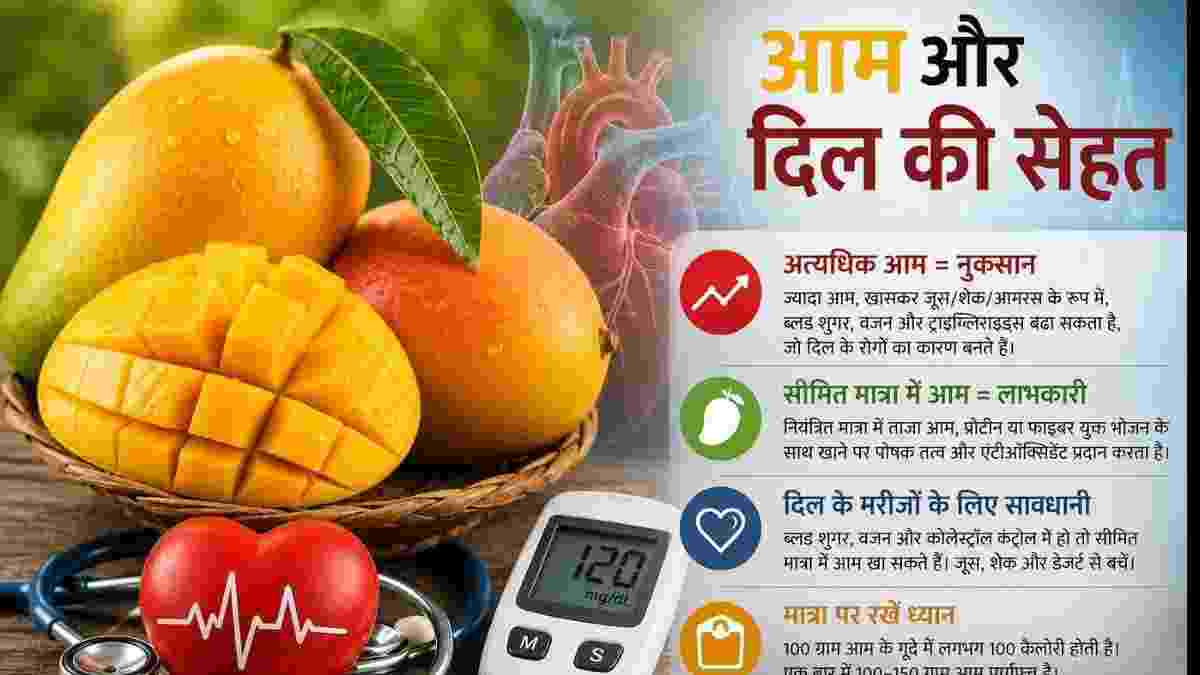
Mango for Heart Patients: Is mango harmful for heart patients? Know the truth from former AIIMS doctor

Mango is everyone’s favorite fruit in the summer season. Diabetic patients are often advised to consume mangoes in limited quantities, but do you know that eating too much mango can prove to be risky for heart patients too? According to Dr. Bimal Chhajer, former consultant of AIIMS (AIIMS) and founder and director of Saul Heart Center, mangoes are rich in fructose (natural sugar) and carbohydrates. If consumed in excess—especially in the form of juices, smoothies, or juices—it can rapidly increase blood sugar and triglycerides levels, which are major causes of heart disease. Nutrients present in mango: If eaten in limited quantity, mango is very beneficial for both heart and health: Vitamin C and A: Strengthen immunity and keep blood vessels healthy. Potassium: Helps in controlling blood pressure and maintaining fluid balance. Dietary fiber: Improves the digestive system and is helpful in controlling cholesterol. Mangiferin (Polyphenols): It is a powerful antioxidant that reduces inflammation in the body. Why is mango more risky for heart and diabetes patients? Triglycerides and weight gain: Mango does not directly contain cholesterol or triglycerides, but its excessive consumption accumulates extra calories in the body, which increases weight and triglycerides. High blood sugar: 100 grams of mango pulp contains approximately 100 calories. The glycemic index (GI) of mango is around 60, which falls in the medium category. Eating in uncontrolled quantities can cause sugar levels to spike. Why avoid mango shakes, juices and desserts? According to the doctor, mango juice, shake or mango juice are very harmful compared to eating the whole fruit: Loss of fiber: Making juice or shake destroys the natural fiber of mango. Rapid absorption of sugar: Without fiber, fructose dissolves very quickly in the blood, causing a sudden increase in blood sugar. Extra calories: Milk and added sugar in the shake accumulate fat in the body. Right way and right time to eat mango: Portion Control: Eating only 100 to 150 grams (about half a mango) at a time is enough. Best time: Consume mango as a snack during the day. Avoid eating mangoes late at night, because metabolism slows down at night. Eat with protein/fibre: Chew the mango as a whole fruit and if you want, take some nuts (Almonds/Walnuts) with it, so that there is no sugar spike. For normal people: People who do not have diabetes and their weight is under control, they can easily eat 1 to 2 mangoes a day. Which people should take special precautions? Uncontrolled diabetes patients. Whose triglyceride level is very high. People who are on a strict weight loss diet. (Note: People who have controlled blood sugar, weight and cholesterol can enjoy fresh mango in limited quantities with the advice of their doctor or dietician.)

Comments are closed.