New Delhi: Geopolitical tensions have once again intensified along the sensitive borders of the Northeast. Reports are emerging that India and Myanmar are considering a possible land swap to resolve the decades-old border dispute. This international move has sparked strong opposition from political and civil society groups in Manipur, raising fears of a new round of tensions in the region. The Indian government ended the Free Movement Regime (FMR) in 2018 in 2024. Under the FMR, tribal communities on both sides of the border were allowed to travel up to 16 kilometers without a visa.
Diplomat’s report
The border dispute came to light after a report in the American magazine “The Diplomat.” According to the report, the Indian government is examining a proposal to exchange approximately 1.4 square miles of land to finalize the unresolved 2.8-kilometer stretch between Border Pillars 65 and 68 on the Manipur border.
When Foreign Ministry spokesperson Randhir Jaiswal was asked about this, he did not directly confirm the exchange proposal, but did admit that demarcation of some parts of the border is still pending and talks are ongoing on them.
The geographical challenge of the 1,643-km long border
India and Myanmar share a 1,643-kilometer-long international border. This border passes through four Indian states: Arunachal Pradesh, Nagaland, Manipur, and Mizoram. According to Home Ministry data, approximately 1,472 kilometers of the border has been demarcated with border pillars, while approximately 171 kilometers remains unresolved. This unresolved area primarily lies within the Lohit sector of Arunachal Pradesh and the Kabaw Valley of Manipur. A large portion of the border is surrounded by rugged hills and dense forests, where people of the same ethnic community reside on both sides.
Strong protest in Manipur over territorial integrity
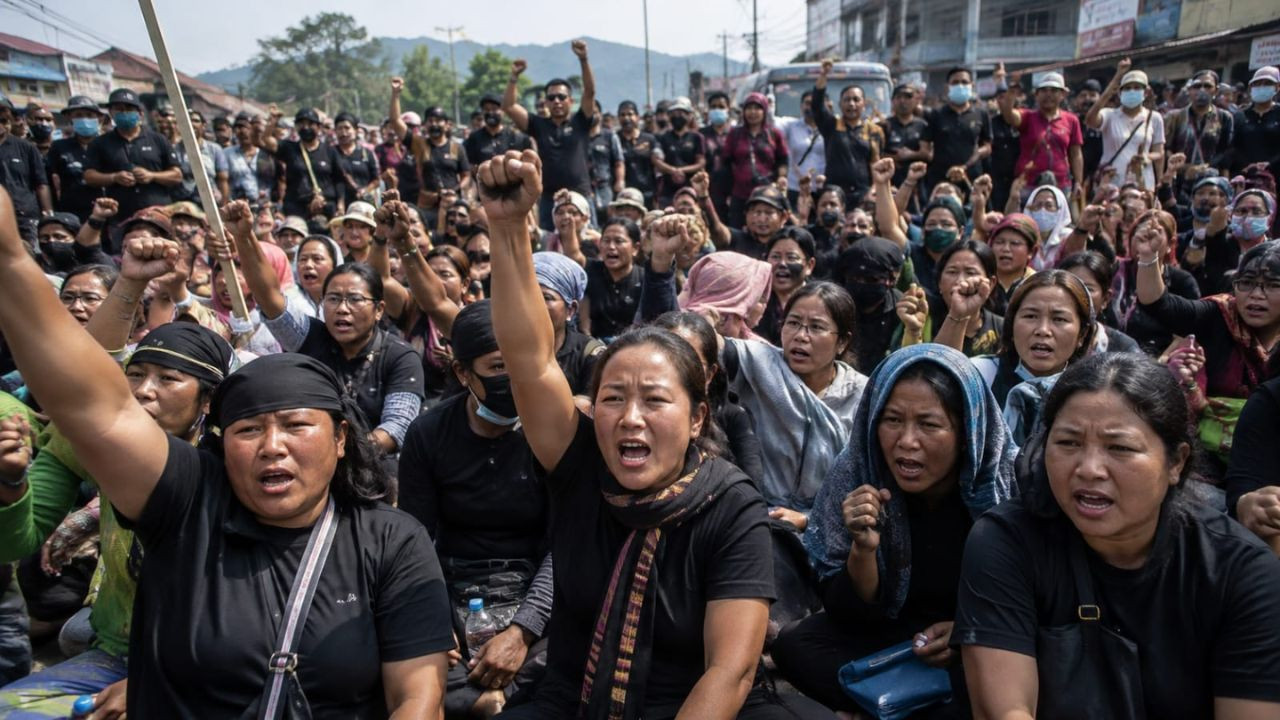
News of the land swap has sparked heightened alarm and aggression among local organizations in Manipur. COCOMI, a Manipuri civil society organization, has issued a clear warning that any compromise with the state’s territorial integrity will not be tolerated. Local groups argue that Manipur has already historically lost significant land, such as the Kabaw Valley, and that ceding even an inch of the state to Myanmar without public consent would be tantamount to insulting the state’s sentiments.