Survivors of devastating floods in Nepal’s hydropower corridor have recounted desperate escapes as rescue teams search for hundreds of missing workers. Many are believed trapped inside tunnels, while teams from Nepal, India and China continue efforts to locate and rescue them.
Published Date – 31 August 2026, 09:57 PM
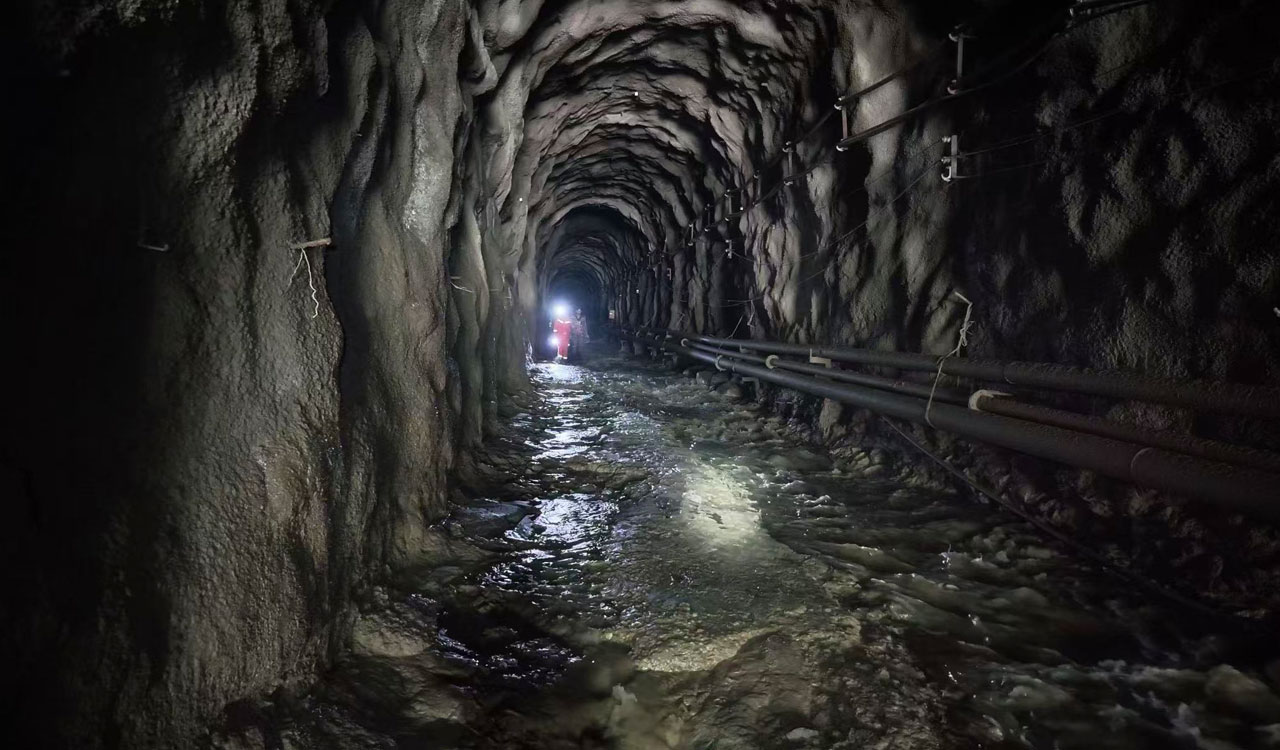
This screenshot from a video clip taken on Aug. 30, 2026, shows Chinese and Nepalese rescuers conducting joint search and rescue operations in a tunnel near Bidur, Nuwakot, Nepal, Aug. 30, 2026. The death toll from the devastating mudslide in Nepal has risen to 903, with 4,247 people still missing as of 9 a.m. local time on Monday, according to the National Disaster Risk Reduction and Management Authority.
Battar (Nepal): As the flood swallowed everything below them, Shiva Giri and six others could do little but climb. They watched houses, settlements and structures disappear as they fled uphill from the Mailung Hydropower Project in Rasuwa.
Several of Giri’s colleagues were swept away, as was his cousin, he told the Nepal News website. Cut off from the usual routes to Timure and Dhunche towns, the group trekked through a forest for about 12 hours before finding a cave where they spent the night.
Their ordeal was among the desperate escapes from Nepal’s flood-hit hydropower projects, where rescue teams are still trying to trace hundreds of workers and employees who have been out of contact since August 26. Many of them are believed to be stranded inside tunnels.
So far, around 280 people have been rescued from tunnels, while expert teams from India and China have joined Nepal’s efforts to locate and reach those still trapped, the authority said on Monday.
A controlled blast was carried out at one of the sites on Monday as rescuers struggled to access a blocked tunnel.
Giri, a technical employee at the Mailung Hydropower Project, said the group descended towards the project site the following day, reported themselves as displaced and called for rescue.
A Nepali Army helicopter eventually evacuated them to Kathmandu, where Giri was receiving treatment at Tribhuvan University Teaching Hospital, Nepal News reported.
At the Upper Trishuli-1 Hydropower Project, civil engineer Sandip Rana escaped the rising flood by climbing a hillside along with around 100 other employees.
Rana told The Rising Nepal on Monday that an emergency siren sounded while he was at the project office.
Before employees could reach their designated assembly point, they were told that a massive flood had struck the dam site about 12 km upstream.
The group began climbing towards higher ground and eventually reached a point about 30 to 35 metres above the Trishuli River. From there, they watched the project office, camps and roads disappear beneath the floodwaters.
“We had to keep climbing while also watching for falling stones. There was no time to stop and think,” Rana told the newspaper.
The group climbed for seven to eight hours before reaching a road in the Grang area around 4 pm. By the time Rana reached Kalikasthan, only two others remained with him, while the rest had become separated.
Another survivor, identified as Ramchandra, endured the flood from inside a tunnel along the Trishuli River. According to the Ratopati news portal, Ramchandra and five colleagues were hundreds of metres from the tunnel exit when water began entering the passage.
He grabbed an iron ladder installed along the tunnel roof to stop himself from being swept away. The six men used a sheet of tin to steady themselves and moved from one ladder to another for about six hours, Ramchandra said. “There were six of us, and later we met another person at the tunnel door.” The accounts came as the scale of the disaster continued to emerge across Nepal’s hydropower corridor.
Massive flash floods, believed to have been triggered by a collapse or avalanche of ice and rock near the Nepal-Tibet border, devastated towns and villages in northern and central Nepal on August 26. Hundreds were killed and thousands remain missing in the disaster.
The Bhotekoshi River, flowing south from the Himalayan border region, carried the floodwaters downstream, sweeping away homes, vehicles, roads and bridges and causing extensive damage to hydropower projects.
At the Upper Trishuli-3A Hydropower Project in Nuwakot, Nepali Army engineers have intensified efforts to reach workers believed to be trapped inside a buried tunnel, using heavy equipment and blasting to widen an opening.
A 90-member joint rescue team has been deployed at the site. The team reached the main section of the tunnel and created a six-square-foot opening. Rescuers descended through it using ropes and called out to those inside but received no response, officials said.
Heavy equipment and blasting were being used simultaneously while the opening was widened to speed up the rescue operation.
The Nepali Army also airlifted dismantled excavators and bulldozers to Battar in Nuwakot to help clear the approach, Nepal News reported.
The tunnel mouth was subsequently located about 40 metres upstream from the vertical opening and about eight metres below it, according to Ratopati. Rescuers, however, had yet to reach the workers believed to be trapped inside.