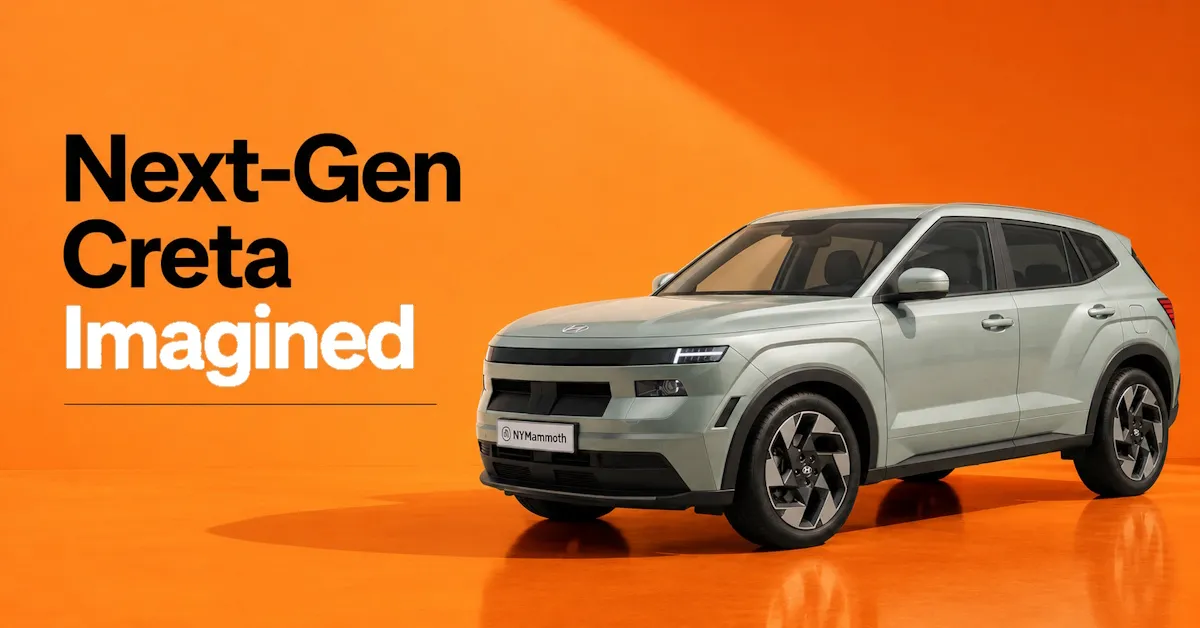
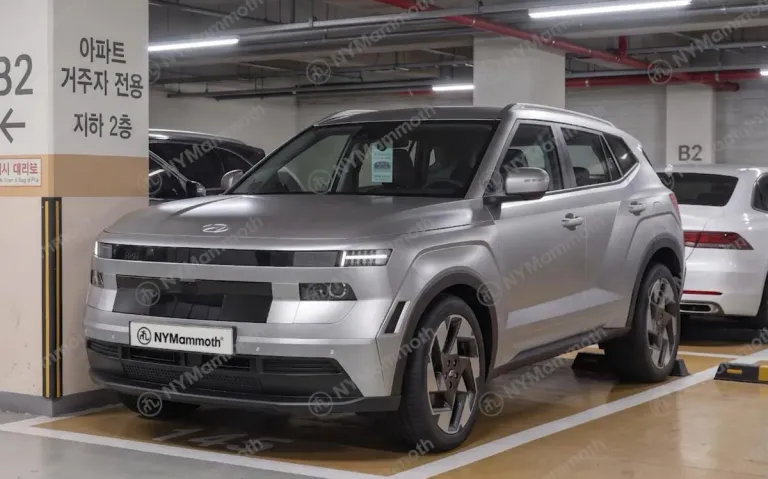
These rendered images of the new-generation Hyundai Creta have been shared on YouTube by NY Mammoth on their channel. As mentioned above, these renders have been based on the spy images of this SUV, which were recently shared online. Most of the spy images are from South Korea; however, Hyundai has commenced its testing in India as well.
First off, let’s start with the exterior design of the new-generation Creta, particularly the front end. At the front, we can note that this time around, the SUV will get a much more modern and futuristic fascia. It will boast a sleek front black grille with a pixelated design and T-shaped LED DRLs. The SUV will also feature a set of small LED projector headlights, which will be placed on the front bumper.
In the centre, there will be an air dam, and just above it will be a front parking camera. Moving a bit below, we can note that the SUV will boast a set of air vents and four parking sensors. We will also be seeing more of the pixelated elements on the lower portion of the bumper as well. Overall, the bonnet and front end of the vehicle have become more mature and bold, with sharp creases.
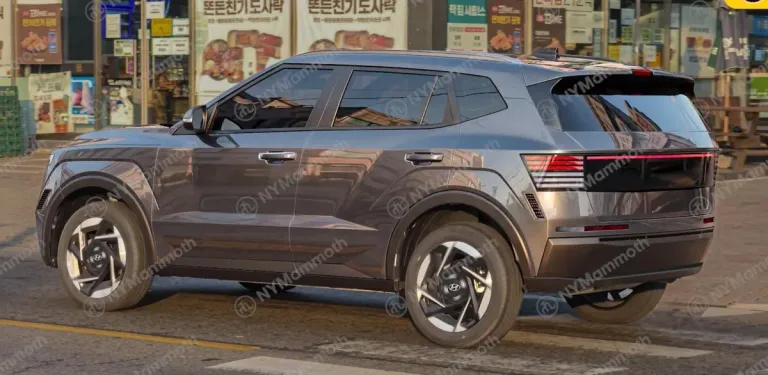
Moving to the side profile, the main highlight will be the offering of the new and bigger set of diamond-cut alloy wheels. These will boast a directional pattern finished in two tones. Additionally, there will be chunky cladding over the wheel arches; however, the cladding on the side will not be as thick. The profile will also boast sharp body lines and large windows. There will also be an integrated roof spoiler as well.
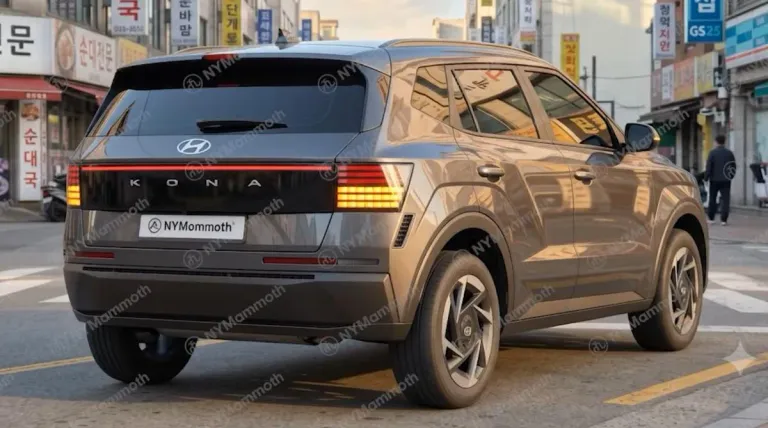
As for the rear end, the SUV will boast an upright tail end. It will feature connected LED taillights with pixelated elements and a black centrepiece on the tailgate. The rear bumper will be very bold and rugged-looking. One interesting note is that this SUV will not feature a traditional skid plate. Overall, the new Creta will become much more premium, modern, and aggressive while being classy at the same time.
Hyundai will also be updating the new-generation Creta’s cabin as well. The SUV will now boast a much bigger cabin with a lot of tech and features loaded in it. Spy shots have shown that it will feature a large freestanding central touchscreen, which will replace the integrated dual-screen layout seen in the current SUV.
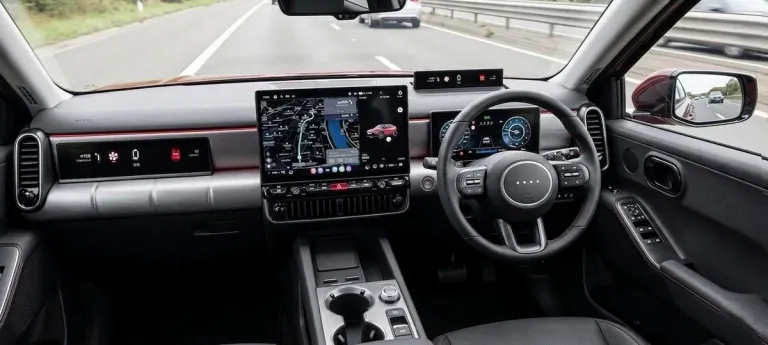
Along with it, the SUV will also boast a slim, fully digital instrument display, which will run Hyundai’s latest Pleos Connect operating system. The new software platform supports over-the-air updates, modular applications, and Hyundai’s AI-powered voice assistant called Gleo. The system will also offer voice-based control of various vehicle functions, and it is expected to get additional capabilities through future software updates.
Hyundai is also expected to offer an upgraded Level 2 Advanced Driver Assistance Systems (ADAS) package with additional autonomous driving functions compared to the current model. It will continue to offer multiple airbags, electronic stability control, a 360-degree camera, and other advanced safety features.
As for the powertrain options, Hyundai will continue to use the same engines as the current model. These include the same 1.5-litre naturally aspirated petrol engine, which makes 113 bhp and 144 Nm. It comes offered with both a 6-speed manual gearbox and an iVT automatic transmission.
The 1.5-litre turbo-petrol engine will also continue with 158 bhp and 253 Nm of torque output. It will be paired with a 7-speed dual-clutch automatic gearbox. And lastly, the 1.5-litre diesel engine is also expected to remain unchanged. This motor makes around 114 bhp and 250 Nm and comes offered with both manual and automatic transmission options. The company is reportedly also working on a strong hybrid version as well, which will be replacing the diesel variants.