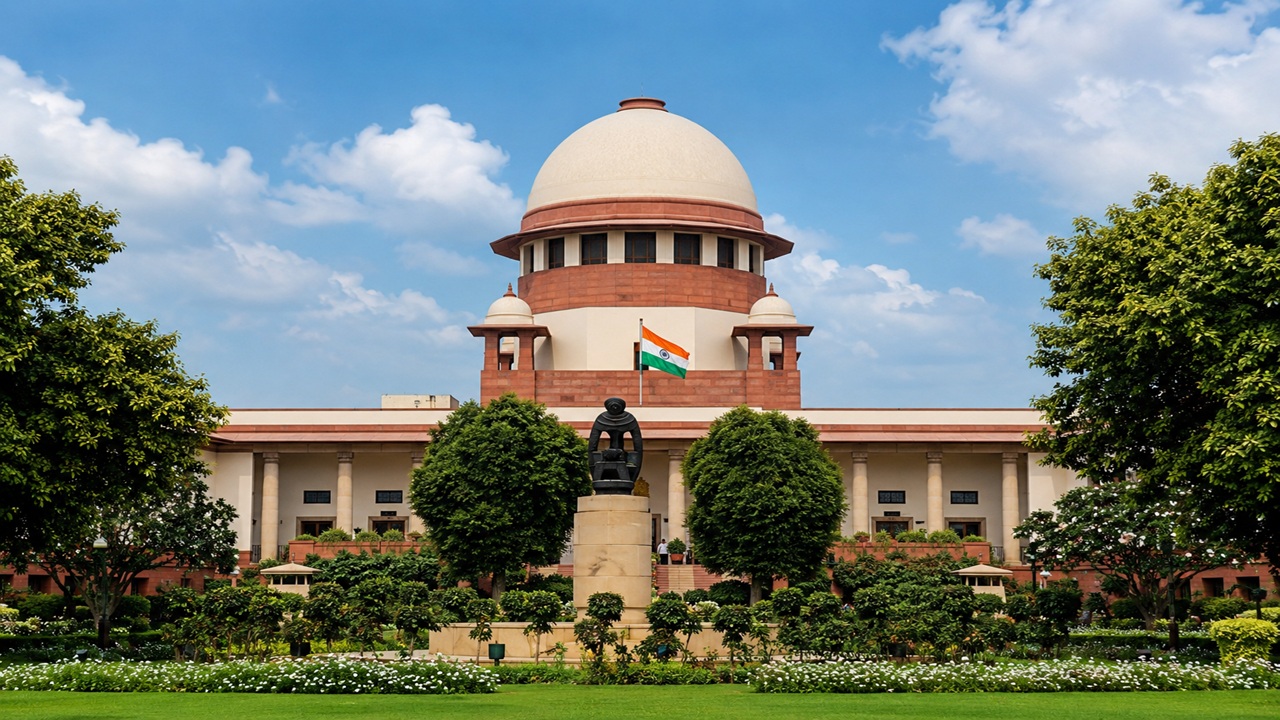
New Delhi: Taking a tough stance on vehicles plying on the roads without third-party insurance, the Supreme Court has issued important directions to the Central Government. The court has ordered to start a pilot project to ensure that vehicles without valid third-party insurance are not supplied with fuel at petrol pumps. While giving this order, a bench of Justices Sanjay Karol and Prashant Kumar Mishra clarified that effective implementation of insurance rules is necessary to ensure timely compensation to road accident victims.
The court has asked the Insurance Regulatory and Development Authority of India and the Ministry of Road Transport and Highways to jointly develop a system in which fuel will be provided only after verification of the validity of the vehicle’s insurance. The court has also advised the use of automatic number plate recognition cameras for this. The state police have been directed to provide mobile devices or apps that can instantly check the insurance of a vehicle. Through this, e-challans can be issued on the spot against vehicles violating the rules.
Meanwhile, the Supreme Court noted that according to the report of the Standing Committee on Finance of Parliament for 2024-25, about 56 percent of the vehicles in the country are uninsured. That is, out of about 30.48 crore registered vehicles in the country, 16.54 crore vehicles are running on the roads without third-party insurance. The court expressed regret that although third-party insurance is mandatory for every vehicle as per Section 146 of the Motor Vehicles Act, it is not being effectively implemented.
Insurance period for new vehicles to increase
The Supreme Court, citing its 2018 order, has revised its decision to make long-term third-party insurance mandatory for new vehicles. According to the new order, third-party insurance will be mandatory for four years for new cars and six years for new two-wheelers. The court has directed that necessary guidelines in this regard be issued immediately.