
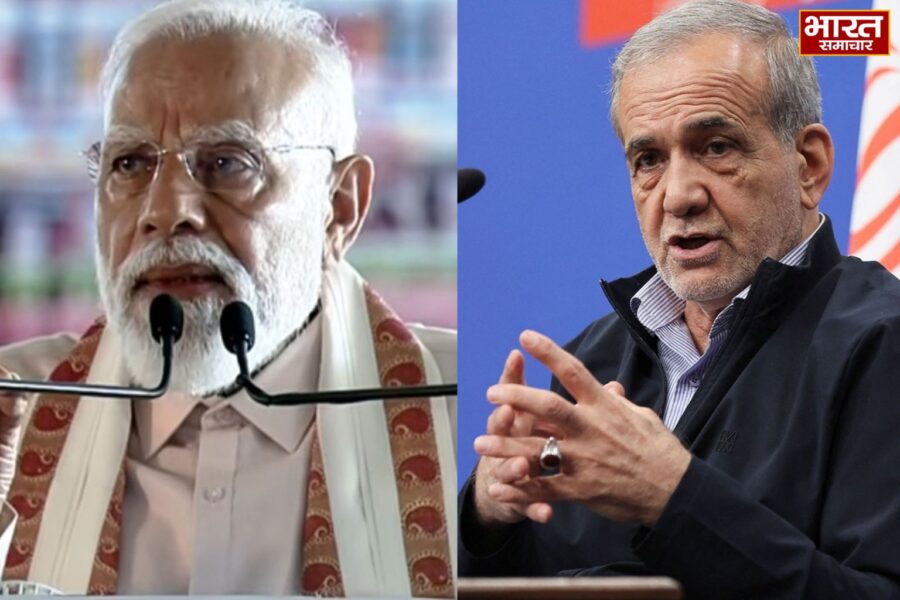
PM Modi’s big diplomatic step for peace in the Middle East, spoke to Iranian President Masood Pejeshkian, said security of ships is very important…

Amidst the ongoing tension and geopolitical changes in West Asia, Indian Prime Minister Narendra Modi has once again taken a major diplomatic step for global peace. PM Modi had a long phone conversation with Iranian President Dr. Masoud Pejeshkian on Tuesday. During this, the Prime Minister warmly welcomed the ’14-Point Memorandum of Understanding’ (MoU) and the progress made in diplomatic talks aimed at ending the hostility between America and Iran. He also laid special emphasis on freedom of navigation and unhindered movement of commercial ships in the ‘Strait of Hormuz’, a very sensitive sea route related to the economic interests of India and the entire world.
Opening of the Strait of Hormuz and the need for peace efforts
According to an official statement issued by the Prime Minister’s Office, President Pejeshkian briefed PM Modi in detail on recent developments in West Asia and the way forward for peacebuilding. Giving information about his conversation on social media platform It is noteworthy that this new MoU includes important rules for reopening the Strait of Hormuz and relaxing financial sanctions imposed on Iran.
Safety of Indian citizens and energy security top priority
This was the third telephonic conversation between the two leaders since the conflict in West Asia began this year. Earlier, in the talks held on March 12 and 21, PM Modi had described the safety and well-being of Indian citizens living in this war-torn region as India’s top priority. The Strait of Hormuz is very important for India because a large part of India’s crude oil supply passes through this sea route.
This conversation has taken place at a time when Iran has made it clear that the upcoming meeting brokered by Qatar in Doha is not a political talk with Washington, but an important technical meeting related to the release of frozen Iranian funds of $ 6 billion and implementation of technical rules.

Comments are closed.