
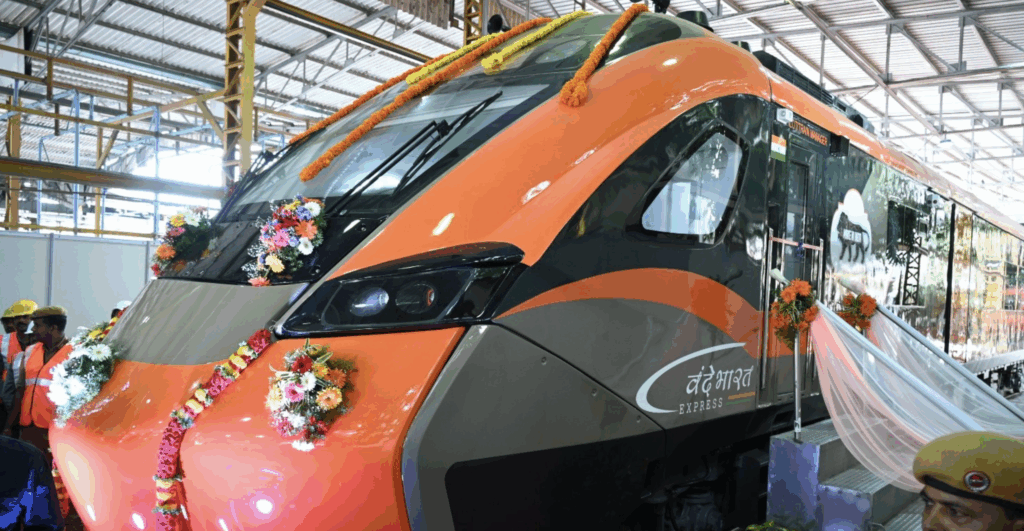

After months of speculation and growing demand from passengers, Pune is now expected to become part of India’s ambitious Vande Bharat Sleeper network.
Reports indicate that the upcoming Mumbai–Bengaluru Vande Bharat Sleeper train is likely to operate via Pune and Solapur, giving Pune travellers direct access to one of Indian Railways’ most premium overnight train services.
For lakhs of IT professionals, business travellers, students, and frequent passengers travelling between Pune and Bengaluru, this could become a major transportation upgrade.
The new sleeper train is expected to significantly reduce travel time while offering modern onboard facilities far beyond traditional overnight trains currently operating on the route.
Travel Time Could Drop Sharply
One of the biggest highlights of the proposed Vande Bharat Sleeper service is the expected reduction in travel duration.
At present, most trains between Pune and Bengaluru take around 18–20 hours depending on congestion, halts, and operational delays. However, early operational estimates suggest the Vande Bharat Sleeper could reduce the Pune–Bengaluru journey to nearly 13 hours.
This would make overnight rail travel dramatically faster and more comfortable for passengers travelling between Maharashtra and Karnataka.
Draft route discussions suggest the train may depart Mumbai in the evening, halt at Pune during the night, pass through Solapur, and arrive in Bengaluru the next morning.
Why Pune Is So Important For This Route
Pune has quietly become one of India’s busiest railway and intercity travel hubs.
The city has massive travel demand toward Bengaluru due to:
- IT and startup sector movement
- Student migration
- Manufacturing and industrial business travel
- Weekend and festival traffic
- Corporate connectivity between Maharashtra and Karnataka
Existing trains on the route often run at high occupancy levels, especially during weekends and holidays.
Railway planners have increasingly viewed Pune as a critical stop for premium long-distance rail services because of its rapidly growing population and strong business connectivity.
The Backstory: Why Indian Railways Is Expanding Sleeper Vande Bharat Trains
When Vande Bharat trains were first launched, they mainly focused on chair-car daytime journeys connecting cities within shorter travel durations.
However, Indian Railways soon realized there was massive demand for premium overnight train travel as well.
Passengers wanted:
- Faster overnight trains
- Better sleeping comfort
- Cleaner coaches
- Airline-style interiors
- Improved safety
- Reduced journey times
This led to the development of the Vande Bharat Sleeper project — India’s next-generation long-distance semi-high-speed overnight train system.
The Mumbai–Bengaluru corridor quickly emerged as one of the strongest candidates because of extremely high passenger demand and strategic economic importance.
What Passengers Can Expect Inside The Train
The Vande Bharat Sleeper trains are expected to feature major upgrades compared to conventional sleeper trains.
Expected features include:
- Modern AC sleeper coaches
- Improved suspension systems
- Better noise insulation
- Automatic doors
- Advanced safety systems
- Smart lighting
- Modern toilets
- Enhanced passenger information systems
- Comfortable berths designed for overnight travel
The trains are also expected to operate at significantly higher average speeds compared to traditional express services.
A Big Win For Pune’s Railway Connectivity
If the Pune routing is finalized officially, the city could emerge as one of the biggest beneficiaries of India’s expanding Vande Bharat Sleeper network.
The corridor would not only improve connectivity with Bengaluru but also strengthen Pune’s position as a major transportation and business hub connecting western and southern India.
For now, official schedules and final operational details are still awaited. But one thing is becoming increasingly clear — Pune’s long-awaited high-speed overnight rail connection to Bengaluru now looks closer than ever before.

Comments are closed.