4
Students face a difficult choice between unsafe housing, higher rents and disruption to their studies.
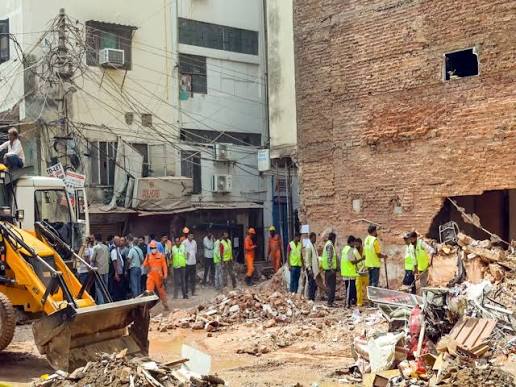
The building collapse in Satya Niketan has left students living around Delhi University’s South Campus worried about their safety and uncertain about where they will live. Seven people died in the incident, including Delhi University students. Since then, several students living in nearby paying guest accommodations have either returned to their hometowns or started looking for new places to stay. The incident has also raised questions about the safety of the large number of PGs and rented accommodations that house students around the university. Aarti Shrivastava, a third year student in Moti Lal Nehru College, who lived close to the collapsed building said the incident had made it difficult to continue living in the area. “I cannot live with the constant fear of dying,” she said. She also mentioned even normal sounds in the building had become frightening after the collapse. “Every time I heard a loud noise, I thought my building was going to fall,” she added. For students who have come to Delhi from other parts of the country, leaving their accommodation is not easy. Most have classes, assignments, examinations and other academic commitments. Moving back home can also mean interrupting their studies.
Another DU student, Kushal Yadav from Bihar, who had been living in a PG near South Campus, said the condition of the building had worried him even before the incident. “The building was so fragile, it felt like it would fall any day,” he said. The student had been paying a substantial amount for a single room and had also paid money as a deposit and brokerage. Moving out after the collapse meant losing money and finding another room at short notice. The problem is particularly serious because students have limited alternatives. Delhi University has thousands of students who come from outside Delhi, but university hostels cannot accommodate everyone. Many therefore depend on private PGs, hostels and rented rooms in areas close to their colleges. Students say that when choosing accommodation, rent and distance from college are often the first considerations. They may not have the knowledge or resources to check whether a building has proper structural or fire-safety approvals. One student, Vikas Kumar, said the collapse had changed the way students look at their accommodation. “Earlier, we would ignore small problems in the building. Now every crack, construction activity or unusual sound makes us nervous,” he said. The impact has also reached students whose buildings were not directly affected by the collapse. Parents have become more concerned about their children’s safety and some have asked them to return home. For students, however, returning home can create another problem.
Vanya Gehlot, a student from outside Delhi said that going back would mean missing classes and disrupting academic work. “My parents are asking me to come home, but I came to Delhi to study. I cannot simply leave every time something happens,” she said. The Delhi government has started taking steps to address the safety concerns. Authorities have begun inspecting PGs and other buildings in and around Satya Niketan. Buildings found to be unsafe or unauthorised are being examined for action. The government is also working on a system to regulate private PGs more closely. The proposed framework would require PG operators to obtain licences and meet structural, fire-safety and police-verification requirements. Registered PGs are expected to be listed on a central portal so that students can check information before taking accommodation. The proposed system would also include measures such as CCTV cameras, security arrangements and designated wardens in larger establishments. Students would have a mechanism to report safety concerns and complaints. The government has also set up an 18-member committee to look at the wider shortage of student accommodation in Delhi. The committee will examine the possibility of using vacant government properties as hostels, prepare a database of student accommodation and suggest measures to improve safety.