New Delhi, September 9, 2026 (Yes Punjab News)
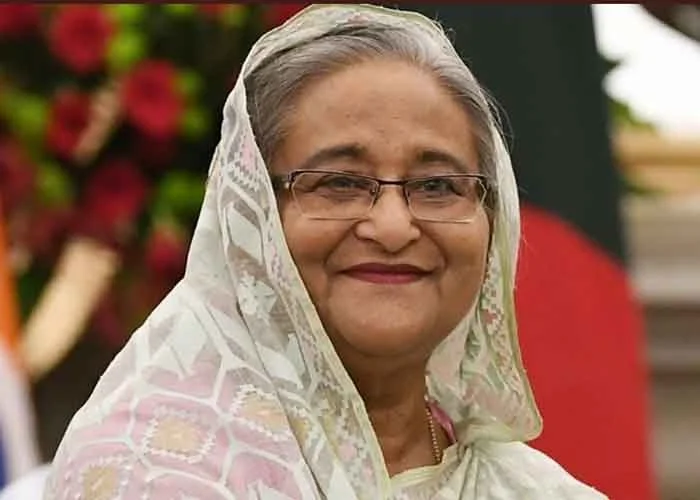
Former Bangladesh Prime Minister Sheikh Hasina's possible return to the country has triggered renewed speculation over her future, with officials in Dhaka insisting on her extradition while Hasina herself has said she intends to return voluntarily in December 2026.
Dhaka has repeatedly asked India to extradite Hasina, who left Bangladesh following her ouster in August 2024. Bangladesh's International Crimes Tribunal subsequently sentenced her to death in absentia over allegations of crimes against humanity.
According to reports from Dhaka, officials have indicated that Hasina would face execution if she returns and would have no opportunity to seek a review of the verdict.
Zahed Ur Rahman, Advisor to Bangladesh Prime Minister Tarique Rahman on Information and Broadcasting, was quoted as saying that India “must send Hasina back” if bilateral relations are to be normalised.
Describing Hasina as an “accused”, “absconding accused” and “convicted person sentenced to death”, Rahman said the government wanted to bring her back rather than wait for her voluntary return. Quoting the chief prosecutor of the International Crimes Tribunal, he said Hasina would face the death penalty upon arrival and added that the government wanted to bring her back by capturing her.
Hasina, meanwhile, has expressed fears for her safety if she returns. In a telephonic interview reported by Bengali news website The Wall, she reportedly said that she could be targeted at the airport. At the same time, she reiterated that Bangladesh was her country and maintained that she planned to return in December 2026 to surrender voluntarily.
Similar concerns were raised by Shafiqul Alam, former Press Secretary to interim government Chief Advisor Muhammad Yunus. In a Facebook post discussing Hasina's possible return, Alam argued that allowing her to cross into Bangladesh through routes such as Benapole or Banglabandha could create political repercussions for India if she were attacked or executed.
Benapole in Bangladesh's Jessore district lies across the Petrapole border in West Bengal's North 24 Parganas, while Banglabandha is a major inland port in northern Bangladesh near the strategically important Siliguri Corridor.
Alam argued that an Indian government would therefore be unlikely to facilitate Hasina's return without assurances from a future government in Dhaka regarding her safety and the death sentence. He referred to the May 1981 assassination of then Bangladesh President Ziaur Rahman, father of incumbent Prime Minister Tarique Rahman, while discussing the political consequences of a potential crisis surrounding Hasina's return.
Hasina and her sister Sheikh Rehana were the only members of Sheikh Mujibur Rahman's immediate family to survive the August 15, 1975 assassination because they were abroad at the time.
Alam also said Hasina's reported choice of Sheikh Selim as a potential successor to lead the Awami League could be linked to concerns that her direct access to the media might eventually be restricted. Dhaka has accused Hasina of using virtual interactions to challenge the interim authorities and influence international opinion.
Bangladesh officials have also argued that allowing Hasina to remain in India until December could give her additional space to shape the political narrative, while Dhaka continues to press for her immediate extradition.
The positions remain sharply different: Dhaka presents her return as an issue of justice and sovereignty, while Hasina describes it as a voluntary act of accountability. Despite the differing approaches, the statements point to serious uncertainty over Hasina's fate if and when she returns to Bangladesh.