
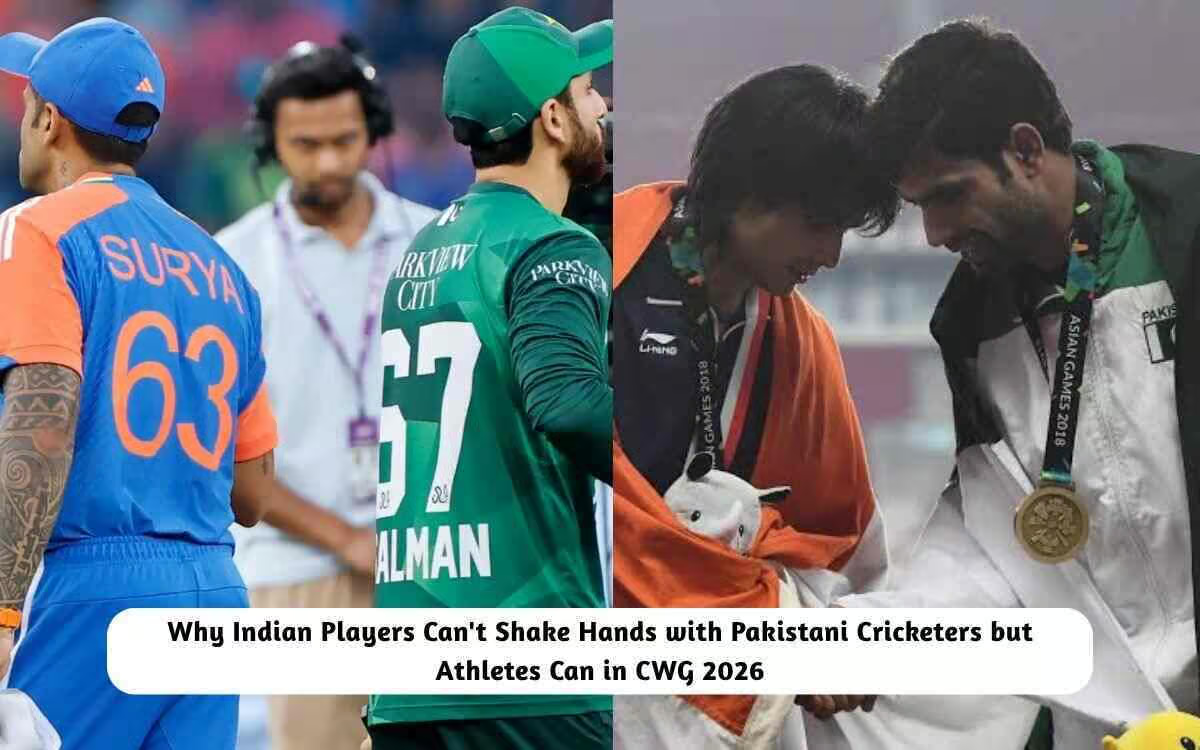

Indian athletes competing at the 2026 Commonwealth Games have personal choice. Athletes are permitted to decide whether to shake hands with opponents. The decision differs significantly from India’s cricket team policies established.
Indian officials have given clear instructions to all competing athletes. Officials instructed athletes not to accept gifts from Pakistani counterparts. Handshake protocols vary depending on the individual sports federations governing them.
Athletes at CWG 2026 Can Choose Whether to Shake Hands
Indian athletes at the 2026 Commonwealth Games have personal choice. Athletes are allowed to decide whether to shake hands with rivals. The decision comes ahead of several India-Pakistan contests across sports.
One marquee event is the men’s javelin match featuring athletes. Neeraj Chopra from India will contest against Arshad Nadeem from Pakistan. In boxing, India’s Jadumani Singh Mandengbam faces Pakistan’s Sumama Rehman. Athletes from various nations are sharing a stay during the Commonwealth Games.
Neeraj Chopra and Arshad Nadeem are staying in the same hotel. This proximity happens before their highly anticipated javelin contest. Lawn bowls officials specifically informed Indian players that handshakes are acceptable.
High-fives and other normal on-field greetings with opponents are permitted. Several Indian sports federations confirmed they received no handshake restrictions.
BCCI’s Cricket-Specific No-Handshake Policy After Pahalgam Terrorist Attack
India’s no-handshake policy applies specifically to cricket under BCCI rules. The policy was introduced following the Pahalgam terrorist attack. This attack significantly strained sporting relations between India and Pakistan.
Since that time, Indian cricketers have avoided handshakes with opponents. This practice has been followed in Asia Cup 2025 matches. The practice continued in the ICC T20 World Cup 2026 too.
Even age-group cricket matches follow this established policy consistently throughout. Although bilateral cricket remains suspended, teams continue facing each other. ICC tournaments feature these teams where policy remains in effect.
Different Approaches Across Indian Sports with Varying Policies
The no-handshake policy has not been universally adopted across sports. Different sports have different approaches to athlete interactions with opponents. Junior hockey players from India and Pakistan exchanged high-fives.
This happened after the Sultan of Johor Cup hockey match. Blind women’s cricket teams from India and Pakistan shook hands. These teams shook hands after their World Cup fixture together.
Such examples illustrate that interaction protocols vary based on governing bodies. Each sport’s federation decides its own greeting and handshake policies. Individual sports manage their own interaction guidelines with Pakistani athletes.
Comments are closed.