
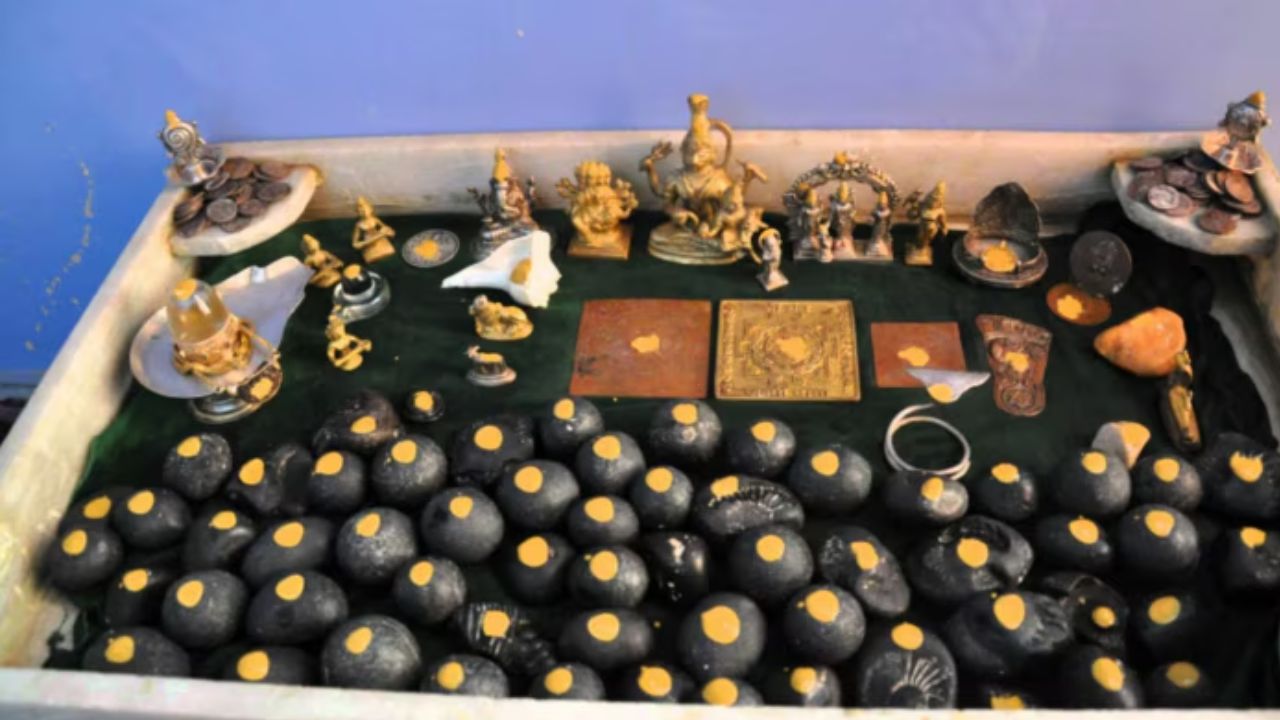
Shubh Labh: If there are 2 Shaligrams in the house then consider them to be the form of Lakshmi Narayan, women should not touch them at all.

In Hindu religion, Shaligram is considered to be the form of Lord Vishnu. It is believed that in the house where Shaligram is present, doing special puja, sattvikta and following the rules is considered auspicious. Although it is not mandatory to worship Shaligram before eating food, there is definitely a tradition of offering food to God.
According to narrator Devkinandan Thakur, if Shaligram is installed in the house then it is considered auspicious to offer sattvik food to God before eating. Especially Lord Vishnu does not accept offerings without Tulsi, hence Tulsi group must be kept in Naivedya. Along with this, Devkinandan Thakur tells in a video that how many Shaligrams are auspicious to have in the house and how many are inauspicious, he also told whether women should touch Shaligram or not…
How many Shaligrams is considered auspicious to keep?
According to Devkinandan Thakur-
1 Shaligram: Symbol of Lord Vishnu
2 Shaligram: Lakshmi-Narayan form
3 Shaligram: Increase in wealth and good fortune
4 Shaligram: Form of four-armed Vishnu
He said that not more than five Shaligrams should be kept in the house and one or two Shaligrams are considered sufficient for an ordinary householder.
Important rules related to Shaligram Puja
1. Do not leave without basil
Lord Shaligram should always be kept with Tulsi. It is considered auspicious to offer Tulsi asana even after taking bath.
2. Offer only satvik food
There should be satvik food in the offering. Onion-garlic, meat and liquor are considered prohibited in many Vaishnav traditions.
3. First enjoyment then food
The family should consume food only after offering food to God. After this the same food is considered as Prasad.
4. What are the beliefs about women?
According to some traditional beliefs, women are told not to touch Shaligram, although this depends on different sects and beliefs. In many families, women also worship with devotion.

Comments are closed.