4
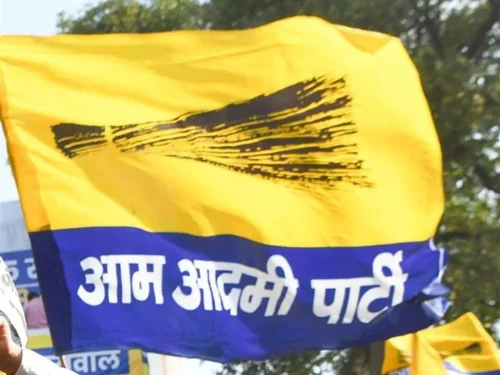
While BJP goes on the offensive, AAP argues that it is trying to pin Delhi’s pollution woes on Punjab.
With less than a year to go before Punjab elects its next government, pollution is once again featuring in political exchanges between the BJP and the Aam Aadmi Party (AAP).
Despite the annual controversy over stubble burning and its contribution to deteriorating air quality across northern India, the issue has not acquired the prominence of unemployment, drugs, law and order, agricultural distress and the state’s financial position in the emerging electoral discourse.
The latest exchange between Delhi Environment Minister Manjinder Singh Sirsa and AAP national convenor Arvind Kejriwal has brought the subject back into focus. Sirsa has accused Kejriwal of attempting to malign Delhi over its pollution levels while questioning the Punjab government’s failure to control farm fires. He has also criticised the Bhagwant Mann government for its handling of stubble burning, an issue that has repeatedly triggered political confrontations between the governments in Delhi and Punjab.
The AAP has countered the allegations, arguing that the BJP is attempting to hold Punjab’s farmers responsible for Delhi’s pollution while ignoring other sources of emissions in the national capital.
The exchange reflects a recurring political pattern. During the period when AAP governed Delhi but was in Opposition in Punjab, Kejriwal frequently raised stubble burning as a contributor to the capital’s winter pollution. Since the party came to power in Punjab in 2022, its emphasis has shifted towards the need for financial assistance to farmers, access to machinery and alternatives to burning crop residue.
The BJP has used this change in position to question AAP’s consistency, while the Congress has also questioned the effectiveness of the state government’s interventions.
Punjab’s farm-fire figures have remained central to the debate. The state recorded 36,663 incidents in 2023, 10,909 in 2024 and 5,114 in 2025. The Mann government has cited the decline as evidence of progress through machinery distribution, awareness campaigns and administrative measures. However, incidents have continued during the 2026 harvesting season, with the cumulative count reaching 2,196 by November 3, according to figures reported in the media.
Despite the recurring political exchanges, pollution has not featured prominently in the major campaign themes being discussed by political parties ahead of the Assembly elections. Vikas Rawat, a political analyst who follows Punjab’s politics, said the issue had not acquired the electoral significance of subjects that voters encounter throughout the year.
“Pollution becomes a major political issue during the harvesting season, particularly when farm fires begin and air quality deteriorates in Delhi and other parts of north India,” he said. “Pollution may be raised by political parties, but it has not yet become a sustained electoral issue.”
Rawat added that the issue also presented challenges for parties in Opposition. “Every party has to explain its position on stubble burning. The ruling party has to answer questions about implementation, while the Opposition has to explain what it would do differently. Since the problem is linked to agricultural practices, financial constraints and the interests of farmers, there is no simple political solution that a party can present,” he explained.
The agricultural dimension is also a factor in the limited political attention given to the issue. Paddy harvesting leaves farmers with a short interval to prepare their fields for wheat sowing. Clearing crop residue through machinery involves additional expenditure, while arrangements for collection, transportation and commercial utilisation of straw remain uneven.
Riya Mishra, an environmental activist, said the debate was largely confined to the period when farm fires were visible. “Stubble burning is discussed extensively for a few weeks every year, but the underlying agricultural and economic issues receive much less attention,” she said. “Farmers need affordable machinery, reliable arrangements for the collection of residue and financial support to adopt alternatives. Unless these arrangements are available, enforcement measures alone cannot address the problem.” Mishra also mentioned that the political parties needed to include crop-residue management, crop diversification and public-health concerns in their long-term policy proposals rather than restricting the discussion to the number of farm fires recorded during the season.
The Punjab government has maintained that farmers should not be criminalised for burning stubble and has sought financial assistance from the Centre to provide incentives for alternative methods.