
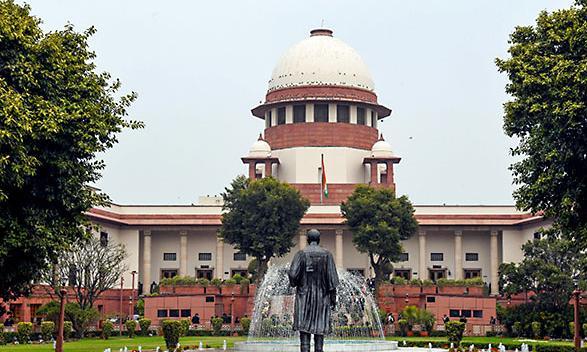

In a development that would leave several crores in West Bengal disappointed, the Supreme Court on Monday (April 13) refused to accommodate a plea by 13 people seeking its intervention in the deletion of their names from the voter list during the contentious Special Intensive Revision in the poll-bound state, calling it “premature”.
A panel consisting of Chief Justice Surya Kant and Justice Joymalya Bagchi instructed the affected parties to seek recourse through the designated appellate tribunals instead.
Also read: Bengal poll is peak drama: Mamata’s welfarism, BJP’s UCC promise, 91 lakh voters missing
The court gave its views 10 days before the first of Bengal’s two phases of elections is held on April 23.
‘Apprehensions premature’
“Since the petitioners have already approached the appellate tribunals… in our considered view, the apprehensions expressed in the petition are premature. If the plea is allowed, then necessary consequences will follow,” the bench said in its order, adding that it has not expressed any views on the merits of the plea.
The complaint asserted that the Election Commission was removing names without adhering to due process and that appeals regarding these removals were not being addressed promptly.
The Chief Justice of Calcutta High Court has set up as many as 19 tribunals headed by former high court chief justices and judges to decide appeals against deletions of names of persons from the voters’ lists.
Senior counsel D S Naidu, representing the commission, notified the court that there are roughly 30 to 34 lakh appeals awaiting resolution.
Also read: Bengal elections: Peace came to Jangalmahal, but prosperity didn’t follow | Ground Report
“Every tribunal now has over one lakh appeals to handle,” the bench remarked.
The petitioners’ counsel argued that the commission had failed to place necessary orders before the relevant judicial authorities and that the “freezing date” for the electoral rolls should be extended.
“If I am not allowed to argue, then what is the use? Will these appeals be decided within a timeframe or just kept extending?” the counsel asked.
Court rules out TMC leader’s plea
During the proceedings, Kalyan Banerjee, the lawyer MP from Bengal’s ruling Trinamool Congress, stated that a minimum of 1.6 million appeals have been submitted, and these individuals should be permitted to participate in the election later this month.
It moved the apex court little with CJI Surya Kant saying the question did not arise. He said if the court allowed that, the voting rights of those involved would have to be suspended.
Justice Bagchi, in the course of the hearing, emphasised the importance of the electoral process and stated that the right to vote is not just a constitutional formality but a “sentimental” foundation of democracy.
‘Right to vote is sentimental’
“The right to vote in a country you were born in is not just constitutional, but sentimental. It is about being part of a democracy and helping elect a government,” he said.
Also read: What the deletion of 91 lakh voters means for Bengal elections | Monideepa Banerjie
He, however, said that the tribunals, manned by former judges, cannot be overburdened by fixing the timelines for adjudications.
“It is not the end justifying the means, but the means justifying the end,” Justice Bagchi said.
“We need to protect due process rights. The voter should not be sandwiched between two constitutional authorities,” he said, adding that it would not interdict the election process at this stage.
Justice Bagchi noted that the Calcutta High Court Chief Justice had already formulated the manner and mode for appeals, which began on Monday.
Also read: In Bengal, TMC fiercely defends bastion as BJP tries to melt fish-loving Bengali heart
CJI Surya Kant emphasised that the petitioners must exhaust their remedies before the appellate tribunals.
As the polling date draws near, the court is now confronted with the challenge of reconciling voter rights with procedural integrity in what is considered one of the major electoral disputes in recent history.
(With agency inputs)

Comments are closed.