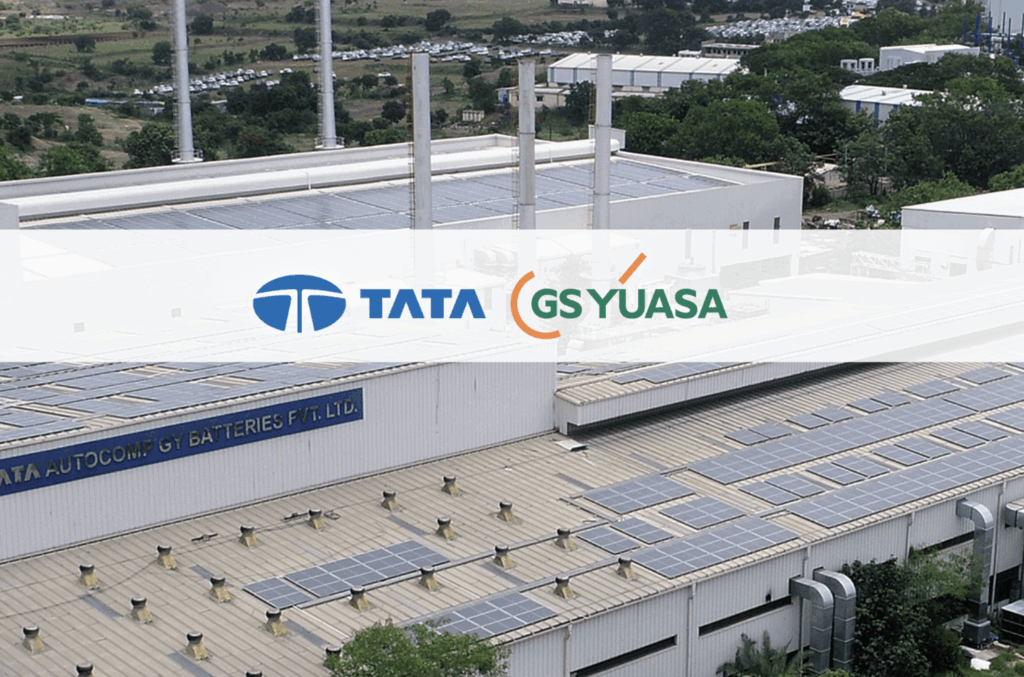
Tata Moves Towards In-House Battery Technology
Tata Group’s battery manufacturing arm is preparing to make lithium battery cells using its own technology for the first time, marking a major shift towards greater self-reliance in battery manufacturing.
Agratas Energy Storage Solutions Pvt Ltd, the Tata Group company responsible for its battery operations, is developing its own manufacturing process as tighter Chinese restrictions on the export of critical battery technology make access to overseas technology more difficult.
The move could help Tata reduce its dependence on foreign technology providers while building deeper expertise in lithium cell manufacturing in India.
Pilot Line Planned At Sanand Factory
Agratas is setting up a pilot production line for lithium iron phosphate (LFP) cells at its upcoming battery manufacturing facility in Sanand, Gujarat.
The pilot line will be used to refine the manufacturing process and validate the first batch of LFP cells before the company moves towards commercial production.
A team of Indian, South Korean and Chinese engineers will work together on the manufacturing process and validation of the initial cells.
China’s Export Curbs Push Tata Towards Self-Reliance
The decision comes after Agratas executives concluded that securing a technology deal with a Chinese company was unlikely because of restrictions imposed by Beijing on the export of critical manufacturing know-how.
The situation has also affected other Indian companies seeking access to battery manufacturing technology.
Reliance Industries and JSW Group have similarly faced difficulties accessing cell manufacturing technology as existing licensing arrangements encounter challenges.
For Tata, developing the technology internally could therefore become an important step in establishing a more independent domestic battery manufacturing ecosystem.
LFP Technology Will Cost More And Take Longer
Building LFP cell technology from scratch will not be easy.
The in-house approach is expected to increase both costs and development timelines for Agratas because the company will have to go through the technology development and validation process itself.
This is different from Tata’s approach to nickel manganese cobalt (NMC) cells. For NMC technology, Agratas licensed established technology from Japan’s Automotive Energy Supply Corp, a unit of Hong Kong-based Envision Energy International.
That partnership allowed the company to avoid the early stages of technology development.
Sanand Factory To Make Two Types Of Cells
The upcoming Sanand factory is expected to produce both LFP and NMC cells.
The development of in-house LFP technology could give Agratas greater control over its manufacturing processes and reduce dependence on external technology providers over time.
The move is also significant for Tata Group’s broader ambition of creating a domestic battery manufacturing ecosystem.
Building India’s Battery Manufacturing Capability
Agratas is central to Tata Group’s plans to establish battery manufacturing capabilities in India. Developing proprietary technology could give the company greater flexibility as it scales production and responds to changes in the global battery supply chain.
The shift also demonstrates how restrictions on technology exports are pushing Indian companies to develop more capabilities domestically, even when doing so requires additional investment, engineering expertise and time.
Summary
Tata Group’s battery unit Agratas Energy Storage Solutions is preparing to manufacture lithium cells using its own technology for the first time. It is setting up a pilot line for LFP cells at its Sanand, Gujarat factory, with Indian, South Korean and Chinese engineers working on the process. The move follows difficulties in accessing Chinese technology and is expected to increase development costs and timelines.
Image Source