
Prapaporn Boonkhachornkul, deputy managing director at property consultancy Savills Thailand, said Phuket and Samui are now competing directly as destinations for international property investment, according to The Nation.
In Phuket, Russian buyers remain the largest client group, with market analysts expecting their dominance to continue for at least another three years as condominium units purchased in recent years change hands through 2026 and beyond.
|
Phuket, Thailand. Photo by Unsplash/Jamison Cameron |
Meanwhile, Koh Samui is undergoing a historic expansion in residential supply. During the first half of 2026, more than 800 villa units were launched across 70 to 80 projects.
Israeli investors are becoming an increasingly influential force in Samui and the neighboring island, Koh Phangan.
The pace of development in Samui exceeded that of Phuket, where 40 to 50 new villa projects totaling about 700 units were introduced in the first half, marking a supply shift not seen in decades.
Annual villa demand in Phuket typically remains just below 1,000 units, but international demand across both islands is expected to stay strong over the next three to five years.
Samui’s momentum
Following the post-pandemic recovery, Israeli arrivals to Samui increased from 70,000 to more than 200,000, providing momentum for rising residential demand, according to Bangkok Biz News.
Prime areas such as Mae Nam, Bophut, Choeng Mon, and Koh Phangan have seen expanding clusters of residential and commercial development.
 |
|
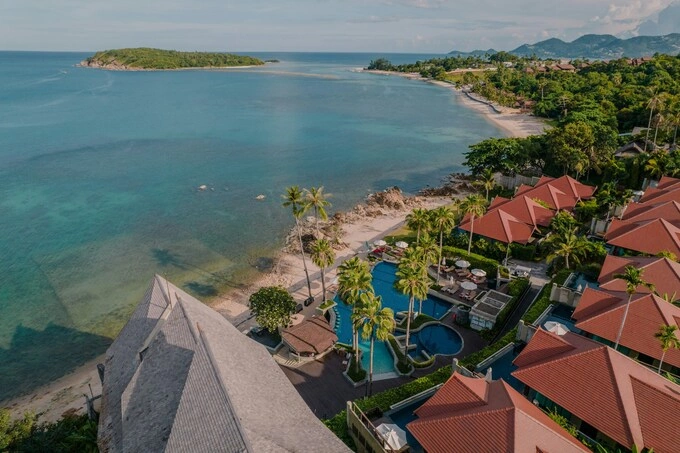
Koh Samui, Thailand. Photo by Unsplash/Antonio Araujo |
To manage development costs, many foreign investors prefer legal long-term leasehold agreements lasting between 10 and 30 years instead of purchasing freehold property outright.
Taking advantage of Samui’s lower land prices compared with Phuket, investors develop boutique villa projects comprising 10 to 25 units before subleasing them through private networks. The strategy has created an integrated ecosystem covering property development, management, and tenant acquisition.
Strong investment returns continue to attract buyers. During peak tourism seasons, mid- to high-end villas can generate monthly rental income of several hundred thousand baht, while legally structured condominium rentals can earn tens of thousands of baht per month.
Developers estimate annual returns of 8% to 10%, exceeding property yields in many Western markets.
The continued inflow of foreign capital has boosted Thailand’s construction, employment, and service sectors. However, industry observers have raised concerns about regulatory oversight and capital monitoring, particularly in transactions involving digital payment systems or digital assets.
Questions have also been raised about the use of foreign labor and imported construction materials, which can reduce the local economic multiplier effect, as well as the potential use of Thai nominee shareholders to bypass land ownership restrictions, a practice that Thai authorities are legally required to investigate.
In response to these market developments, proposals are gaining support to review tax policies for foreign property buyers.
Analysts have pointed to international models such as Singapore’s Additional Buyer’s Stamp Duty, suggesting Thailand could adopt a tiered tax system for foreign buyers owning multiple properties to boost state revenue, support domestic housing stability, and preserve the country’s competitiveness as an investment destination.