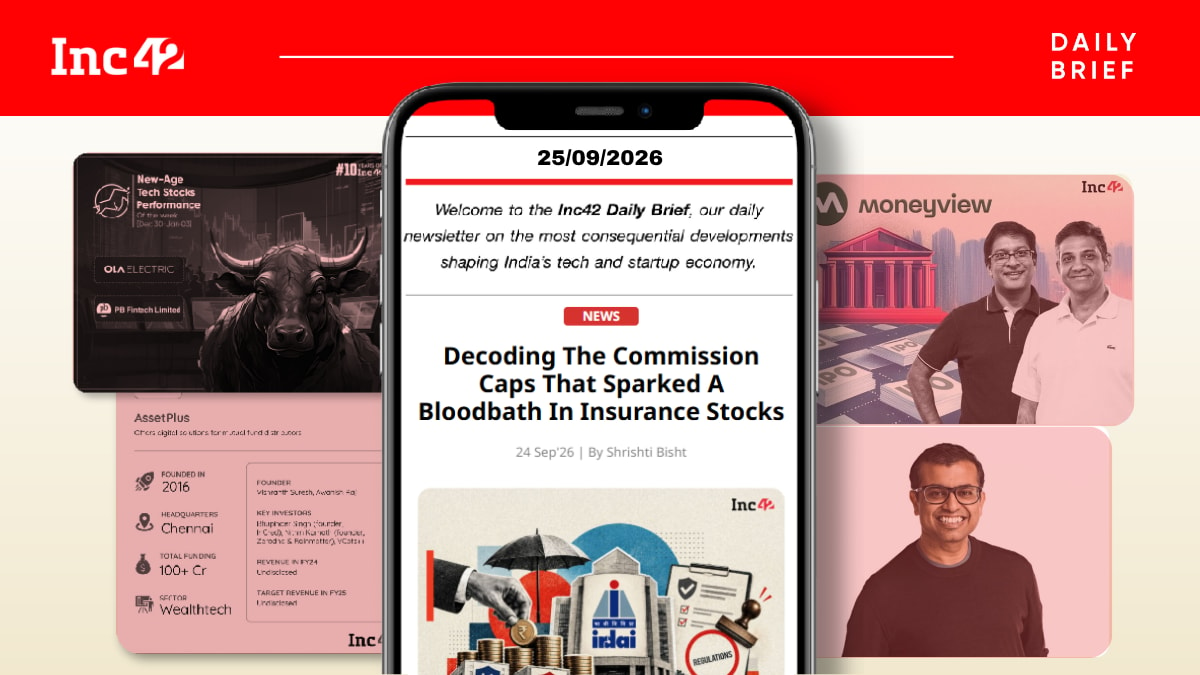
IRDAI Resets Insurtech’s Economics
The IRDAI has proposed a radical overhaul of the insurance tech sector. The draft norms threaten to dismantle lucrative payout structures, impose commission caps and introduce tighter expense limits for insurance distributors. Can the sector adapt to this new regime?
The Commission Reset: IRDAI’s consultation paper seeks to re-introduce product-level commission ceilings. Under the proposed framework, mandatory or near-mandatory products will attract nil or low commissions for IDEs (such as PB Fintech and Turtlemint’s insurtech arm), while products requiring greater selling and servicing efforts will have 15% cap.
The IRDAI Eclipse: The regulator has also proposed lowering EoM limits for life and general insurers, while mandating cost audits for all IDEs above ₹100 Cr revenue. The draft norms also ban compulsory loan-insurance bundling, restrict employee incentives and introduce a three-tier distribution structure, with clawback provisions, to curb misselling.
Insurtechs On The Edge: For starters, the proposed caps could threaten the high upfront commissions of aggregators, which in turn could take a toll on their user acquisition strategies. Unbundling insurance from loans could also potentially lead to revenue compression across various categories, while pushing competition toward service, technology and product discovery.
Markets React Sharply: The draft norms resulted in a major sell-off. PB Fintech shares crashed 36% to ₹1,210, while Turtlemint stock tanked 20% to hit an all-time low of ₹109.1. Brokerages flagged severe margin compression. While Jefferies projected a 10-12% earnings cuts for distributors, Citi warned of 70–90% economics compression in high-margin categories like credit-linked insurance.
What’s Next? With stakeholder comments due by October 25, final rules may differ from current proposals. Yet the market’s reaction underscores the stakes. Platforms will have to cut acquisition spends and diversify into new areas. They will also have to rethink products and insurer partnerships. So, will lower commissions drive transparency or squeeze margins? Let’s find out…

From The Editor’s Desk
📈 Moneyview IPO Day 1
- The fintech unicorn’s public issue was subscribed 1.44X at the end of the first day of bidding, with investors placing bids for 33.49 Cr shares against 23.25 Cr shares on offer.
- NIIs led the demand and oversubscribed their portion 2.43X, while the retail quota was subscribed 1.79X. However, the QIBs remained on the sidelines and undersubscribed their portion 0.05X.
- Moneyview’s ₹1,092 Cr IPO comprises a fresh issue of shares worth up to ₹750 Cr and an OFS of up to 10.05 Cr shares. At the upper end of its ₹32-₹34 price band, the public issue values the company at around ₹5,985 Cr.
💰 Ema Bags $77 Mn
- The agentic AI startup has raised ₹738 Cr in its Series B round led by Creaegis to scale its GTM strategy and expand into new geographies. It has not disclosed the valuation at which it raised the latest fund.
- Founded in 2023, Ema is building agentic AI systems that can plan and execute enterprise workflows. With 200 employees on its rolls, the startup focuses on automating functions like HR, IT and finance. It has raised $140 Mn to date.
- The fundraise comes as enterprises increasingly deploy agentic AI systems to automate tasks and bring down company costs. At the heart of all this is the Indian enterprise AI economy, which is projected to become a $71 Bn opportunity by 2030.
📊 Navi’s FY26 Loss Widens
- The IPO-bound fintech startup’s net loss zoomed 269% YoY to ₹465.99 in FY26. This came despite revenue from operations jumping 16.2% YoY to ₹2,981.7 Cr in the fiscal under review.
- The bottom line took a hit largely on the back of total expenses surging 29% YoY to ₹3,514 Cr in FY26. On the operational front, Navi’s loan book grew 57% YoY to ₹13,138 Cr, while monthly transacting users more than doubled YoY to 2.9 Cr.
- Founded in 2018, Navi offers financial products across lending, insurance, mutual funds and UPI payments. The startup is also gearing for its ₹3,000 Cr IPO and plans to file its DRHP by December this year.
✂️ VCs Dump SEDEMAC Shares
- Shortly after the expiry of its IPO lock-in period, the B2B manufacturing startup’s early backers A91 Partners, Xponentia, NJRN Family Trust and Mace Pvt Ltd cumulatively offloaded shares worth ₹1,456.38 Cr via multiple bulk deals.
- While A91 Partners sold shares worth ₹484.9 Cr, Xponentia sold 16.85 Lakh shares for a sum of ₹507.4 Cr. Mace sold another 7.28 Lakh shares worth ₹219 Cr and NJRN Family Trust dumped 4.5 Lakh shares worth ₹135 Cr.
- Separately, Accel and 360 ONE together sold 61.98 Lakh shares of jewellery brand Bluestone via multiple open-market transactions for ₹513 Cr. The shares that flooded the market were lapped up by domestic mutual funds and insurance companies.
🔔 AceVector All Set For IPO
- Ahead of the commencement of the bidding for its public issue later today, the Snapdeal parent raised ₹189 Cr from anchor investors. It allocated 5.91 Cr shares to anchor investors at ₹32 apiece, the upper end of its IPO price band.
- Only two domestic mutual funds took part in the round, picking up 15.87% of the total allocation. Negen Capital, Singularity Capital and TIMF Holdings also participated in the anchor round.
- AceVector’s ₹420 Cr public issue comprises a fresh issue of shares worth ₹287 Cr and an OFS component of 4.16 Cr shares. At the upper end of its ₹30-₹32 price band, the IPO values AceVector at around ₹1,741.4 Cr.
Inc42 Markets

Inc42 Startup Spotlight
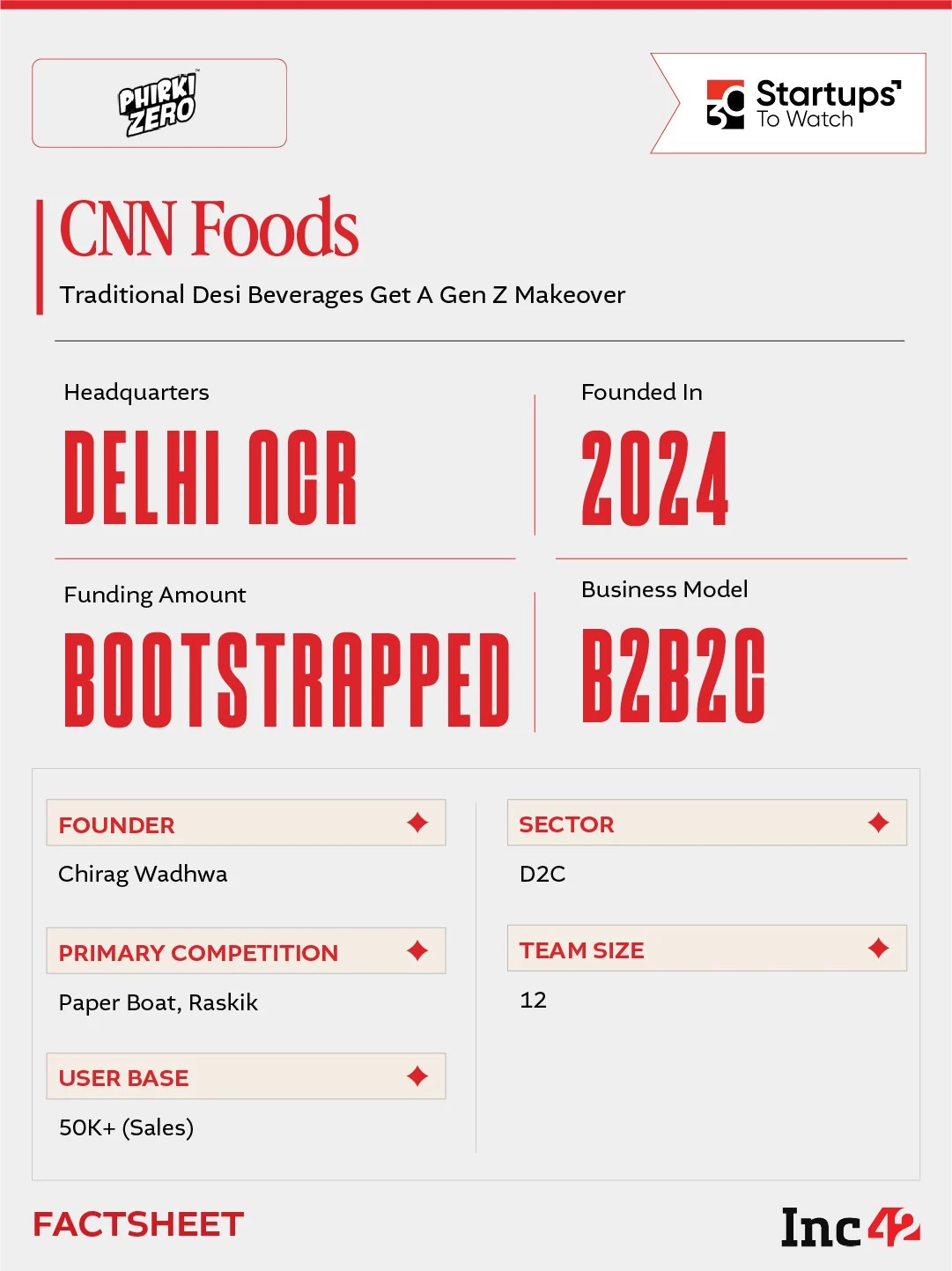
How CNN Foods Is Serving Nostalgic Beverages With A Twist
India’s beverage shelves are crowded with global giants selling colas and energy drinks, while many familiar local flavours remain trapped in regional formats. CNN Foods is modernising these tastes for younger consumers, combining nostalgia with zero-sugar formulations.
Remixing Familiar Flavours: Founded in 2024, CNN Foods is building a portfolio of culture-led beverage brands. Its flagship Phirki Zero is positioned as a zero-sugar and zero-caffeine take on jeera masala soda, made with lemon. Its second product, Papa Nata, pairs fruit juice with coconut jelly, turning a conventional drink into a drink-and-snack experience.
The Q-Comm Launchpad: Phirki Zero launched in March 2026 and sold roughly 2.5 Lakh cans in its first two months, with nearly 80% of sales coming through the quick commerce channel. The brand has since expanded to modern trade and kirana outlets and other online channels.
A Desi Take: CNN Foods claims that its products are designed to be consumed for their flavour, texture and “talkability” as much as for refreshment. The startup’s packaging and affordable pricing are built for phone-first discovery, designed to make experimentation accessible beyond premium urban consumers.
A Competitive Market: Competing with the likes of new-age brands such as Paper Boat, Lahori and Raw Pressery, CNN Foods’ early challenge is to turn early quick commerce traction into repeat consumption and profitable distribution. But the startup is banking on lower-sugar products and affordable formats to carve a niche.
With India’s non-alcoholic beverages market projected to cross $69 Bn by 2034, can CNN Foods make unconventional Indian flavours mainstream?
Infographic Of The Day
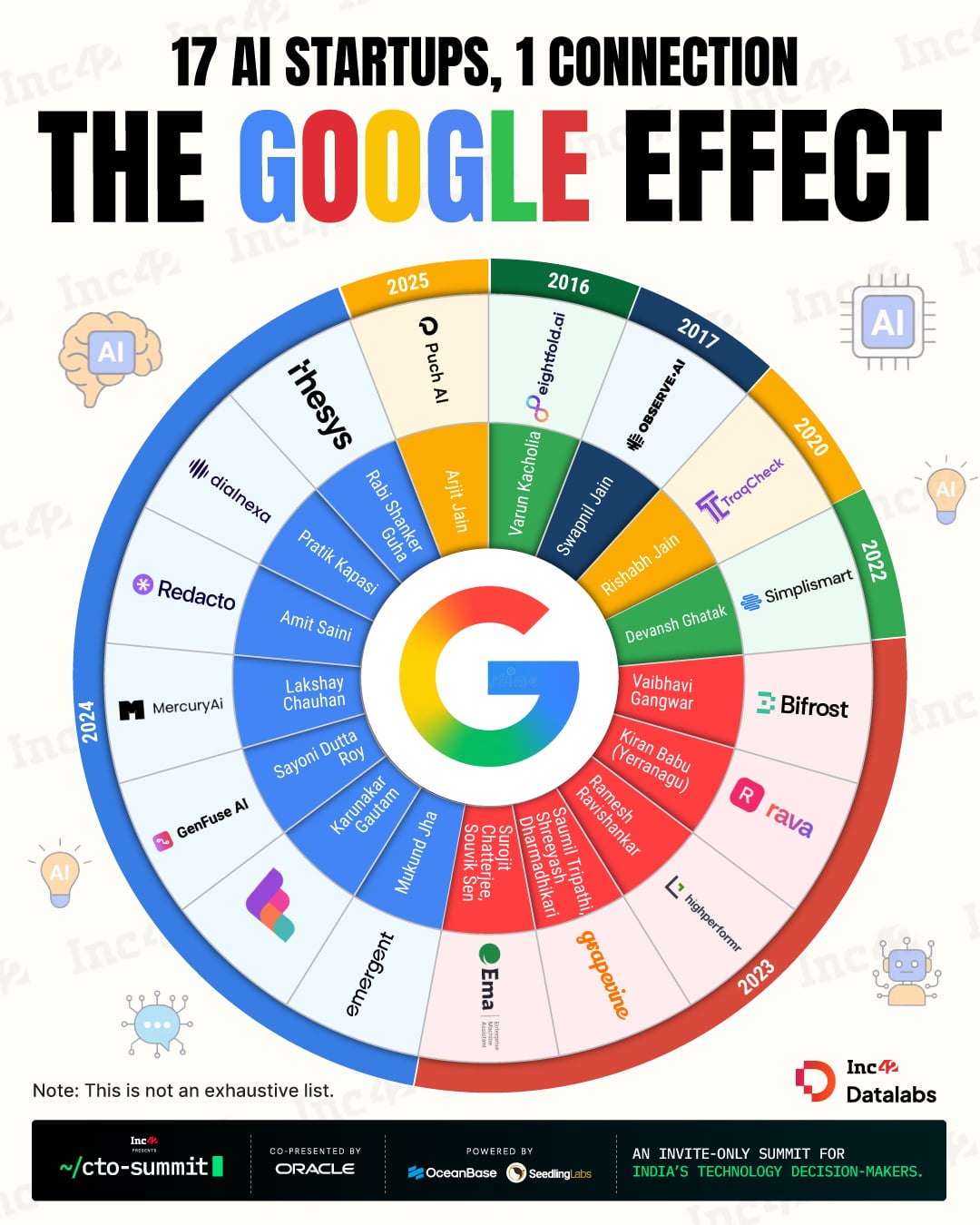
AI has been the buzzword for years now. But what if we told you a bunch of India’s AI startups have something else in common. Their founders once worked at Google. So, which Indian founders are taking their experience from Google to the startup world…