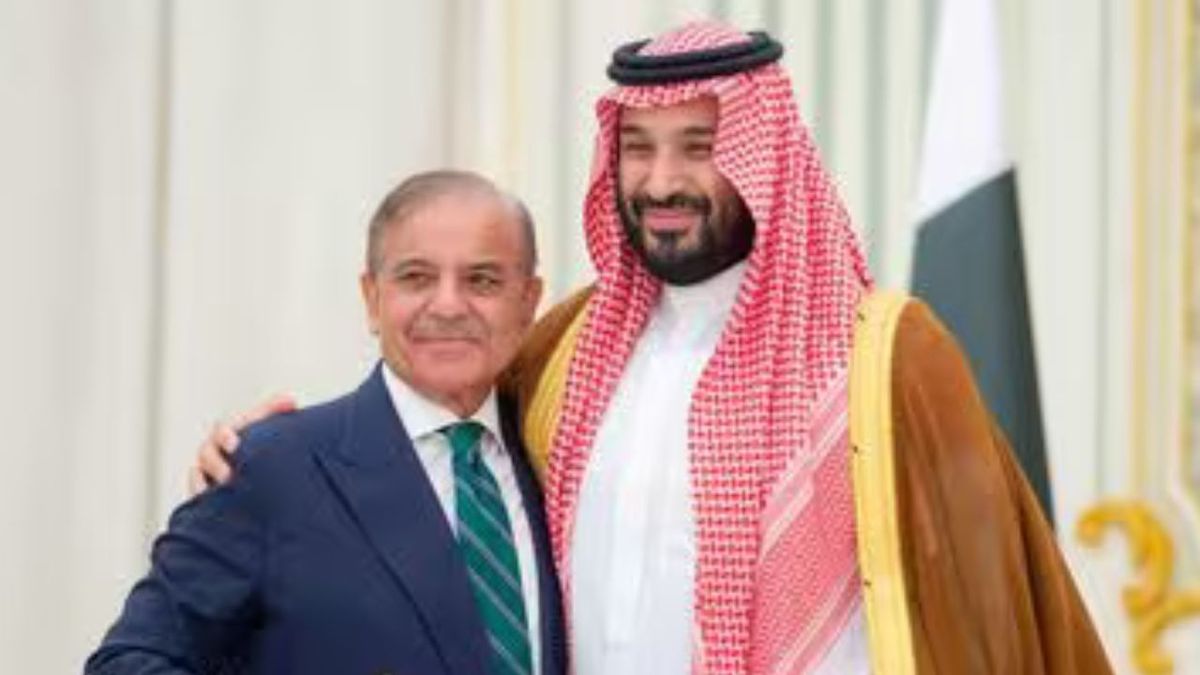
When Prime Minister Shehbaz Sharif signed the Strategic Mutual Defense Agreement (SMDA) with Crown Prince Mohammed bin Salman in Riyadh on 17 September 2025, the conventional reading was that Pakistan was merely formalizing an old partnership while preserving its balance between the two shores of the Gulf.
But each step Islamabad has taken under the pact is best read as a cost imposed on Tehran, and the cumulative price has been the neighborly relationship itself.
The timing of the agreement is the first piece of evidence. President Masoud Pezeshkian had been received in Islamabad only a month earlier, in August 2025, amid assurances of deepening ties. Within weeks, Pakistan bound itself to the principle that aggression against Saudi Arabia would be treated as aggression against Pakistan itself.
For Tehran, whose principal rival across the Gulf is Riyadh, the effect was to place a nuclear-armed army on its eastern flank in the service of an adversary's defense. Earlier Pakistani governments had avoided such a formal commitment. In 2015, following a parliamentary resolution, Pakistan declined a Saudi request to join the war in Yemen. Abandoning that restraint was a choice, and Iran bears the strategic cost.
The Warning
The second step came once the war began. Within hours of the conflict's opening on 28 February 2026, when US and Israeli strikes killed Ayatollah Ali Khamenei, Islamabad condemned Iran's retaliation against the Gulf states as a violation of sovereignty. On 3 March, Deputy Prime Minister Ishaq Dar told the Senate he had personally reminded Foreign Minister Abbas Araghchi of Pakistan's obligations to Riyadh, and he indicated publicly that Pakistan might be forced to enter the conflict.
Three days later, Field Marshal Asim Munir was in Riyadh, discussing with the Saudi defense minister the measures needed to halt Iranian attacks under the pact. The message to a country under bombardment was unambiguous: its freedom to respond would be limited by its own neighbor. In May, Dar restated the point, describing Saudi Arabia as a “no-go area.”
The deployment
Words were then followed by forces. In April 2026, while Islamabad was hosting talks between Tehran and Washington, Pakistani fighter jets and troops arrived in the kingdom. Later reporting put the deployment at some 8,000 soldiers, a fighter squadron and an air-defense system, financed by Riyadh. The coincidence of the two events is difficult to regard as accidental.
A host that reinforces the rival of one delegation while talks are in session is applying pressure, not offering good offices. Some commentary at the time read the move as a signal to Iran to show flexibility at the table. The cost to Tehran was twofold: a weaker negotiating position, and the knowledge that the venue of its diplomacy was also contributing to the military posture arrayed against it.
The Widening
The fourth step enlarged the commitment. On 7 August 2026, Pakistan joined Saudi Arabia and Turkey in the Mecca Joint Defense Agreement, extending the collective-defense clause to three Sunni-majority powers. The text names no adversary, but Iranian officials understood to whom it was addressed.
On 5 October, the alliance activated its deterrence measures against the Iran-aligned Houthis, and Pakistan undertook, with its partners, to deploy the agreed forces rapidly. A commitment presented a year ago as bilateral and defensive has thus become an instrument directed at Iran's regional partners, with Pakistani soldiers as its means.
Three conclusions can be drawn. First, the sequence is consistent: signature, warning, deployment and enlargement each narrowed Iran's options, and each was a choice. Second, the motive appears transactional. Saudi financial support has repeatedly underwritten Pakistan's fragile economy, and Tehran has no comparable inducement to offer.
Third, the costs are unlikely to stop at the border. A 900-kilometre frontier, a Shia community of between 15 and 20 per cent of the population, and the unrest that left at least 23 dead after Khamenei's killing all suggest that the bill for Saudi friendship will, in time, be presented in Pakistan as well. The relationship with Iran has been spent to pay for it.