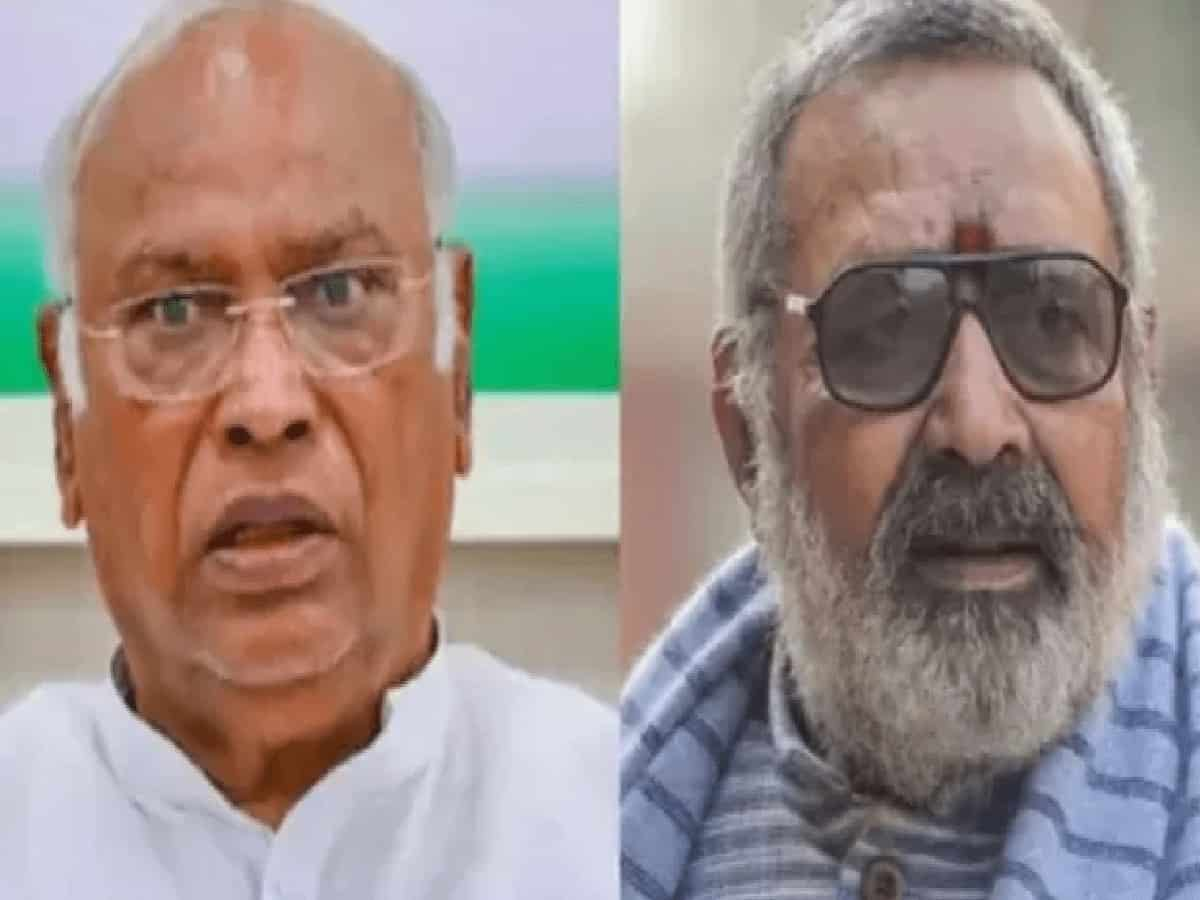
A major political controversy erupted during the festive weekend after Congress President Mallikarjun Kharge referred to Diwali as the “Eid of joy and happiness” while extending greetings to the nation. The phrasing drew an immediate and sharp rebuke from the ruling Bharatiya Janata Party (BJP), with senior leaders accusing the Congress leadership of engaging in calculated vote-bank appeasement and eroding the sacred religious distinctiveness of Sanatan festivals. Leading the offensive on Monday, November 9, 2026, Union Minister Giriraj Singh launched a fiery attack on the Congress chief, asserting that the opposition party’s “true colours” have been laid bare before the Indian electorate. Characterizing Kharge as a mere political megaphone repeating talking points dictated by the Gandhi family, Singh alleged that the remarks were part of a long-standing ideological pattern aimed at fragmenting Hindu society to consolidate minority support. As national party spokespersons joined the ideological clash, the verbal duel escalated into a broader national debate over cultural preservation, secular discourse, and political rhetoric during major religious celebrations.
The Spark: Kharge Describes Deepavali as the ‘Eid of Happiness’
The friction began on Sunday as citizens across the nation celebrated Deepavali by lighting traditional earthen diyas, performing Lakshmi Puja, and sharing festive delicacies. Addressing mediapersons during an official holiday interaction, Congress President Mallikarjun Kharge extended his best wishes for national unity, peace, and shared joy across all communities. However, his choice of words immediately drew public and media scrutiny when he described the festival of lights as an inclusive “Eid of joy,” framing it as a collective celebration belonging equally to all citizens regardless of their religious affiliations.
The comparative remark triggered prompt pushback from political commentators and right-wing organizations, who contended that drawing direct linguistic parallels between deeply distinct theological celebrations obscures their cultural roots. While supporters within the Congress party defended Kharge’s intent as a poetic expression of India’s syncretic Ganga-Jamuni tehzeeb and universal brotherhood, the ruling party moved swiftly to challenge the phrasing, turning the holiday greeting into a national political flashpoint.
Giriraj Singh’s Retort: ‘Kharge Speaks the Script of the Gandhi Family’
Reacting forcefully to the statement, Union Minister for Textiles Giriraj Singh held a media interaction to counter Kharge’s comparison. Singh contended that the Congress chief was not speaking from personal conviction, but rather functioning as an ideological mouthpiece executing a broader strategy formulated by former party president Rahul Gandhi and the Gandhi household.
The Union Minister laid out an unsparing critique of the Congress leadership:
The ‘Loudspeaker’ Analogy: Singh dismissed the autonomy of the Congress president’s public positions, remarking: “Mallikarjun Kharge has no independent voice of his own. He functions like a loudspeaker that merely amplifies whatever tape is inserted into it by Rahul Gandhi and the Gandhi family”.
Appeasement Politics: Accusing the Grand Old Party of pandering to sectarian voter groups, Singh said: “Their true colours have once again been exposed before the nation. Congress has consistently played the politics of appeasement to split Hindu unity while bending over backwards to gratify specific voting blocs”.
Historical Grievance: Tracing the roots of communal polarization back to modern Indian history, Singh claimed that the Congress had adhered to divisive electoral calculations since the partition of 1947, choosing political expediency over civilizational heritage.
Silence on Extremism: BJP Highlights Double Standards
Continuing his offensive, Giriraj Singh accused the opposition leadership of maintaining selective silence whenever controversies or incidents of communal provocation affect Hindu festivals. The Union Minister pointedly questioned why neither Mallikarjun Kharge nor Rahul Gandhi takes a firm stand against polarizing rhetoric delivered by controversial state leaders within their political orbit, citing recent derogatory remarks by Jharkhand politician Irfan Ansari.
Singh highlighted what he described as deliberate legislative and executive double standards:
The Ghaziabad Incident: Singh brought attention to recent firecracker disputes and crude explosive seizures in Ghaziabad during Diwali preparations, expressing outrage over what he described as absolute silence from Congress party headquarters regarding threats to holiday celebrations.
Protecting Sanatan Identity: The minister asserted that the public has grown weary of witnessing Hindu festivals subjected to secular dilution while other religious milestones are observed strictly within their original theological terminology. “This mindset of diminishing Hindu sentiments will no longer be tolerated in this country,” Singh warned.
National Spokespersons Intervene: Bhatia and Sinha Challenge Congress
Echoing Singh’s criticisms, the BJP national communications team mounted a coordinated offensive from party headquarters in the national capital. Senior BJP national spokesperson and Supreme Court advocate Gaurav Bhatia questioned why the Congress high command felt compelled to redefine Diwali rather than celebrating it by its millennia-old nomenclature.
Bhatia posed a direct public challenge to the opposition leadership:
The Reciprocal Query: Challenging the consistency of Congress’s secular framing, Bhatia asked: “What prevents the Congress party from calling Diwali by its sacred original name? We challenge Mallikarjun Kharge and Rahul Gandhi to stand before the public and declare whether they would ever dare to describe Eid as the ‘Diwali of Happiness'”.
Erosion of Faith Traditions: Fellow party spokesperson Tuhin Sinha echoed the sentiment, arguing that attempts to merge distinct cultural milestones under generic terminology dilute the distinct spiritual identity of Sanatan traditions. Sinha claimed that such rhetoric is strategically deployed to soften the public perception of traditional Hindu practices.
Political Fallout: Secular Rhetoric Meets Cultural Polarisation
The confrontation between Giriraj Singh and Mallikarjun Kharge highlights the deepening cultural and ideological polarization running through contemporary Indian politics. As regional assembly elections and crucial legislative cycles approach, debates surrounding cultural heritage, religious vocabulary, and state secularism continue to serve as major mobilization levers for both national coalitions.
While the Congress and its alliance partners maintain that expressing festive solidarity across faith lines represents the foundational pluralism of the Indian Constitution, the BJP has increasingly held opposition parties accountable for perceived imbalances in addressing community sentiments. With Union Minister Giriraj Singh’s sharp rebuff dominating prime-time news debates and digital platforms, the controversy demonstrates that even festive holiday messages now operate within an intensely contested ideological battlefield.