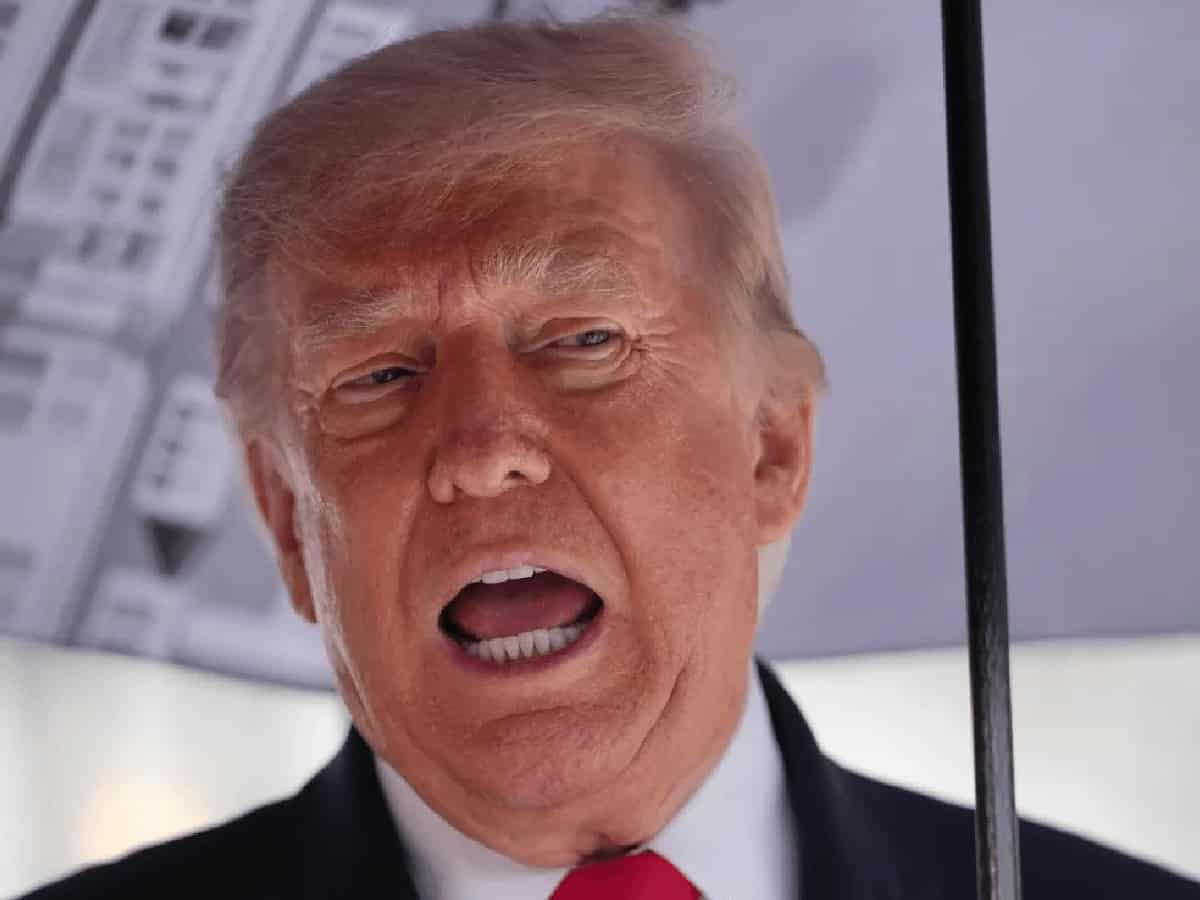
In a major diplomatic signal amid high tensions across the Persian Gulf, US President Donald Trump stated that fresh American military strikes against Iran are “highly unlikely,” provided ongoing negotiations yield concrete progress regarding Tehran’s nuclear program and the reopening of the strategic Strait of Hormuz. In an extensive 20-minute telephone interview with CNN, the US President repeated the phrase “highly unlikely” five times, indicating a willingness to suspend military escalation if Iranian leadership agrees to comprehensive diplomatic terms. Despite his diplomatic opening, Trump maintained pressure by revealing that American military planners have identified 38 key Iranian bridges capable of being destroyed within an hour, while describing the Islamic Republic as a “failing nation” crumbling under severe economic distress. The remarks come amid sharp warnings from Tehran, where Iranian Foreign Minister Seyed Abbas Araghchi demanded an end to hostilities on all fronts or warned that Iranian forces would “rain down hell,” alongside statements from Israeli Defence Minister Israel Katz asserting that Israel’s military mission against Iran remains incomplete.
Diplomatic Signaling: Trump Weighs In on Negotiations and Deterrence
Speaking by phone with CNN, Donald Trump framed the prospect of renewed US military strikes as contingent upon whether Iranian negotiators deliver tangible commitments on long-standing security disputes. Emphasizing the leverage created by previous military engagements and severe economic sanctions, Trump argued that Tehran’s leadership is negotiating from a weakened position.
“It depends on whether or not they sign a very strong agreement,” Trump told CNN. “The answer is highly unlikely it’s going to be necessary. They’re a failing nation. It just came out, you saw this year, 301% inflation. Highly unlikely it will be necessary. I would if necessary, but we hit them really hard. I hit them so hard. You don’t know how hard I hit them”.
Trump argued that sustained economic sanctions alongside recent strikes had degraded Iran’s logistical capabilities. “So it’s highly unlikely I’ll have to,” he added. “They’re withering away financially. We’ve hit them militarily. We could finish them off”. The remarks point toward a diplomatic path focused on securing concessions around uranium enrichment levels, ballistic missile proliferation, and commercial navigation guarantees through the Strait of Hormuz.
Targeting Infrastructure: 38 Bridges in the Crosshairs
While downplaying the immediate necessity of renewed air operations, Trump revealed that US Central Command has mapped out key infrastructural vulnerabilities across Iranian territory. Specifically, the President disclosed that American target folders include nearly four dozen bridge crossings vital to internal transit and military logistics.
The US President detailed the targeting calculus:
One-Hour Destruction Window: Trump disclosed that American forces have identified 38 Iranian bridges: “We have 38 bridges in our site that we can knock down in literally one hour. They’ll all be down”.
Builder’s Reluctance: Explaining his hesitation to obliterate vital transportation corridors, Trump remarked: “I don’t want to do that because, essentially, it’ll take 10 years to rebuild them. I don’t like ripping down bridges. And the hardest thing to build is a bridge. It takes years, and I’m a good builder”.
Naval Presence: Trump reiterated that three US aircraft carrier strike groups remain positioned in regional waters, maintaining combat readiness should diplomatic tracks collapse.
Tehran’s Ultimatum: Araghchi Warns of ‘Raining Down Hell’
The statements from Washington were met with strong defiance from Tehran. Taking to social media platform X, Iranian Foreign Minister Seyed Abbas Araghchi issued an ultimatum to the White House, asserting that the United States must decide between regional de-escalation and expanded military conflict.
Araghchi addressed the political climate in Washington, declaring that the ball rests in the American court. “American voters have made their choice. Time for the White House to make its own,” Araghchi posted, referencing recent US electoral outcomes.
The Iranian top diplomat outlined Tehran’s demands:
The Two-Day Proposal: Araghchi pointed to a diplomatic proposal submitted by Tehran aimed at halting hostilities: “Our 2-day proposal stands: meet the requirements, including an end to war on all fronts, and you will see results”.
Retaliation Warning: Rebuffing Trump’s assertions of Iranian weakness, Araghchi warned: “Or choose war, and see our alert and battle-hardened Warriors rain down hell”.
Tehran has maintained that any agreement must ensure the removal of economic blockades, respect Iranian sovereignty over maritime channels, and halt joint US-Israeli military operations across regional theaters.
Israel’s Stance: Defense Minister Katz Says Mission Not Complete
Adding to the regional dynamics, Israeli Defence Minister Israel Katz indicated that Israel remains prepared to execute further military operations against Iranian targets. Speaking in Tel Aviv, Katz stated that the broader campaign to neutralize strategic threats originating from Iran has not concluded.
“With regard to Iran, the mission is still not complete,” Katz said, as cited by AFP. “Iran is trying to renew its efforts to obtain nuclear weapons—alongside other grave efforts that place the State of Israel in real danger”. Although Katz did not present updated intelligence documentation during his briefing, Israeli defense officials have consistently asserted that preemptive measures remain necessary to prevent Tehran from achieving nuclear breakout capability.
The differing rhetoric from Washington and Tel Aviv highlights strategic nuances between the allies. While the Trump administration emphasizes economic leverage to negotiate an exit from military operations, Israeli security planners remain focused on targeting command facilities and nuclear infrastructure.
Geopolitical High-Wire: Hormuz Stability and the Path Forward
The diplomatic exchanges coincide with efforts to secure the Strait of Hormuz, an energy transit chokepoint responsible for approximately 20 percent of the world’s petroleum supply. Disruptions to maritime passage in the Persian Gulf have placed upward pressure on global crude benchmarks, impacting consumer fuel costs and trade across North America, Europe, and Asia.
While both Washington and Tehran exchange sharp public warnings, backchannel intermediaries in Muscat and Geneva continue efforts to establish a framework for formal talks. Trump’s repeated description of renewed strikes as “highly unlikely” provides diplomatic room for mediators to engage. However, with military assets deployed across the Persian Gulf, 38 Iranian infrastructure points targeted, and Israeli forces on high alert, the margin for error remains thin as the region navigates between negotiated de-escalation and expanded conflict.