
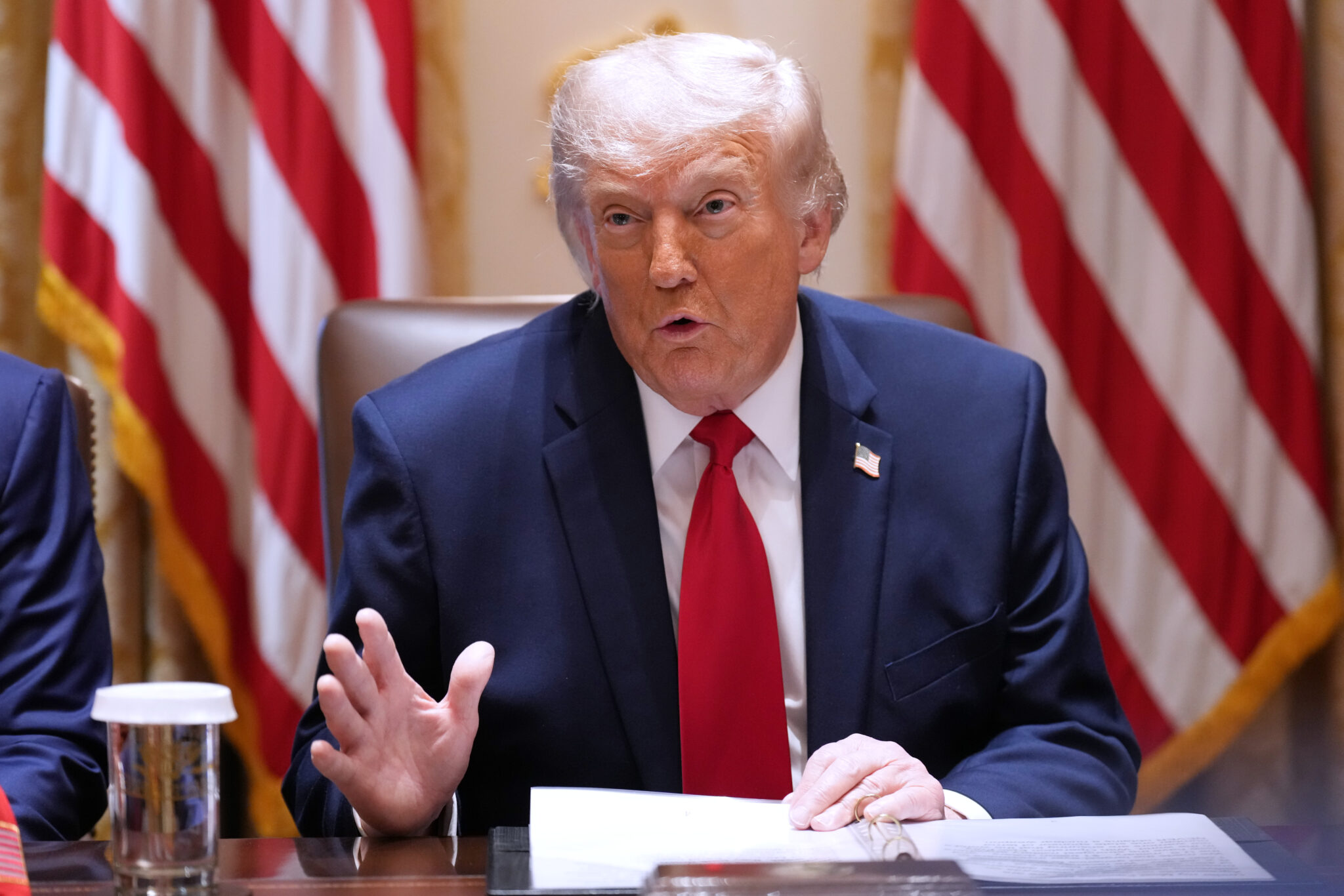

Trump Administration Ties Homeland Security Grants to State Election Reforms/ TezzBuzz/ WASHINGTON/ J. Mansour/ Morning Edition/ The Trump administration plans to tie federal homeland security funding to a series of election-related reforms. States that fail to comply could lose up to 20% of certain DHS grant funding. Critics argue the proposal may face significant legal challenges because states traditionally control election administration.
Election Funding Plan Quick Looks
- DHS grants could be linked to election policy compliance.
- States may lose 20% of certain homeland security funding if requirements are not met.
- New rules would encourage hand-marked paper ballots.
- States would be required to use the SAVE citizenship verification system.
- Manual election audits would become mandatory.
- Poll workers could face additional citizenship verification requirements.
- Several states may need to replace existing voting equipment.
- Critics argue the proposal exceeds presidential authority over elections.
- Election security grants have historically focused on cybersecurity and infrastructure protection.
- Legal challenges are expected if the policy is implemented.
Deep Look
Trump Administration Seeks Election Changes Through Federal Funding
The Trump administration is preparing a new strategy aimed at reshaping election administration across the country by tying federal homeland security funding to a series of election reforms.
According to internal documents and sources familiar with the plan, states would be required to adopt several election-related measures in order to maintain access to portions of federal homeland security grant funding.
The proposal is part of President Donald Trump’s broader effort to address what he has repeatedly described as vulnerabilities in the election system and to increase federal involvement in election security matters.
Homeland Security Grants Become Policy Lever
The grants involved are among the federal government’s primary tools for helping states and local governments prepare for emergencies, combat terrorism, secure critical infrastructure and respond to disasters.
These programs are expected to distribute more than $1 billion during the current fiscal year.
Historically, states receiving these grants have been required to devote at least 3% of the funding toward election security initiatives.
Under the new proposal, however, additional election requirements would be attached to the funding.
States that fail to comply could lose up to 20% of certain grant allocations, potentially amounting to millions of dollars.
A Department of Homeland Security spokesperson emphasized that no final decision has been announced.
“No changes to grant requirements or funding distributions are official until they are formally announced and published through proper, authorized agency channels,” the spokesperson said.
The agency also reiterated its view that election security remains a national security priority.
“Any recipient of federal funding should expect accountability for how taxpayer dollars are spent,” the spokesperson said.
Proposed Election Requirements
The new conditions would require states to adopt several reforms related to voting systems, election audits and voter verification.
Among the requirements:
- Conducting manual election audits using federally approved methodologies.
- Verifying the citizenship status of election workers through approved government systems.
- Running voter registration databases through the Systematic Alien Verification for Entitlements (SAVE) program.
- Developing plans to phase out voting systems that do not rely on hand-marked paper ballots.
Most jurisdictions already provide paper ballots. However, some states and local governments continue to use ballot-marking devices or electronic voting systems that could require modification or replacement under the proposal.
States such as Delaware, Georgia, Nevada and South Carolina could be among those most affected.
SAVE Database Remains Controversial
One of the most debated provisions involves the use of the SAVE database.
The federal system is designed to help verify immigration and citizenship status and is already used by many states for voter registration reviews.
Supporters argue that it can help identify individuals who are not eligible to vote.
Critics, however, contend that the database can produce inaccurate matches and potentially flag eligible voters incorrectly.
The Department of Justice has already pursued legal action against several states that declined to provide voter registration records for federal review using the system.
Legal Questions Loom
Election law experts argue that the proposal could face significant constitutional challenges.
The Constitution grants states broad authority over election administration, while Congress has limited authority to establish election regulations.
Courts have previously ruled that presidents possess only narrow powers to unilaterally impose election rule changes.
David Becker, a former Justice Department attorney who now advises election officials, predicted that legal challenges are likely.
“I expect (the new requirements) will be blocked in the courts,” said David Becker, a former Justice Department lawyer who now advises election officials.
Several states have recently passed laws specifically designed to limit federal involvement in election administration, potentially setting the stage for future legal battles.
Significant Costs for States
Beyond legal concerns, election officials are also weighing the financial impact of the proposed changes.
Replacing voting equipment and modifying election infrastructure could cost states billions of dollars nationwide.
Previous estimates have suggested that bringing election systems into alignment with updated voting standards could cost approximately $2.7 billion nationally.
In Georgia, Secretary of State Brad Raffensperger previously estimated that transitioning fully to hand-marked paper ballots would cost roughly $66 million.
While the proposed DHS guidelines allow states to seek additional federal assistance for implementation, some officials question whether the available funding would be enough to offset the costs.
Part of a Broader Funding Strategy
The proposal reflects a broader approach by the administration that uses federal funding as leverage to encourage states to adopt policies aligned with federal priorities.
Similar strategies have been employed regarding immigration enforcement, population counts and diversity-related programs.
Some of those efforts have already been challenged successfully in court.
If implemented, the election funding proposal could become one of the most significant federal efforts to influence state election administration in recent years, setting up a major legal and political battle over the balance of power between Washington and the states.
More on US News
Comments are closed.