
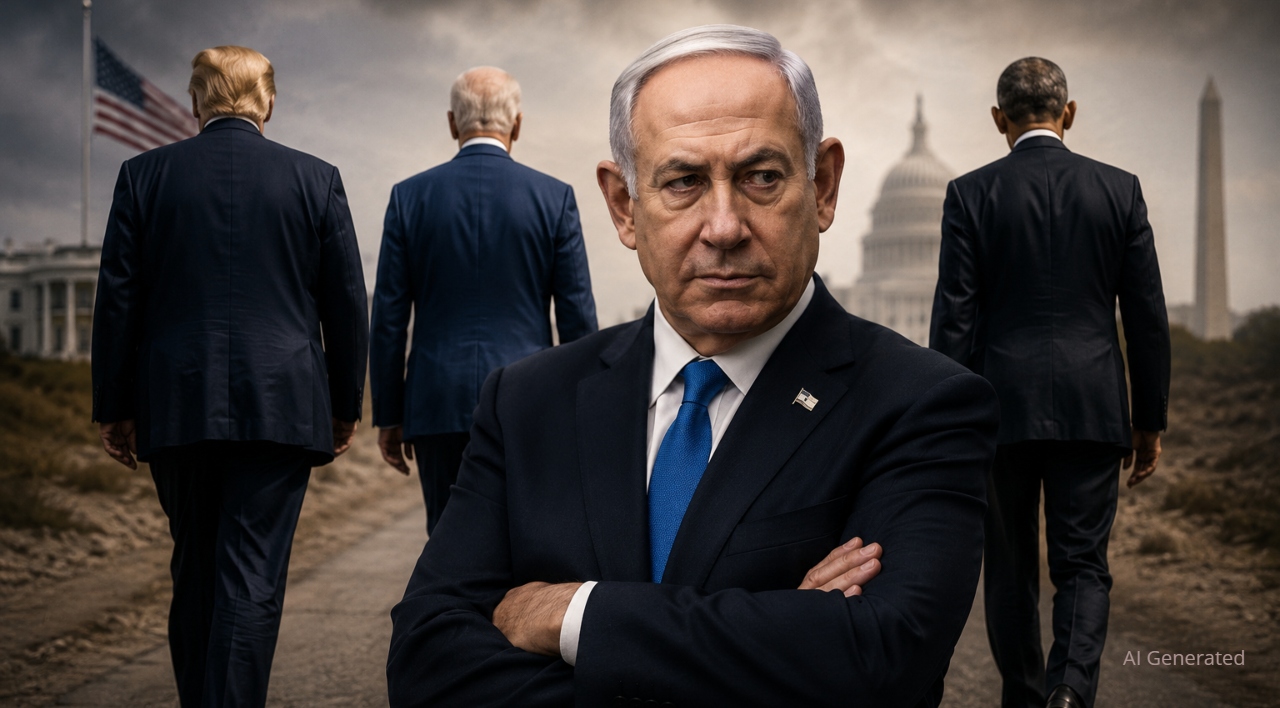
Trump, Biden, Obama… all came and went, but Netanyahu did not change, after all in whose control is he?

America should compromise on the Middle East war, the United Nations should pass resolutions, Europe should keep making appeals and the Arab countries should cry for peace, but if Benjamin Netanyahu is not ready then no one can guarantee peace in the Middle East. This is not about today. Netanyahu has always been doing this. From Obama to Biden to Trump, he stuck to his words. Therefore, the question is not under whose control is Netanyahu. The real question is, can even America, the world’s biggest power, be able to make Netanyahu agree? History’s answer is- very little. In such a situation, the important question is, under whose control is Netanyahu? Understand the whole thing like this.
When challenged Obama himself
It is the year 2015. At that time the President of America was Barack Obama. Even at that time, Netanyahu had openly opposed the nuclear deal (JCPOA) between America and Iran. Not only this, he went to the US Congress and gave a speech against the policy of then President Barack Obama. This was considered a very unusual event in American history. This proves that netanyahu There are no leaders who follow the line of the American President.
When even Biden’s advice was not followed
America openly supported Israel during the Gaza war that started after October 7, 2023. But as civilian casualties mounted, President Joe Biden repeatedly advised public restraint and avoided a major military operation in Rafah. Despite this, the Israeli army started the Rafah operation in May 2024. This made it clear that Netanyahu can ignore even the advice of his biggest ally if necessary.
Even UN resolutions could not stop Netanyahu
During the Gaza war, many resolutions were passed in the United Nations General Assembly and Security Council, demanding a ceasefire. The International Court of Justice (ICJ) also called for increasing humanitarian assistance and exercising caution in action. But Israel did not make any major changes in its military strategy. This shows that Netanyahu is not known for bowing to international pressure.
The real pressure is not America, it is domestic politics.
Netanyahu’s government rests on the support of right-wing parties. His coalition includes leaders who want a more aggressive policy on Gaza and the West Bank. If Netanyahu suddenly adopts a soft stance, his government may fall. Therefore, many political analysts believe that the biggest influence on Netanyahu is not from any foreign leader, but from Israel’s coalition politics, and he is under its control.
For them, war is not just a question of security, it is also a question of survival.
Many cases related to corruption are pending against Netanyahu. There were big protests across the country regarding judiciary reforms in 2023. He was also criticized for security lapses after the October 7 attack. In such an environment, the war changed the center of political debate. Critics believe that the long conflict buys Netanyahu time politically, while supporters call it a national security need.
Even Trump could not always convince them
Former US President Donald Trump is considered close to Netanyahu. But in 2020, even as the Trump administration tried to advance some regional agreements and political arrangements, Netanyahu prioritized his domestic political interests on many issues. This strengthens the impression that they give more importance to their political needs than relationships.
Netanyahu is not under anyone’s control, he is definitely a prisoner of circumstances.
Netanyahu’s political record shows that he has many times ignored the pressure from Obama, Biden, the United Nations and European countries. Therefore, it is difficult to say whether they are under the control of America, Trump or any other leader. Yes, it can definitely be said that he is a prisoner of his political heritage, the compulsions of the alliance and the security thinking that he himself has crafted over the decades. Therefore, the question of peace in the Middle East today appears to be more related to Netanyahu’s political calculations than to Iran or America.
What is the reason for Netanyahu’s anger?
Israeli Prime Minister Benjamin Netanyahu has long called Iran the biggest security threat to his country. Their political and strategic logic has always been that giving any kind of relief to Iran could pose a serious threat to Israel in the future. In such a situation, accepting the agreement made between America and Iran is not only a diplomatic decision but also a political risk. If he supports this agreement, his years old political line may weaken.
How big is the compulsion to save power?
Netanyahu’s government rests on the support of parties that take a very tough stance against Iran. The right-wing and nationalist parties in the coalition consider any softening to be a compromise with Israel’s security. In such a situation, if the Prime Minister stands with the American initiative, then the resentment of his allies can pose a threat to the existence of the government. Therefore, for Netanyahu it is not only a question of foreign policy but also of saving power.
Why might Netanyahu’s problems increase after the end of the war?
War situations often provide political relief to governments. The issue of national security limits opposition attacks and also diverts public attention from other controversies. Netanyahu has already faced many political and legal challenges. In such a situation, after the war ends, domestic politics can again become a big challenge for them. This is why some analysts believe that the current tension is not politically harmful for them.
Why is there a difference in the interests of America and Israel?
America’s priority at present is to maintain regional stability and secure energy supply. The opening of the Strait of Hormuz has brought relief to the global market and Washington does not want the situation to worsen again. On the other hand, Israel is concerned about the security and military capabilities of Iran. This is the reason why the goals of both the allied countries do not appear to be completely similar at this time.
Has the danger not gone away despite the ceasefire?
The agreement reached between America and Iran cannot be considered completely successful unless other major players in the region also accept it. If Israel continues its actions against the agreement or launches new military operations against Iran-backed groups, tensions could rise again. This is the reason why despite the ceasefire there remains uncertainty in the Middle East.
Why will the next 60 days be decisive?
Under the agreement, discussions are to be held on many sensitive issues in the next 60 days. If there is progress in these talks and Israel also agrees to a common framework, then there may be a possibility of permanent peace in the region. But if differences escalate, the current ceasefire may prove to be only a temporary pause.
Tel Aviv now holds the key to peace?
This is not the first time in the politics of the Middle East that there is a difference in the viewpoints of America and Israel. But in the current crisis this difference may prove decisive. America and Iran have returned to the negotiating table, but the real question is whether Netanyahu will also follow the same path. Unless the answer to this question is found, the declaration of peace in the Middle East will be considered incomplete.

Comments are closed.