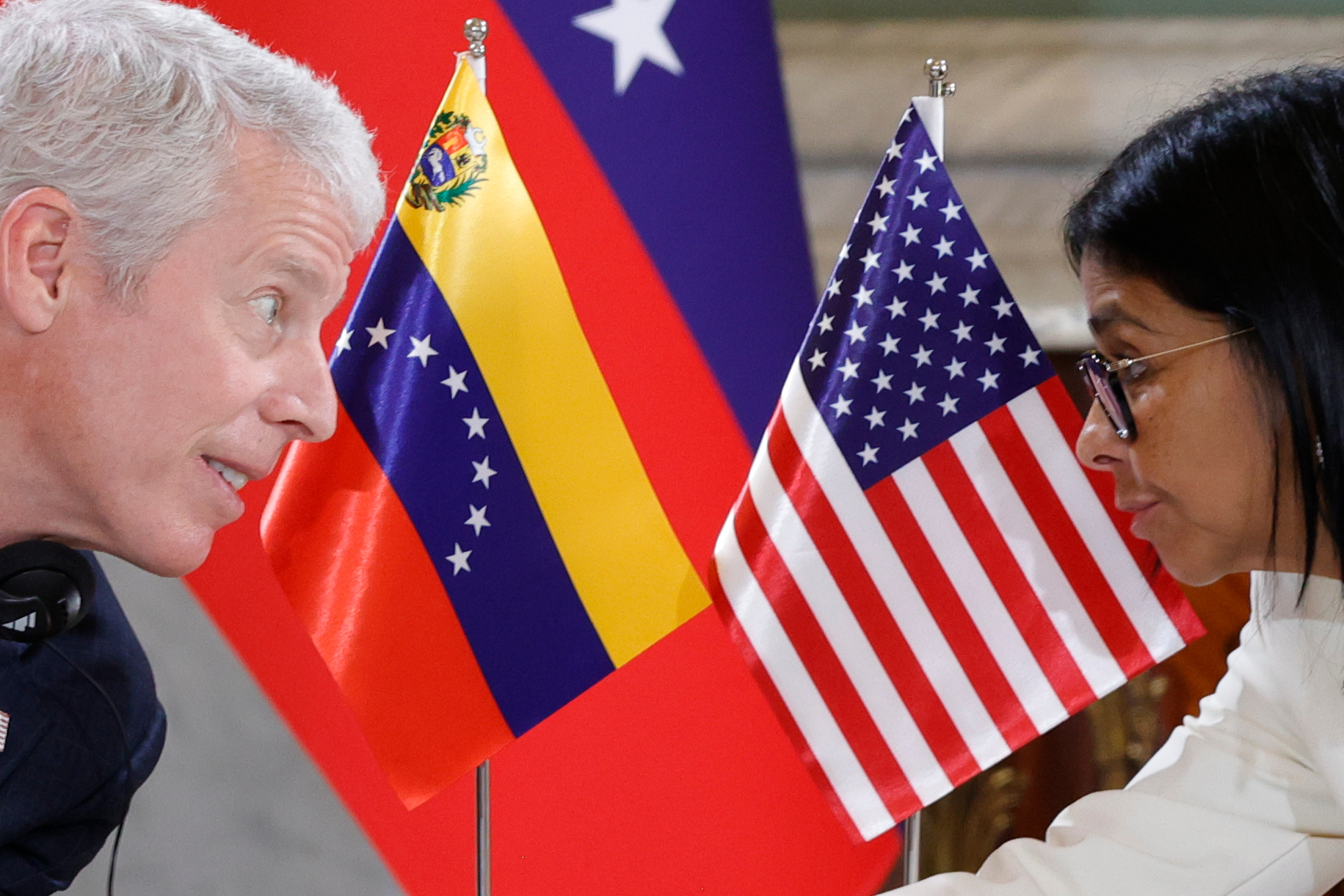
Venezuela-US Oil Deal Tests National Pride After Decades of Decline/ TezzBuzz/ WASHINGTON/ J. Mansour/ A deal granting a U.S.-linked venture long-term rights to 17 Venezuelan oil fields has stirred anger in a country whose identity is closely tied to its petroleum wealth. Some Venezuelans view the agreement as a surrender of national resources following the U.S. capture of Nicolás Maduro, while others hope foreign investment will revive production and employment. Experts caution that Venezuela’s deteriorated infrastructure means any significant economic benefits will probably take years to emerge.

Quick Look
- The agreement covers 17 oil fields with 65 billion barrels of proven reserves.
- Those reserves represent roughly one-fifth of Venezuela’s estimated total.
- The venture will receive rights to the fields for 100 years.
- The United States is partnering with North American Blue Energy Partners.
- Venezuela holds the world’s largest proven oil reserves.
- The country currently produces about 1 million barrels per day.
- Many Venezuelans consider petroleum wealth part of their national identity.
- Critics see the deal as the real objective of the U.S. operation that captured Maduro.
- Supporters hope new investment will restore production and create jobs.
- Years of mismanagement, corruption and sanctions severely damaged the industry.
- Experts say major production increases will require years of investment.

Deep Look
Oil Deal Bruises Venezuelan National Pride
Few resources have shaped Venezuela’s economy, culture and national identity as profoundly as oil.
For more than a century, Venezuelans have generally regarded the country’s petroleum reserves as the collective property of its people rather than assets belonging to a government, foreign power or private company.
That conviction is now being tested by acting President Delcy Rodríguez’s agreement granting a U.S.-linked venture long-term rights to 17 oil fields containing an estimated 65 billion barrels.
The amount represents roughly one-fifth of Venezuela’s approximately 300 billion barrels of reserves, the largest proven petroleum holdings in the world.
Although the agreement could eventually attract billions of dollars and help restore the country’s severely damaged oil industry, many Venezuelans describe it as a national surrender.
“It’s not just worrying, it’s outrageous, because we, like a drop in the ocean, have no power to intervene,” Caracas architect Lisandro Castro said. “There is genuine collective concern in Venezuela right now about what we are witnessing.”
Oil Transformed Venezuela
Commercial oil discoveries in northwestern Venezuela during the 1920s transformed a poor, largely agricultural nation into an urbanized regional power.
The industry shaped everyday culture as well as the economy. American energy workers helped popularize baseball by building fields in petroleum-producing communities. Venezuelan workers embraced the game and spread it throughout the country.
Oil wealth also attracted Europeans escaping economic hardship after World War II. Portuguese migrants established bakeries that remain part of Venezuelan life, while Italian immigrants designed buildings that continue to define the country’s cities.
Rather than relying primarily on taxes collected from residents and businesses, Venezuela’s developing democracy financed itself through oil exports. Politicians used that revenue to provide public services and cultivate popular support, said Ronal Rodríguez, a researcher at the Venezuela Observatory at Colombia’s Universidad del Rosario.
“Every Venezuelan sees oil as something they have the right to claim,” Rodríguez said.
Nationalization Made Petroleum a Public Asset
Venezuela helped establish the Organization of the Petroleum Exporting Countries and, during the 1970s, enjoyed the highest per-capita income in Latin America.
The government nationalized the oil industry and created Petróleos de Venezuela S.A., commonly known as PDVSA. Foreign companies were permitted to participate only as minority partners in joint ventures controlled by the state.
Oil revenue financed heavily subsidized gasoline, overseas scholarships, free medical procedures and other public benefits. Petroleum wealth consequently became associated not only with national sovereignty but also with the government’s social obligations to its citizens.
Booms and Crises Shaped Modern History
Venezuela’s dependence on oil also left the country vulnerable to global price changes.
A collapse in oil prices during the 1980s devastated the economy and forced the government to seek assistance from the International Monetary Fund. The elimination of subsidies fueled public unrest and helped create the conditions in which military officer Hugo Chávez attempted a failed coup.
After winning the presidency in 1998, Chávez used another period of high oil prices to expand government programs in healthcare, housing and education.
PDVSA generated an estimated $981 billion in revenue between 1999 and 2011. The government distributed homes, refrigerators and medicine, while petroleum income supported well-paying public- and private-sector jobs.
Chávez also tightened state control of PDVSA and clashed with foreign companies, including ExxonMobil and ConocoPhillips.
Mismanagement and Sanctions Accelerated Decline
PDVSA’s fortunes deteriorated when oil prices fell again. Corruption and mismanagement weakened the company and reduced production under Chávez and his chosen successor, Nicolás Maduro.
After Maduro became president in 2013, Venezuela entered a prolonged economic crisis. U.S. sanctions imposed over human rights and democratic concerns placed additional pressure on the petroleum industry and broader economy.
The collapse caused severe shortages of food, medicine and other necessities, prompting millions of Venezuelans to leave the country.
Stores and markets are now better supplied, but inflation has left many people unable to afford basic goods. Public-sector workers earn approximately $160 per month, while the average private-sector employee received about $237 per month last year.
Former oil worker Romel Abreu, who now works as a security guard in the northwestern petroleum center of Cabimas, said the country remains dependent on its limited production of approximately 1 million barrels per day.
“Something is better than nothing,” Abreu said. “If we didn’t have it, we would be fried.”
Like many Cabimas residents, he hopes investment will produce another oil boom and restore lost jobs.
Maduro’s Capture Raised Expectations for Change
Many Venezuelans hoped the U.S. capture of Maduro in January would end the ruling party’s 27-year hold on power.
Instead, President Donald Trump backed Rodríguez as acting president rather than supporting Venezuela’s political opposition. Some citizens nevertheless hoped that easing U.S. sanctions would improve the economy.
A legal overhaul adopted in February expanded opportunities for private investment in the petroleum sector, which some Venezuelans interpreted as preparation for broader changes.
The subsequent oil agreement reinforced suspicions that obtaining access to Venezuela’s resources had been a central U.S. objective.
“Everything that happened on Jan. 3 was simply a strategy to get where we are today,” Castro said of Trump’s Venezuela policy. “That is, to fully immerse themselves in the country’s energy affairs for their own personal gain and benefit, not for a purpose that would truly benefit us Venezuelans.”
Agreement Grants Century-Long Oil Rights
Under the deal, the United States is entering a joint venture with North American Blue Energy Partners, Venezuela’s second-largest private oil operator after Chevron.
Rodríguez granted the venture 100-year rights to develop the 17 fields.
Supporters argue that Venezuela lacks the equipment, technology and capital required to extract more of its vast petroleum wealth. Critics question the legitimacy of granting a foreign-linked operation such extensive control over strategic national assets.
The country’s degraded pipelines, refineries and production facilities present another obstacle. Energy experts say it will take years of construction and investment before the agreement can generate a substantial increase in output.
US and Venezuelan Officials Defend the Deal
Speaking in Caracas, U.S. Energy Secretary Chris Wright said Trump’s mission in Venezuela “is to bring peace, freedom, opportunity and prosperity to the people.”
Rodríguez defended the agreement in a national address and said she wants Venezuela to become an “energy powerhouse.”
For residents of oil-producing communities, the deal has created a difficult choice between concerns about sovereignty and the urgent need for investment.
“Well, on the one hand, one feels and thinks that one of the largest oil reserves has been handed over,” oil company worker Erwin Ayala said outside his Cabimas home. “But if it’s for the good of the country and for future generations, then yes, we agree with that, because what good is having so much oil … if there’s no machinery, no technology, to extract it?”
More on US News