In the politics of Uttar Pradesh, it is common for leaders to leave one party and join another camp before the elections. But does his vote bank along with the leader also go to the other party's account? The data of the last four assembly elections presents an interesting picture of this question.
KNews Desk: In the politics of Uttar Pradesh, the movement of defection increases as the elections approach. Leaders change sides keeping in mind their political ground and future, while parties also try to include leaders of other parties with them to achieve caste equations and local influence. However, a leader changing party does not ensure that his supporters will also vote for the new party.
As preparations for the 2027 assembly elections begin in UP, discussions about defection are once again gaining momentum. In such a situation, it is important to understand why parties express so much trust in defection leaders and what is their real role in elections.
How many turncoats will contest in 2022?
Close in 2022 assembly elections There were 206 such candidates in the election fray, who contested the elections from different parties. According to the report, this was the lowest number of defector candidates in the UP Assembly elections after 1977.
Out of these 206 candidates, almost every fifth candidate was successful in winning the election. This makes it clear that merely changing party does not make it easy to win elections.
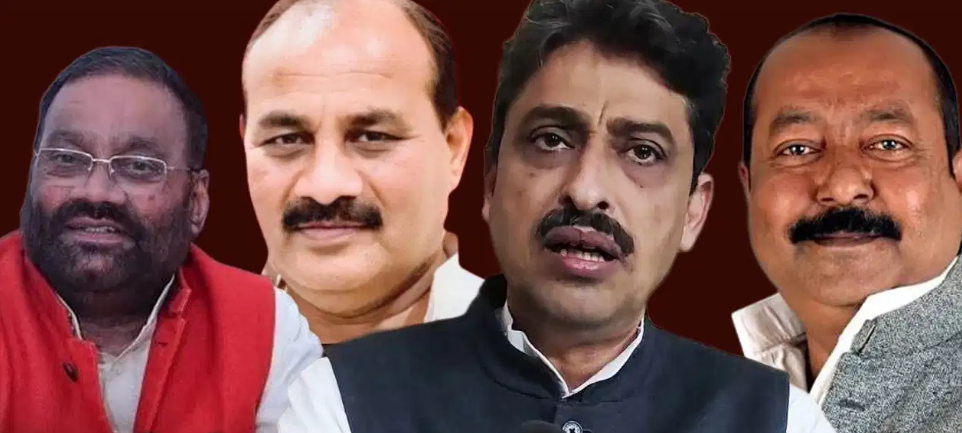
Many big leaders who switched from BJP to Samajwadi Party in 2022 had made a lot of headlines. Was a minister in Yogi government Swami Prasad Maurya, Dara Singh Chauhan and Dharam Singh Saini Left BJP and joined SP. These leaders had accused BJP of ignoring backward people, Dalits and farmers.
However, the picture was different in the election results. Swami Prasad Maurya lost the election from Fazilnagar and Dharam Singh Saini from Nakur. Whereas Dara Singh Chauhan was successful in winning the Ghosi seat. Later he resigned from the post of MLA and returned to BJP.
Similarly, Imran Masood, who left Congress and joined SP, also did not get a ticket in the assembly elections. The performance of turncoats in 2017 was excellent; the performance of turncoat leaders in 2022 was weak, but the picture has not been like this in every election.
In the 2017 assembly elections, BJP had given tickets to 65 turncoat leaders. Of these, 52 candidates were successful in winning the elections. That means their success rate was around 80 percent.
In comparison, Samajwadi Party fielded 26 turncoats, but only 3 of these candidates could win. Whereas out of 29 turncoat candidates of BSP, only 2 could win the elections.
This figure shows that when there is a strong political wave in favor of a party, the turncoats who join that party and contest the elections can also benefit from it.
SP got benefit from defectors in 2012
In the 2012 assembly elections, Samajwadi Party had given tickets to 32 turncoat leaders and out of these, 14 candidates reached the assembly after winning.
Whereas BJP had fielded 21 turncoat candidates, but only one of them could win the election.
That means the success of a turncoat leader does not depend only on his personal influence. At that time, the atmosphere in favor of which party is there in the state, how strong is the organization and how strong is the local equation of the candidate, all these things influence the election results.
BSP turncoats did wonders in 2007
The 2007 assembly elections were also important in this matter. In that election BSP Tickets were given to 44 turncoat candidates, out of which 27 were successful in winning the elections.
This once again indicates that when a strong electoral environment is created in favor of a political party, leaders from other parties can also benefit from it.
Not just the leader, his social impact also matters
A leader may certainly have personal supporters and influence, but elections are not won on his name alone. The voter takes the decision keeping in mind many aspects like party, leadership, functioning of the government, local issues, caste equations and the image of the candidate.
This is the reason why despite many big leaders leaving BJP and joining SP in 2022, BJP's electoral base was not completely affected. BJP won its seats in 2017 232 seats Retained a large number of. there total The party that won 274 seats last time was victorious again.
This indicates that sometimes the organization of a party and its permanent vote base is stronger than the personal influence of any one leader.
Then why do parties give tickets to turncoats?
The strategy of parties to take turncoat leaders on board is not just to win elections. such a leader is special caste, region or social group Can help in increasing the reach of the party.
A leader who has a strong hold in an area can become a means for the party to reach out to new voters. Besides, his arrival may also change the local political equations.
However, its benefit is greater only when the personal influence of the leader, the organization and the electoral wave of the party work in favor of each other.
The game of defection may be seen again in 2027
Political activities are intensifying in UP regarding the 2027 assembly elections. The political equation of the state has also been much discussed after the 2024 Lok Sabha elections.
In such a situation, in the coming time, both the major political camps may try to include influential leaders of other parties with them. especially OBC, Dalit and leaders with regional influence But political parties may keep an eye on it.
But the figures of the last elections make one thing clear –How many votes a defecting leader brings with him is not determined by his changing party, but by his personal influence, social influence, local organizations and the political wave prevailing at that time.