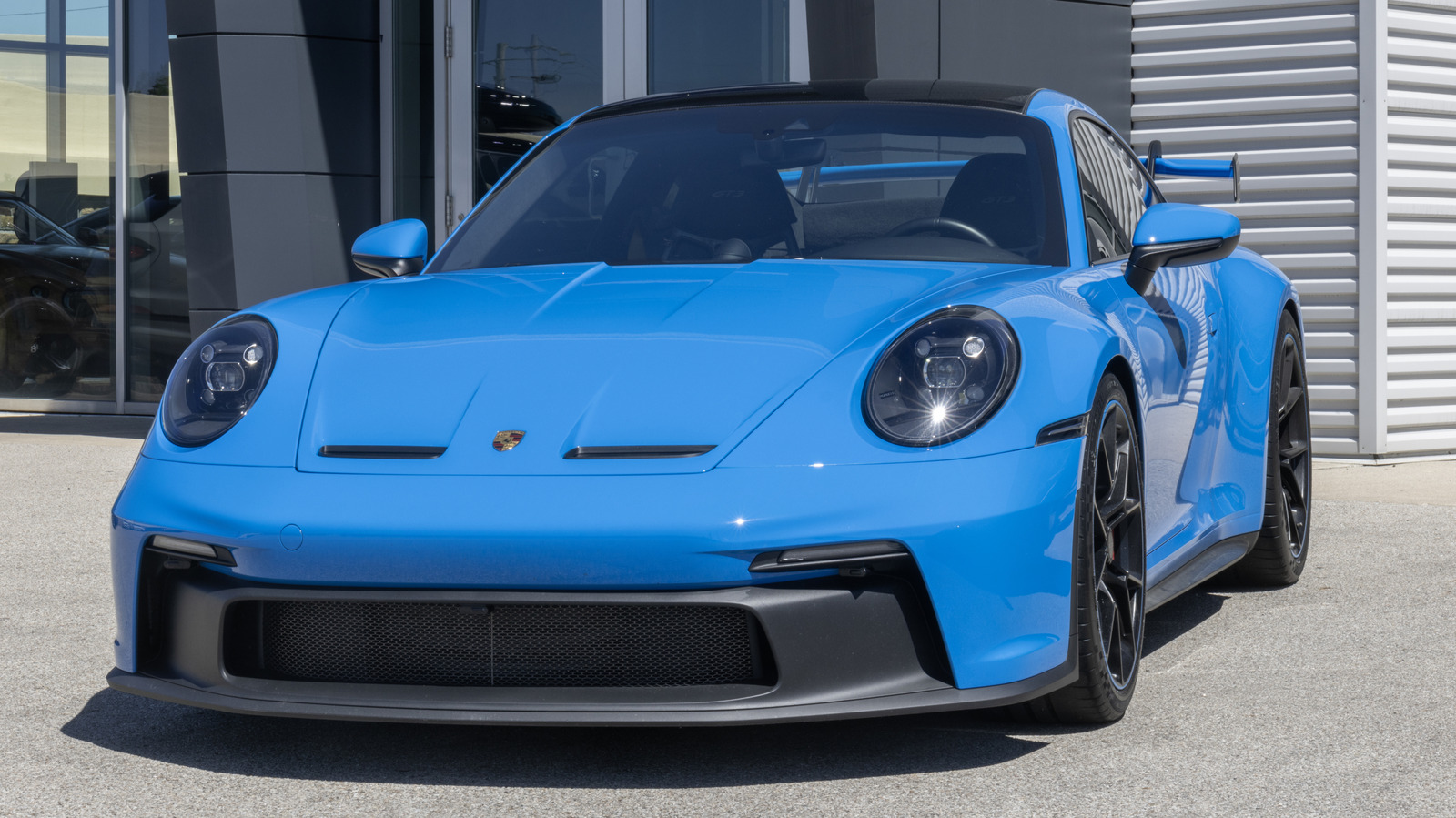
In the 911 range, the 911 GT3 is the “entry-level” track-focused variant that sits below the GT3 RS. It’s powered by a 4.0-liter naturally aspirated flat-six making 502 horsepower and 331 pound-feet of torque. The PDK-equipped GT3 has a curb weight of 3,278 pounds. The Porsche 718 Cayman GT4 is the dialed-up version of Porsche’s compact, mid-engined 718 Cayman, also available with a PDK.
It’s built around a 4.0-liter flat-six with 414 horsepower and 309 pound-feet of torque, with a curb weight of around 3,276 pounds. So why is the Porsche 911 GT3 quicker on a track than the smaller, mid-engined Cayman GT4? It comes down to a combination of power, chassis hardware, and aerodynamics. First of all, the GT3’s flat-six makes 88 more horsepower and 22 more pound-feet of torque than the GT4’s.
The 911 also gets a double-wishbone front suspension that comes straight off a 911 RSR race car. The GT4 doesn’t have it — the 718 platform keeps MacPherson struts at both axles. Rear-axle steering is standard on the GT3, too. It works by turning the rear wheels opposite the front wheels at low speed to sharpen turn-in, then swings them in the same direction as the front wheels at higher speeds for more stability.
Top Gear reports 849 pounds of downforce at 124 mph for the GT3 in its most aggressive setting. This includes a redesigned front diffuser, spoiler lip, underbody air guides, and rear wing, all aimed at increasing downforce and high-speed stability. The GT4 also generates meaningful downforce, 268 pounds of it at top speed, but its aerodynamic package is less aggressive overall.
Why the 911 GT3 is faster than a Cayman GT4

Launching the 911 GT3 from zero to 60 mph takes between 2.7 seconds and 3.3 seconds, depending on the transmission choice, the surface, and similar environmental factors. The GT3 is able to cross the quarter mile in around 10.9 to 11.5 seconds. The 718 GT4 is able to reach 60 mph in somewhere between 3.3 seconds and 4.4 seconds, and the quarter mile time is reached in 11.6 to 11.8 seconds.
When looking at Nürburgring lap times, a place where Porsche usually develops and tests its cars, the 992.2 GT3 is able to do a 6:56, while the 718 GT4’s best was 7:32. At 12.9 miles per lap, small per-corner advantages in tires and mechanical grip compound in a way they wouldn’t over a shorter circuit, which is part of why the differences between the GT4 and the GT3 show up so clearly here.
Although a mid-engine configuration of the GT4 helps in overall agility, the rear-engine placement in the GT3 is very helpful for getting out of slower corners, especially on a track like the Nürburgring. Even through mid- and high-speed corners, the GT3 has a definite edge thanks to its more aggressive aerodynamic package. This means the GT3 can carry more speed through corners and remain stable while maintaining momentum.
The GT3’s brakes are also bigger and more capable. At the front, the GT3’s standard brakes are 408 millimeters in diameter, while the GT4’s are 380 millimeters. Both can be had with Porsche’s PCCB carbon ceramics, and these are the same. The Porsche Cayman is now discontinued, but the 992.2 GT3 was introduced relatively recently, meaning that the last 718 Cayman GT4 is one generation older than the current GT3.
Is the Porsche Cayman GT4 a poor man’s GT3?
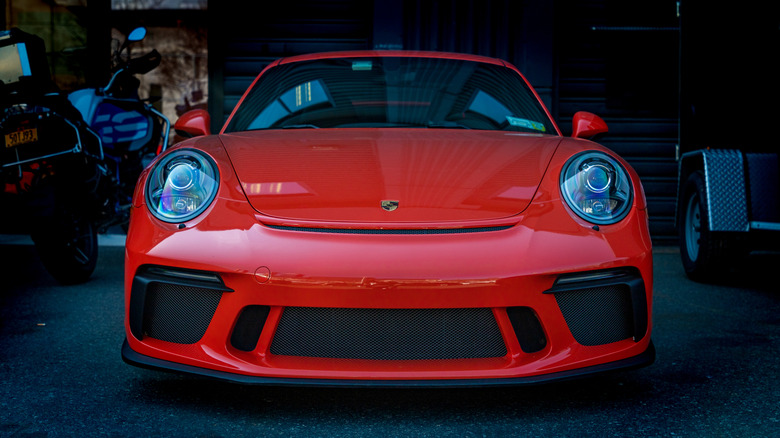
No — not exactly, and the price gap isn’t as simple as a straight sticker-to-sticker comparison. Porsche’s 2022 911 GT3 — the one we reviewed and rated with a perfect 10 out of 10 — went on sale at the same time as the GT4 starting at $162,450, while the 718 Cayman GT4 launched at $100,550. That’s a real gap of about $62,00.
That gap looks different again since Porsche ended 718 production in October 2025. Used Cayman GT4s have been trading well above their original sticker. At the time of writing this article, Classic.com puts the average sale price at $125,654, with one 2022 car selling for $181,000 in July 2026. This is almost double its original MSRP.
As such, a car appreciating past its own sticker price isn’t behaving like the budget option a “poor man’s” label implies. The character argument matters just as much; the GT4 puts its mass between the axles instead of behind the rear wheels, giving it a different kind of balance that has nothing to do with outright pace.
This is exactly why some drivers choose the smaller car on purpose, not as a compromise. The Cayman/Boxster lineup has its own character, and if you’ve ever driven a Cayman and a 911, you can easily tell they are not the same cars, although they do share the same DNA.