
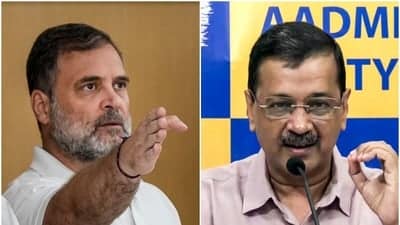
Rahul Gandhi, Kejriwal Question Telegram Ban Ahead of NEET Re-Test, Ask if ‘WhatsApp Is Next’

The temporary restriction of Telegram in India ahead of the NEET-UG re-examination has triggered a political debate, with opposition leaders Rahul Gandhi and Arvind Kejriwal questioning whether the move will effectively prevent paper leaks.
The National Testing Agency (NTA) has restricted access to Telegram until June 22, following concerns that fraudsters were using the platform to circulate fake claims of leaked examination papers before the NEET-UG re-test scheduled for June 21.
Rahul Gandhi Criticises Telegram Restriction
Congress leader Rahul Gandhi strongly opposed the decision, arguing that millions of students depend on Telegram for educational resources, including study notes, test series, and exam discussions.
In a post on social media, Gandhi questioned whether messaging platforms such as WhatsApp could also face similar restrictions in the future.
Using a Hindi analogy, he remarked that instead of catching the thief, authorities were locking the victim’s house. He argued that restricting access to a platform widely used by students does not address the root cause of paper leaks.
Gandhi further described the security measures surrounding the re-exam as “theatrics” and urged the government to focus on dismantling examination leak networks rather than inconveniencing students.
Kejriwal Calls Move ‘Absurd’
Former Delhi Chief Minister Arvind Kejriwal also criticised the decision, calling it an ineffective response to a serious issue.
According to Kejriwal, paper leaks are part of a larger organised racket that cannot be stopped merely by restricting a communication platform. He questioned whether measures such as enhanced transportation security and Telegram restrictions would genuinely prevent examination malpractice.
The Aam Aadmi Party leader argued that authorities should concentrate on identifying and prosecuting those responsible for leaks instead of imposing broad restrictions.
NTA Defends Its Decision
Defending the temporary block, NTA Director General Abhishek Singh stated that fraudsters had been using Telegram channels to demand money from students and parents while falsely claiming access to leaked question papers.
The agency said the restriction was introduced as a precautionary measure to maintain the integrity of the re-examination process.
NTA officials also warned candidates against believing fabricated screenshots, manipulated chat conversations, and misleading videos circulating online. The agency reiterated that strict measures are being implemented to ensure a fair and transparent examination.
Legal Challenge Reaches Delhi High Court
The restriction has also sparked legal action. Telegram has approached the Delhi High Court challenging the temporary block, and the matter is expected to be heard soon.
The outcome of the case could have wider implications for how authorities balance exam security concerns with access to digital communication platforms used by millions of students across India.
Exam Security Measures Under Scrutiny
The controversy comes amid heightened concerns over examination security following the NEET paper leak row. While authorities insist that strict safeguards are necessary to restore confidence in the examination system, critics argue that restrictions on widely used educational platforms may place additional stress on students already preparing for a high-stakes re-test.
As the June 21 re-examination approaches, the debate continues over whether platform restrictions can effectively curb malpractice or whether deeper structural reforms are needed to tackle the paper leak menace.
Comments are closed.