
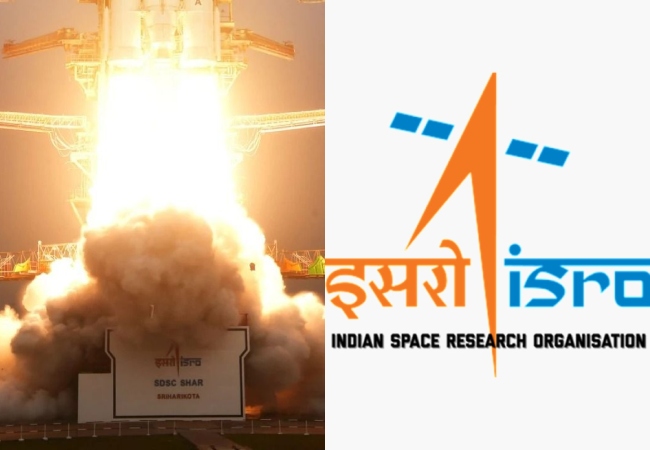
ISRO successfully tests ‘Semi-Cryogenic Engine Power Head’, big preparations to step on the Moon by 2040

Bengaluru. Indian Space Research Organization has achieved a major milestone by successfully conducting ‘hot test’ of its semi-cryogenic engine power head at 88 percent target capacity (thrust). This test was conducted at ISRO Propulsion Complex in Tamil Nadu which has proved to be an important milestone in the development of the new propulsion system. Apart from this, this engine remained completely stable at the thrust level of 175 tons.
Read :- 21 year old ‘Muskaan Kumari’ from Begusarai, Bihar created history by becoming a BPSC officer.
ISRO Chairman V. Narayanan met 17th Air Chief Marshal L.M. in Bengaluru. During the Katre Memorial Lecture, he said that today India has mastered the technology of cryogenic engine which was refused to be given to India by other countries. Today the country has three cryogenic propulsion systems and many world records have been created in the process. The power of LVM3 will increase, as the next target has been set at 200 tons of thrust. According to ISRO, earlier successful tests have also been conducted at 47 percent and 60 percent thrust. Let us tell you that this semi-cryogenic propulsion stage is being developed to replace the existing L110 core stage of India’s heavy-lift rocket LVM3. The engine will use liquid oxygen and kerosene-based fuel to improve operational efficiency. Also equipped with the SE2000 engine with a capacity of two thousand kilonewtons, this upgrade will significantly increase the payload carrying capacity of the rocket.
Preparation to step on the moon by 2040
According to sources, ISRO Chairman V. Narayanan called it a major success and said that the test was conducted without the thrust chamber. Talking about Gaganyaan mission, he clarified that it is a highly technology-intensive mission. Three unmanned missions will be sent to space to test the safety of the vehicle before sending humans into space. The date of the first mission of these three will be announced soon. Sharing information about ISRO’s future roadmap and important missions, he said that India is preparing for its first unmanned Gaganyaan mission. Along with this, work is moving forward on Chandrayaan-4 and a long-term Chandrayaan-5 mission with a heavy rover in collaboration with Japan to bring samples from the Moon.
ISRO aims to establish an Indian space station by 2035 and land Indian astronauts on the Moon by 2040. This progress of India in the field of space science is an important decision towards self-reliance and becoming a global power.
Comments are closed.