
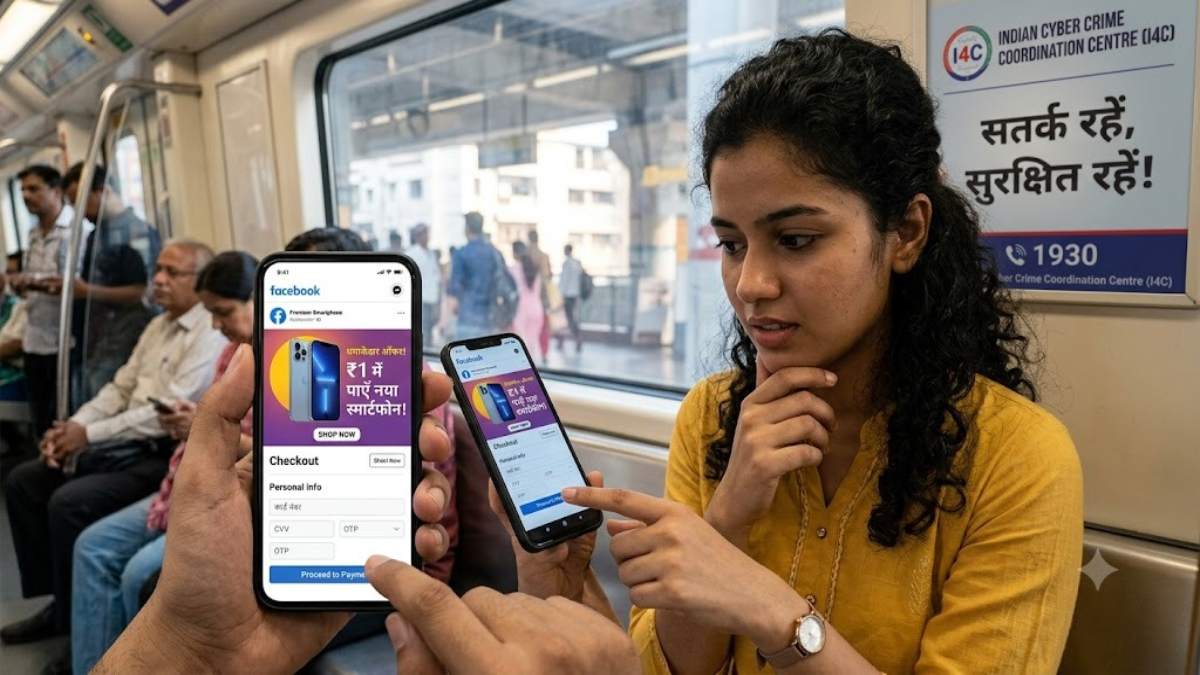

Technology Desk – Fake Social Media Ads: If you ever see an advertisement on your Facebook or Instagram to buy desi ghee, expensive smartphone, smartwatch or any branded item for ₹ 1, then think twice before trusting it. Such offers may look attractive, but there may be a big network of cyber fraudsters hidden behind them. The Indian Cyber Crime Coordination Center (I4C), working under the Indian Home Ministry, has advised people to beware of such fake advertisements.
How do cyber thugs trap you?
First of all, fraudsters show such advertisements on social media in which they claim to sell very expensive goods at just ₹ 1 or at a discount of up to 90%. As soon as a person sees the offer and clicks on the advertisement, he is redirected to a website that looks exactly like a real online shopping site. This is where the game of cheating begins.

Payment of ₹1 becomes the biggest trap
On the fake website, the user is asked to pay only ₹ 1. During payment, information like card number, CVV, expiry date and in many cases OTP is also asked. As soon as this information comes into the hands of fraudsters, they can misuse the bank account or card. In many cases, instead of withdrawing large amounts immediately, small amounts are deducted so that the fraud can be continued for a long time.
Recognize fake offers by these signs
Incredibly cheap price for an expensive product.
Advertisements that pressure you to buy quickly.
Request to make payment on a new or unknown website.
Incorrect spelling in website name or link.
Ads from suspicious pages or accounts instead of official brands.
Easy ways to avoid fraud
Some small precautions can save you from big losses while shopping online.
Don’t blindly trust offers that are too cheap or unbelievable.
Always purchase from the brand’s official website or verified app.
Check the address (URL) of any website carefully and confirm the secure connection (HTTPS).
Avoid clicking on links of unknown advertisements appearing on social media.
Before sharing complete card information on an unknown website, please check its credibility.
What to do immediately if you get cheated?
If you have accidentally paid on a fake website or shared card information, take action without delay.
First of all contact your bank and get the card blocked.
Register a complaint immediately on the National Cyber Helpline 1930.
File a complaint online on the National Cyber Crime Reporting Portal.
Monitor all bank account and card transactions and report any suspicious activity immediately.
Caution is more important than greed
Cyber criminals are now increasingly using social media advertisements to defraud people. Remember, if an offer seems too good to be true, the chances of it being fake are equally high. A little caution while shopping online can keep both your hard-earned money and personal information safe.

Comments are closed.